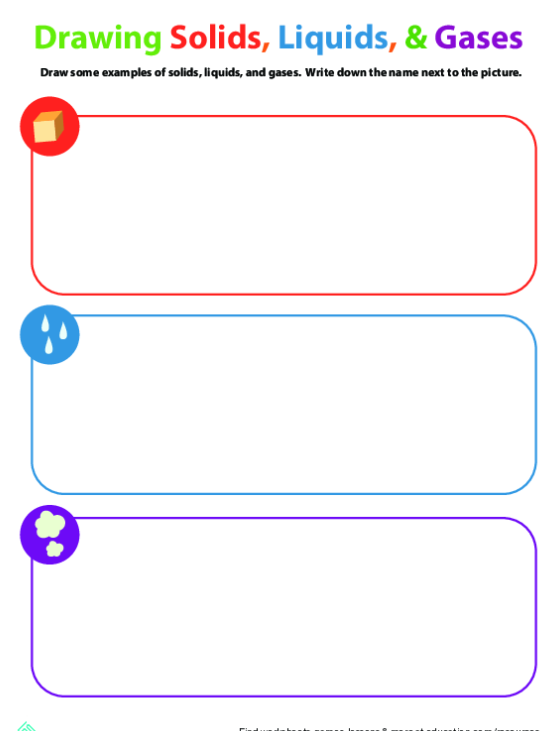
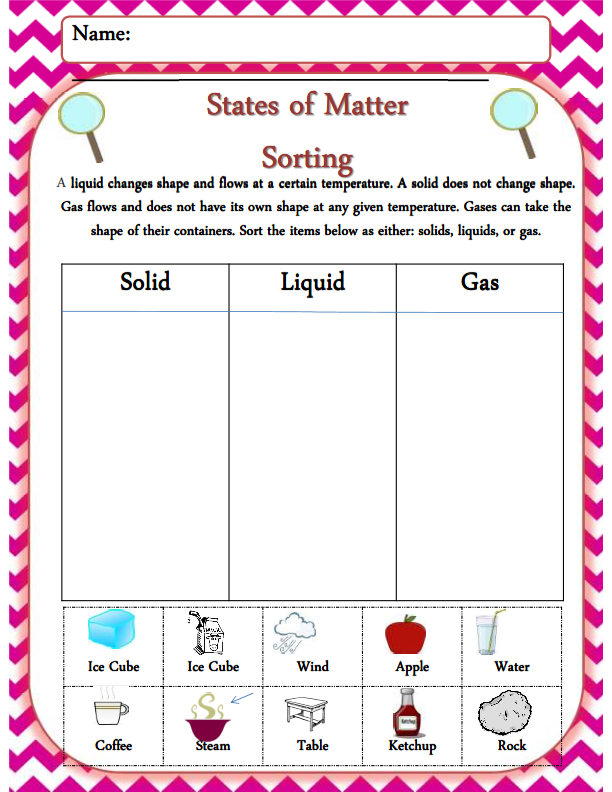
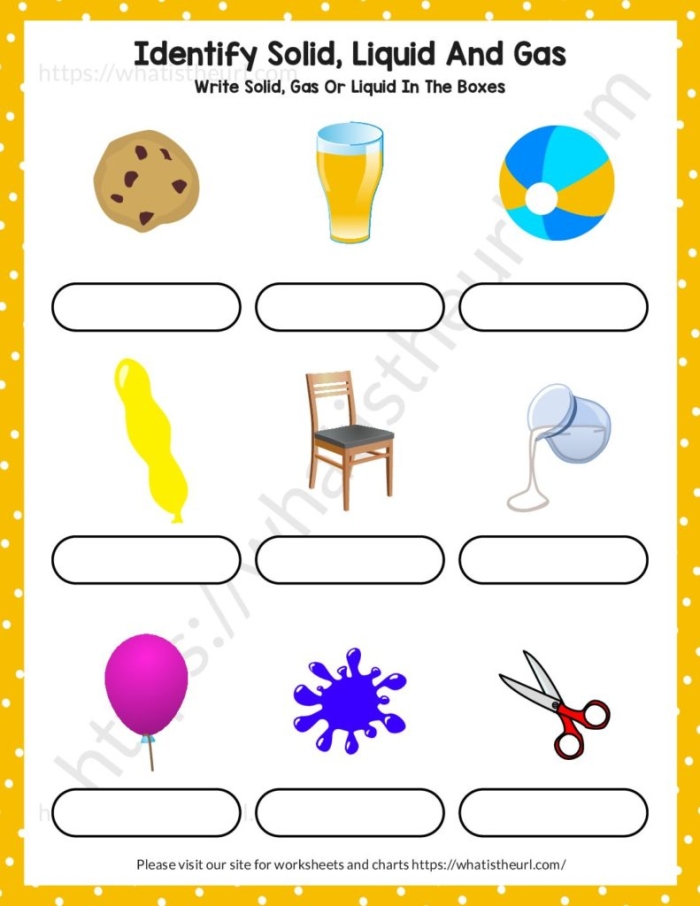
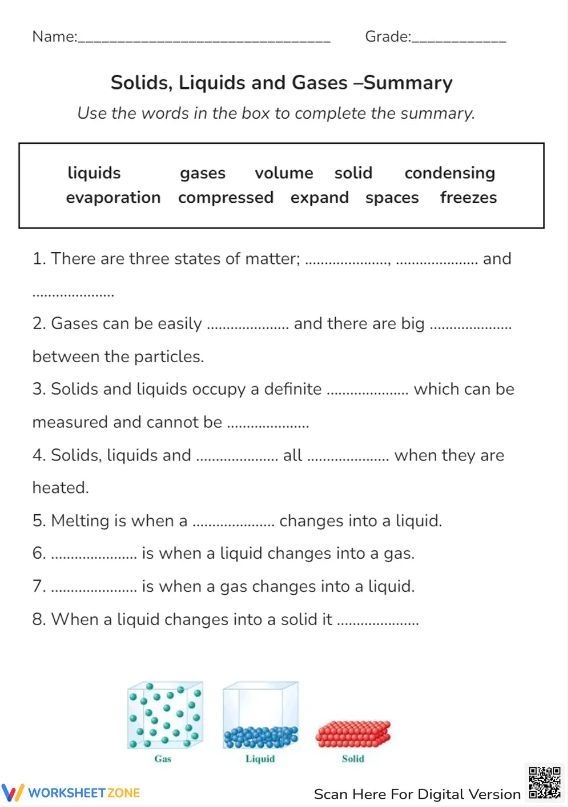
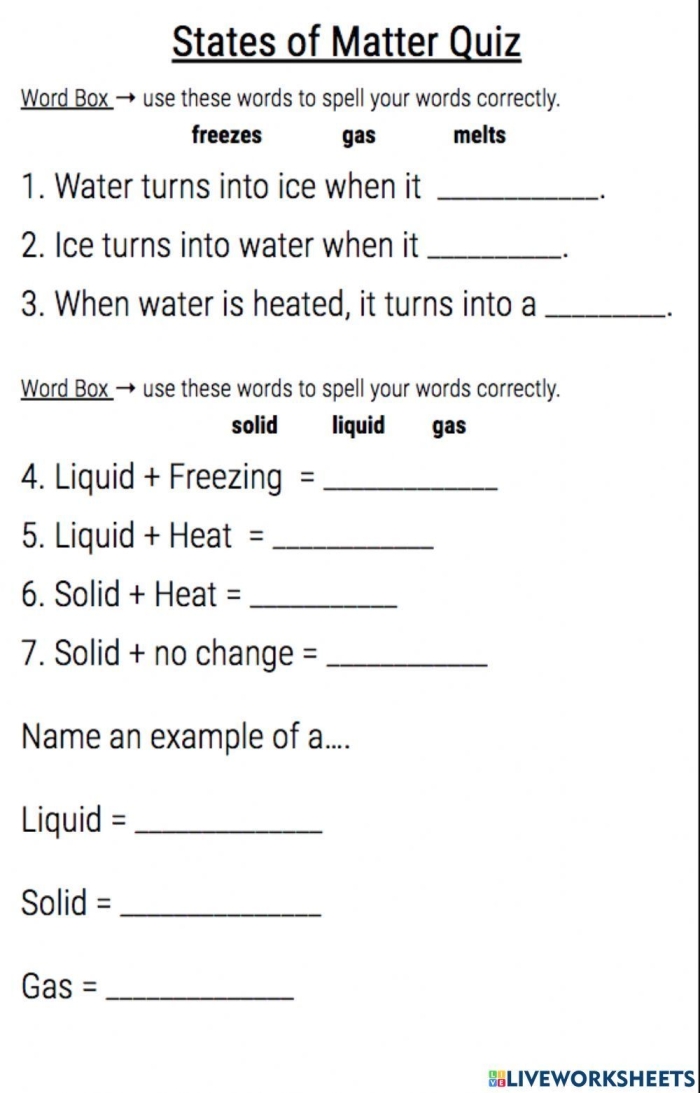
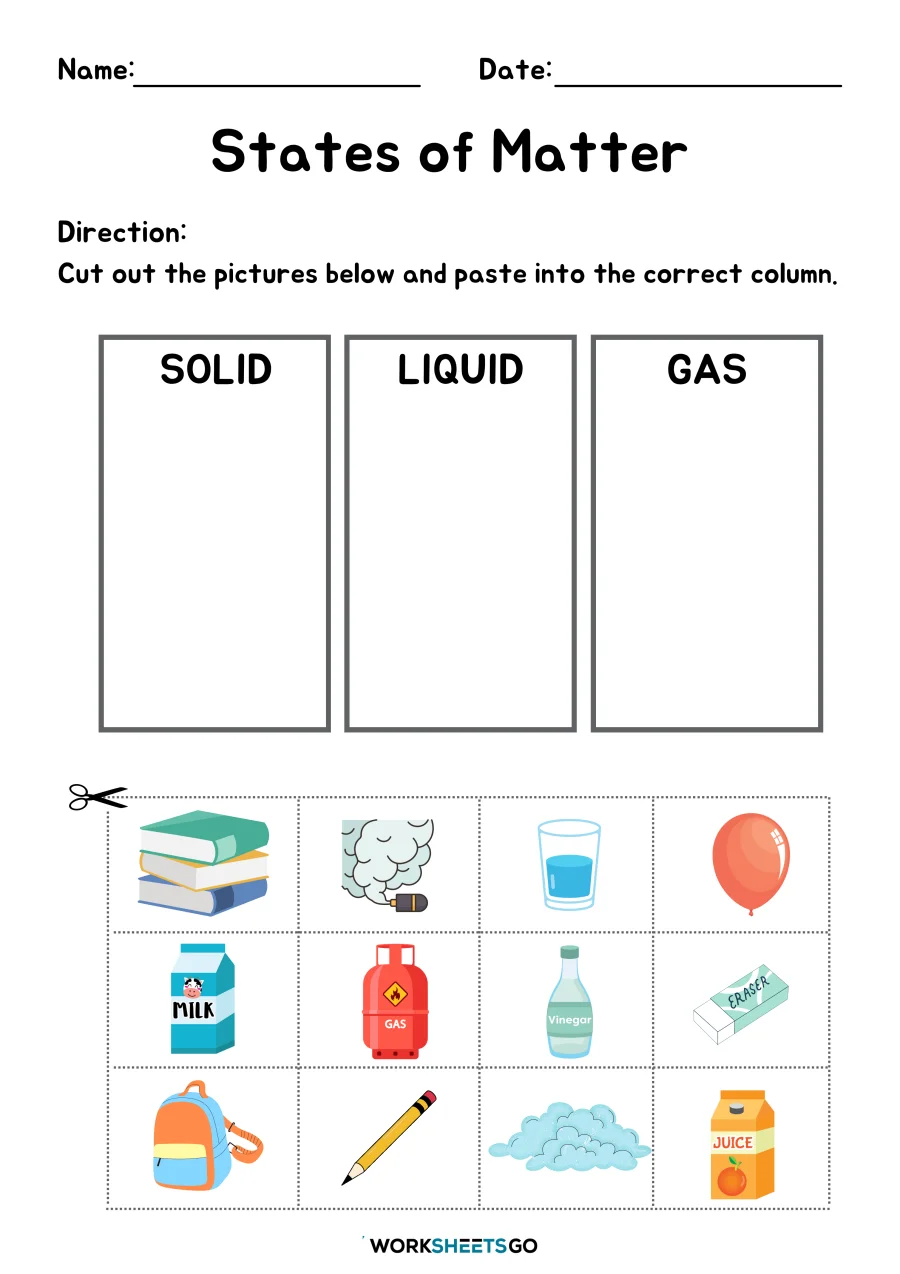
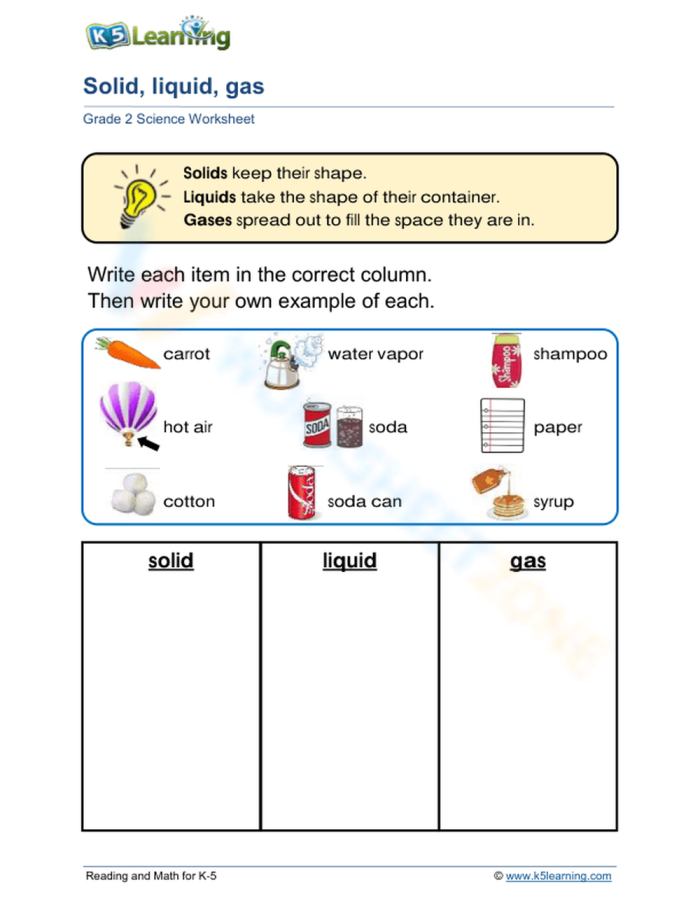
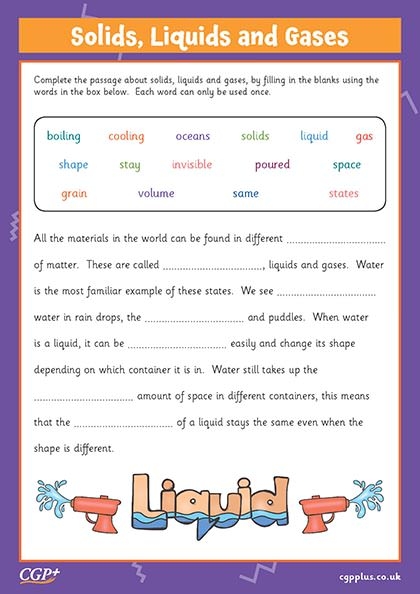
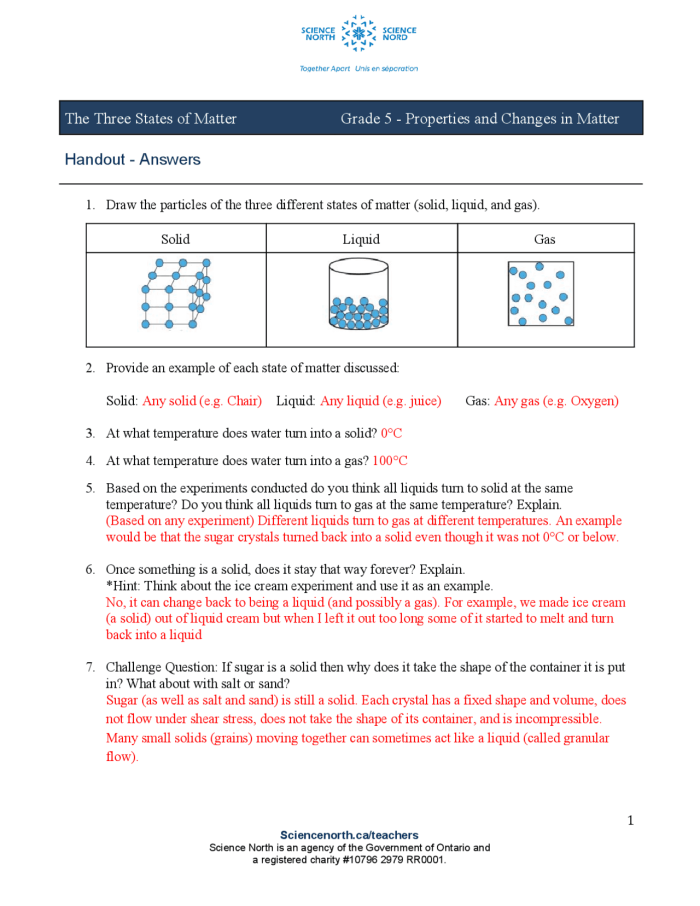
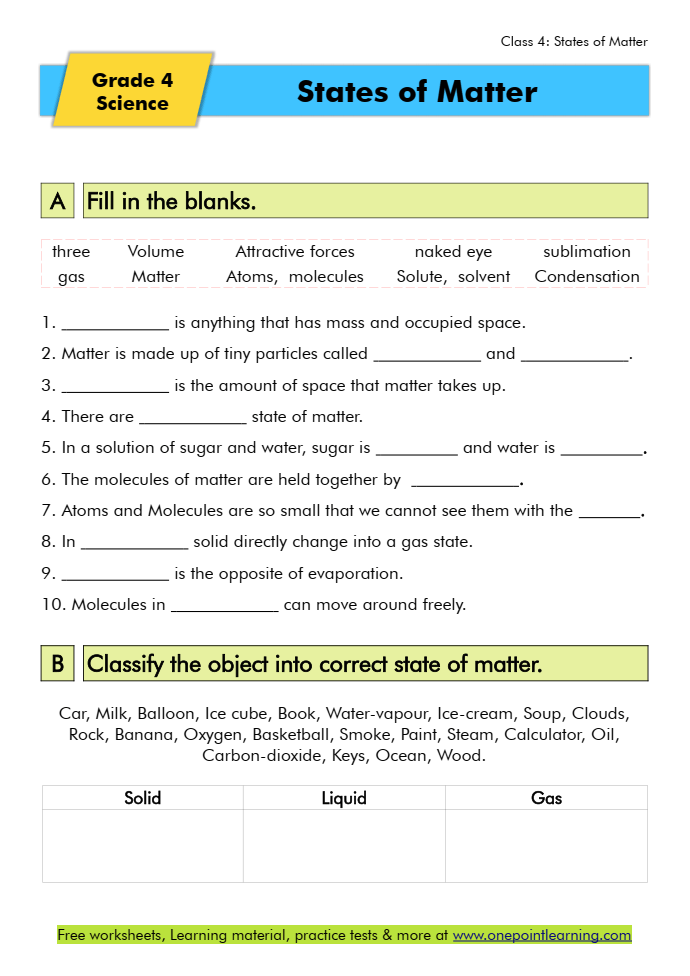
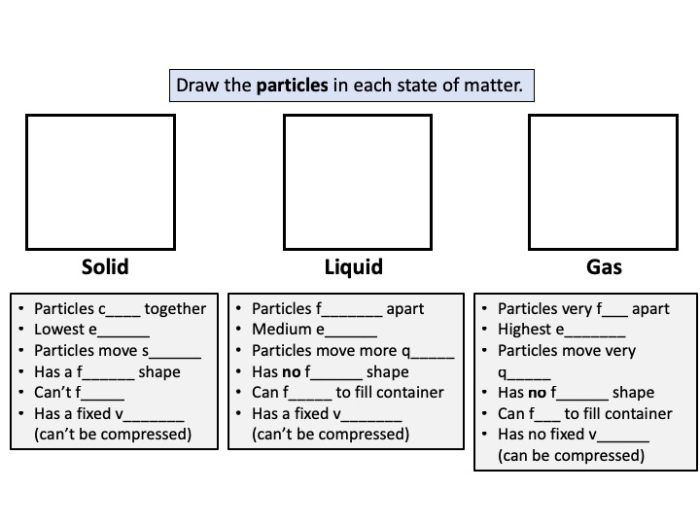
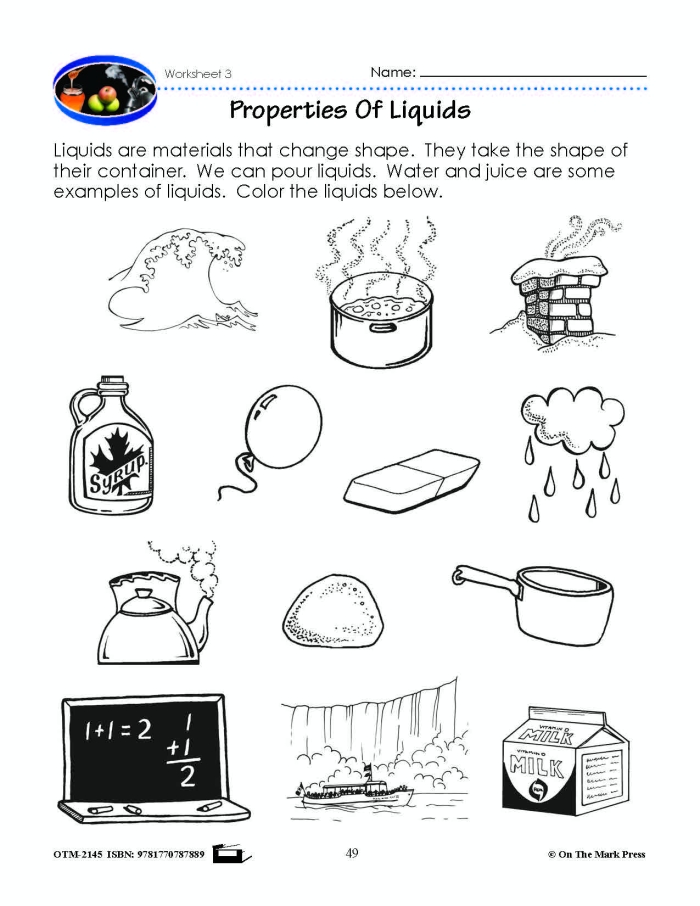
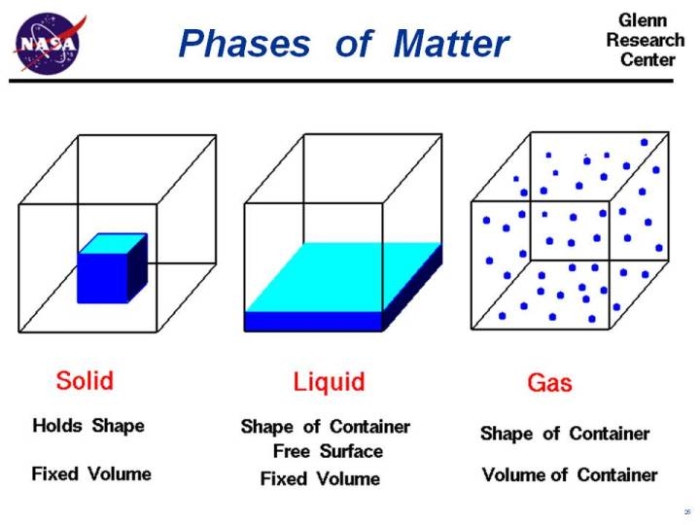
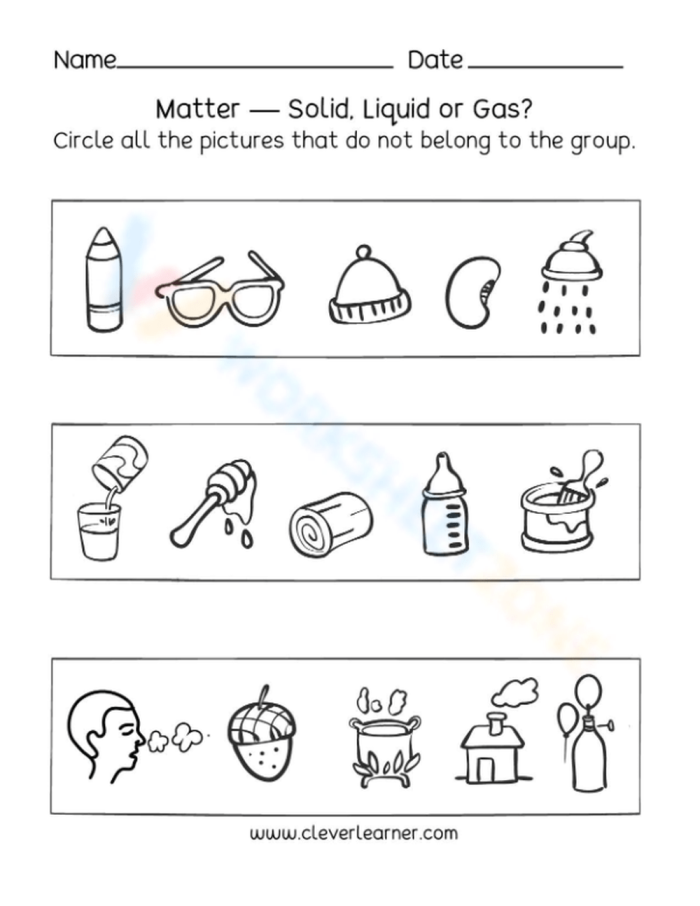
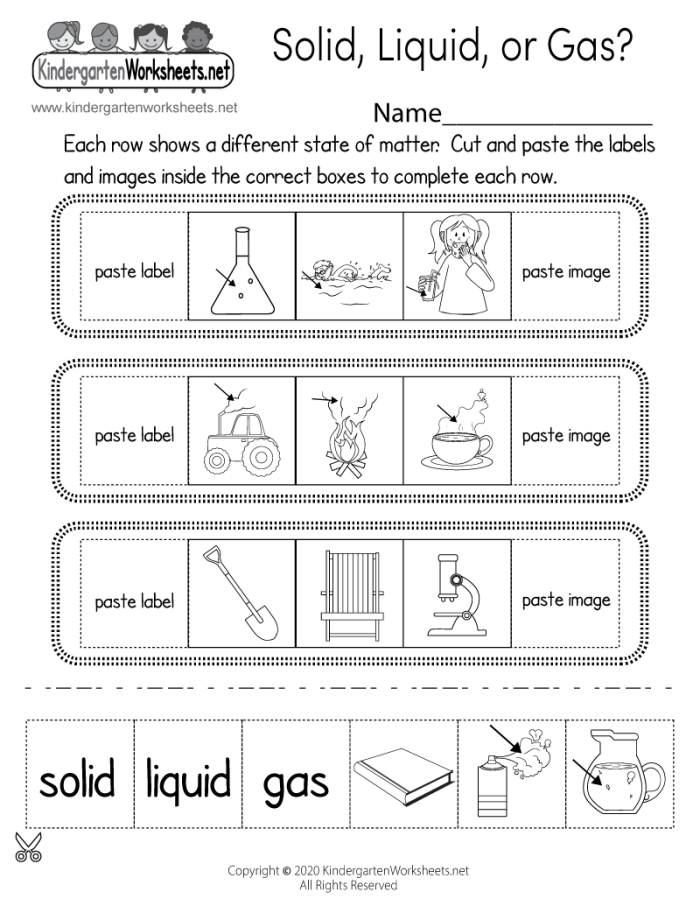
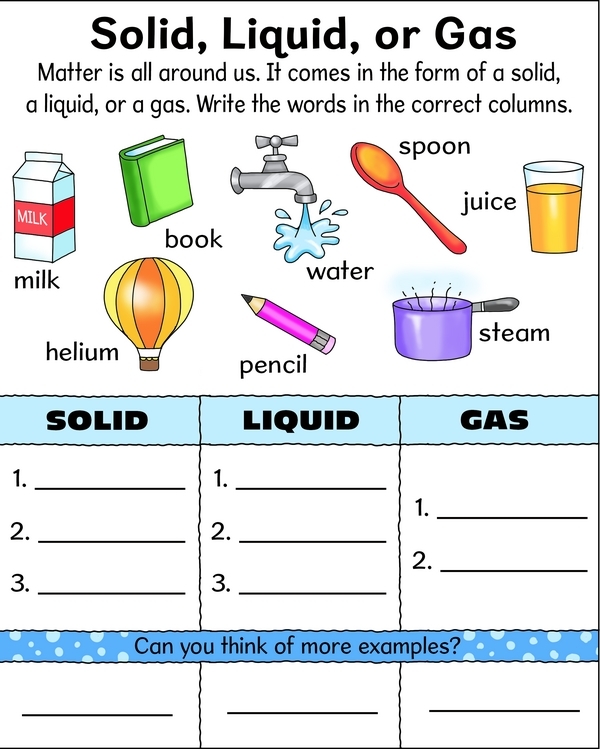
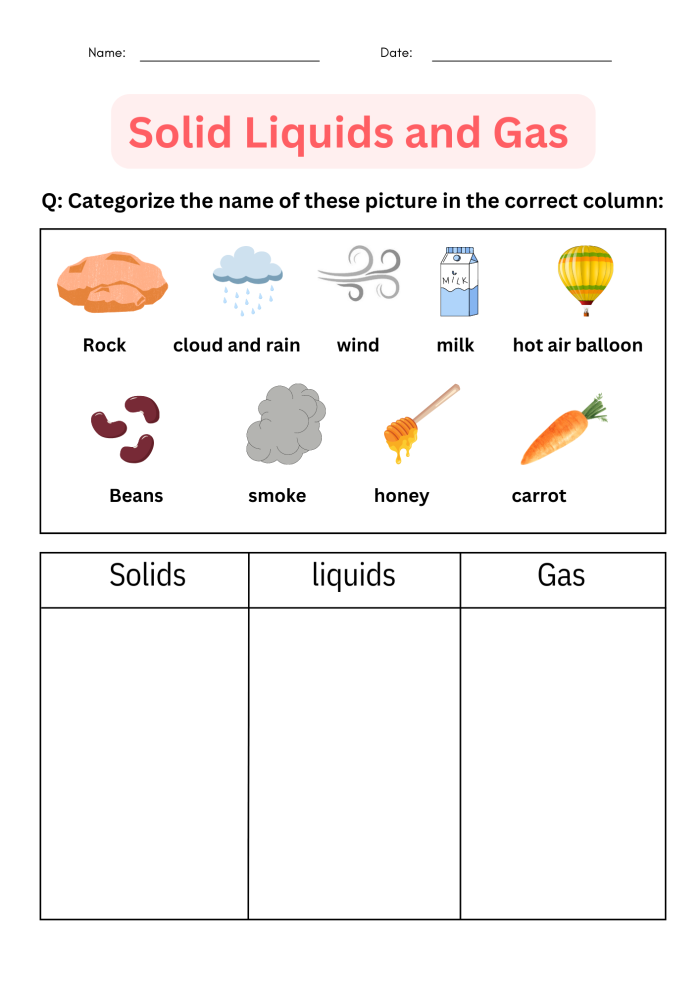
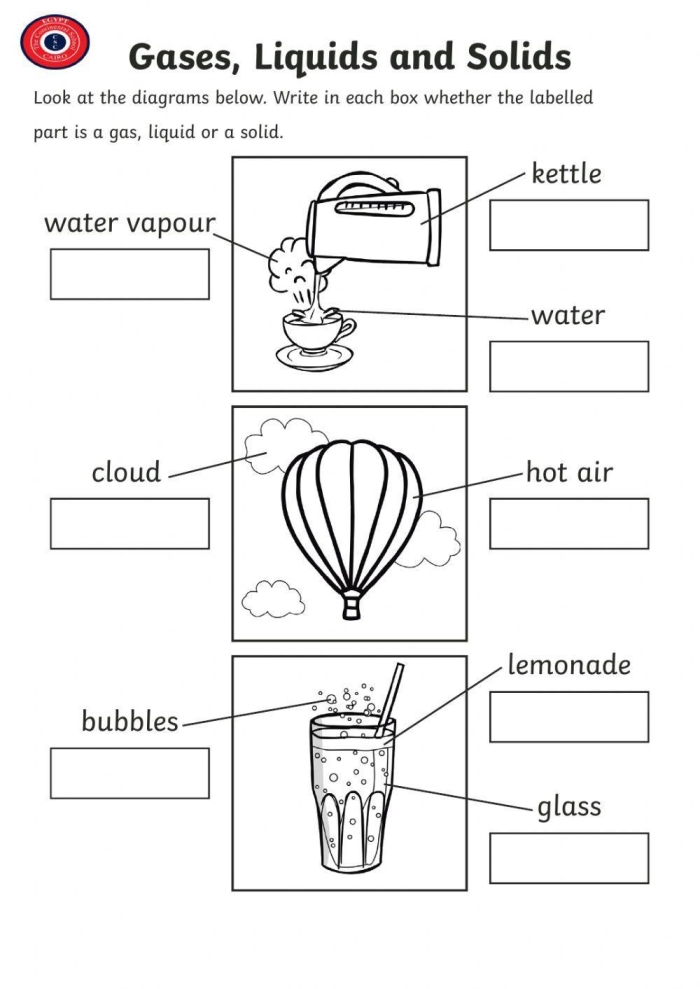
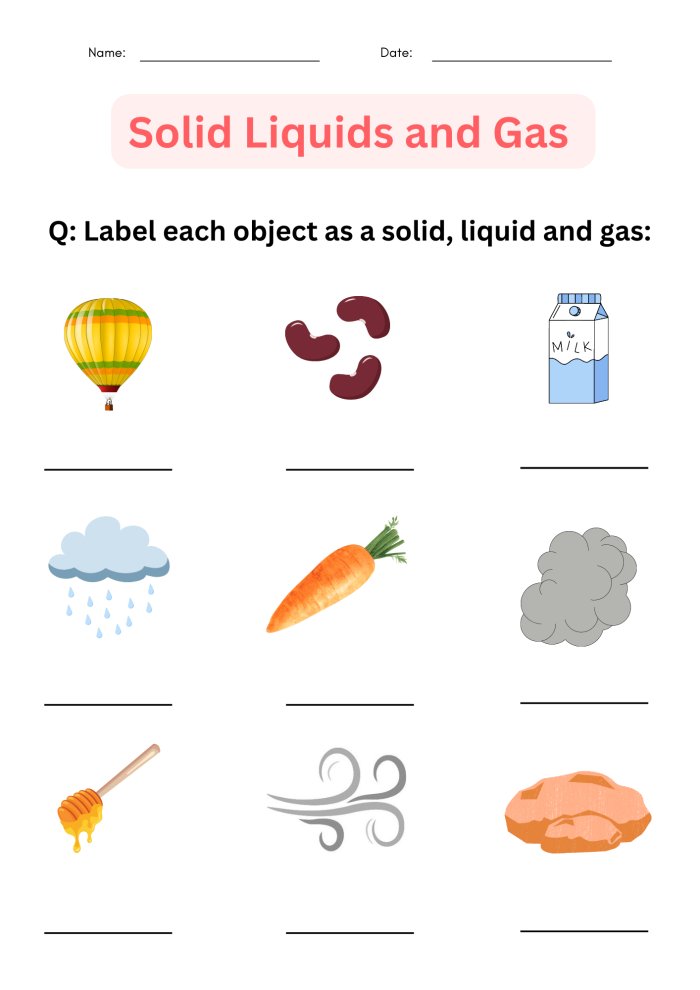
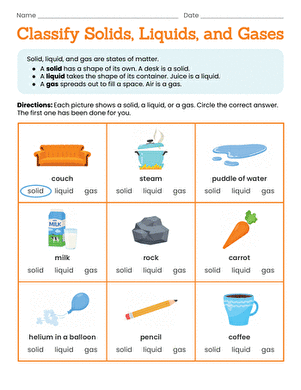
First graders often struggle to understand that matter exists in different forms, and a hands-on worksheet approach helps cement this concept. A states of matter worksheet that asks kids to write down examples of solids, liquids, and gases gives them the chance to observe their own world and categorize what they see.
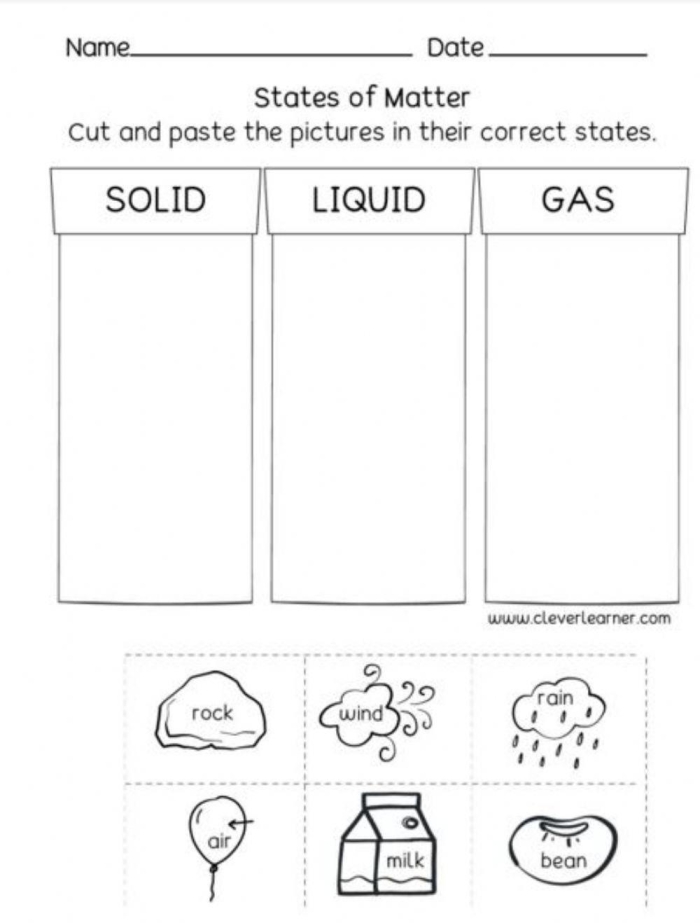
The beauty of this physical science activity lies in its simplicity. Rather than just reading definitions, children identify a rock as a solid, water as a liquid, and air as a gas. They’re making connections between abstract science vocabulary and tangible objects they encounter daily. This direct observation method sticks with learners far better than passive instruction.
When first graders complete this type of worksheet, they typically start with obvious examples. A pencil becomes a solid. Milk becomes a liquid. Steam or wind becomes a gas. As they work through the exercise, teachers often notice that some children begin asking deeper questions: “Is ice a solid?” or “Can something change from one state to another?” These questions signal genuine curiosity about the physical world.
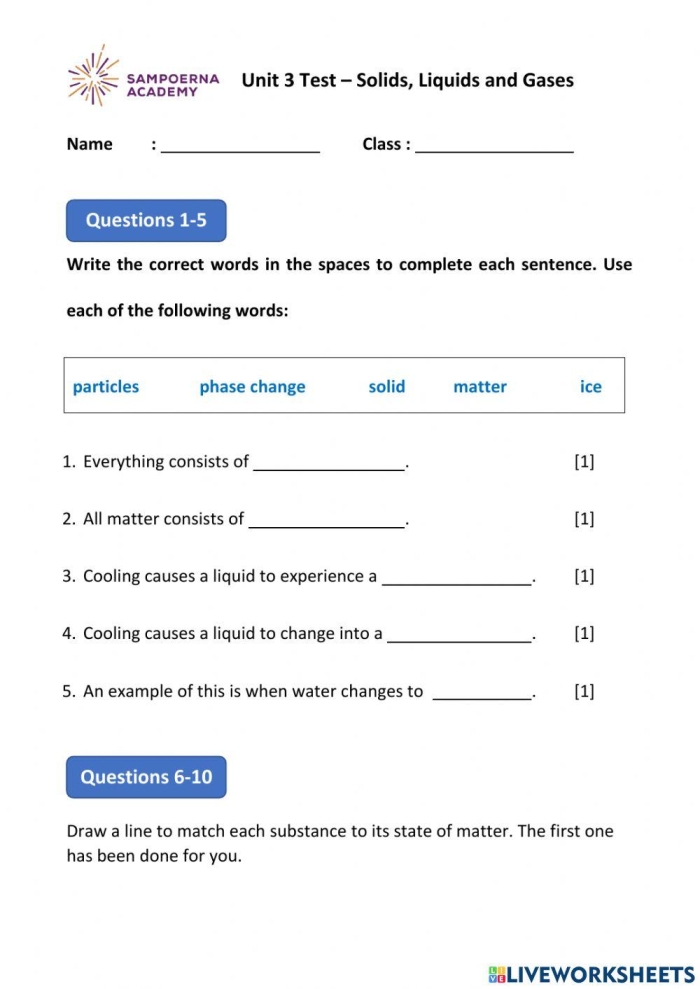
The writing component matters too. Even at this early stage, asking children to write their answers rather than simply circle options strengthens their vocabulary retention and spelling skills. This dual-purpose approach means the worksheet supports both science learning and literacy development simultaneously.
For teachers looking to expand on this foundation, pairing this activity with related worksheets can deepen understanding. Activities like Matter Mixup: Writing Solids, Liquids, and Gases offer more interactive practice, while other first grade physical science resources help reinforce complementary skills. Some educators also incorporate consonant sound practice when reviewing vocabulary words aloud, creating a more integrated learning experience.
The states of matter concept forms a cornerstone of elementary science understanding, and worksheets that ask children to identify and write examples make that foundation solid and memorable.
Worksheet Practice Section