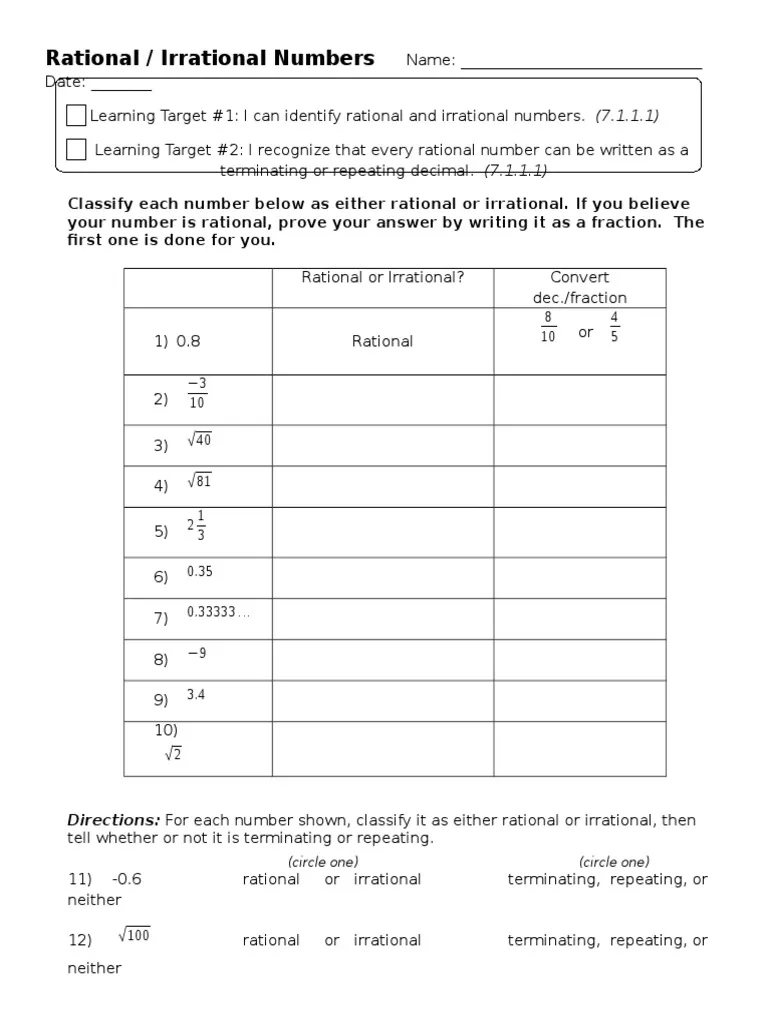
Understanding the difference between rational and irrational numbers is a crucial skill for eighth-grade learners. This differentiation is not just an academic exercise; it lays the groundwork for advanced mathematical concepts encountered later on. With a helpful worksheet focused on this topic, students can practice and master these distinctions effectively.
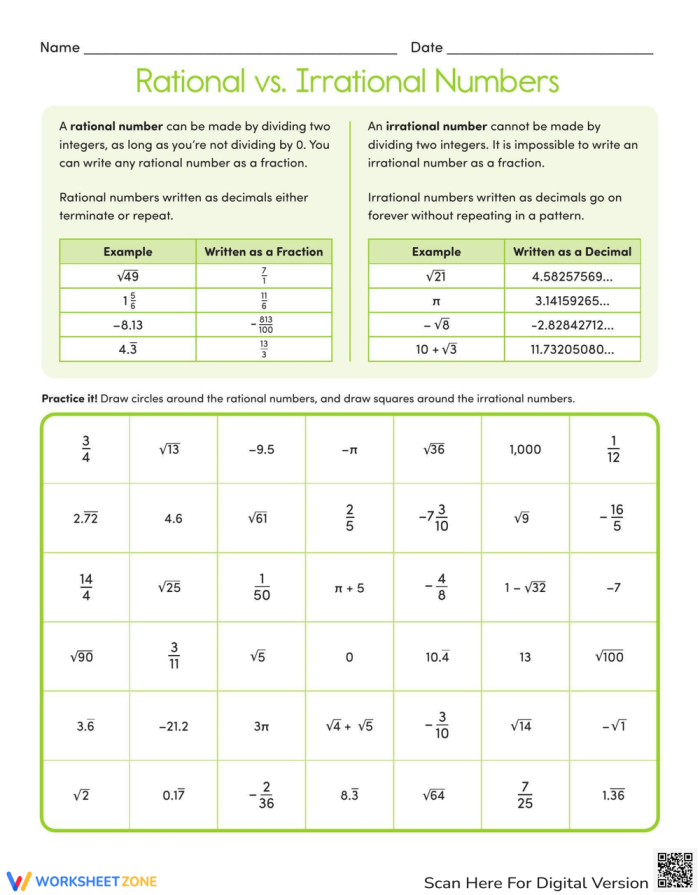
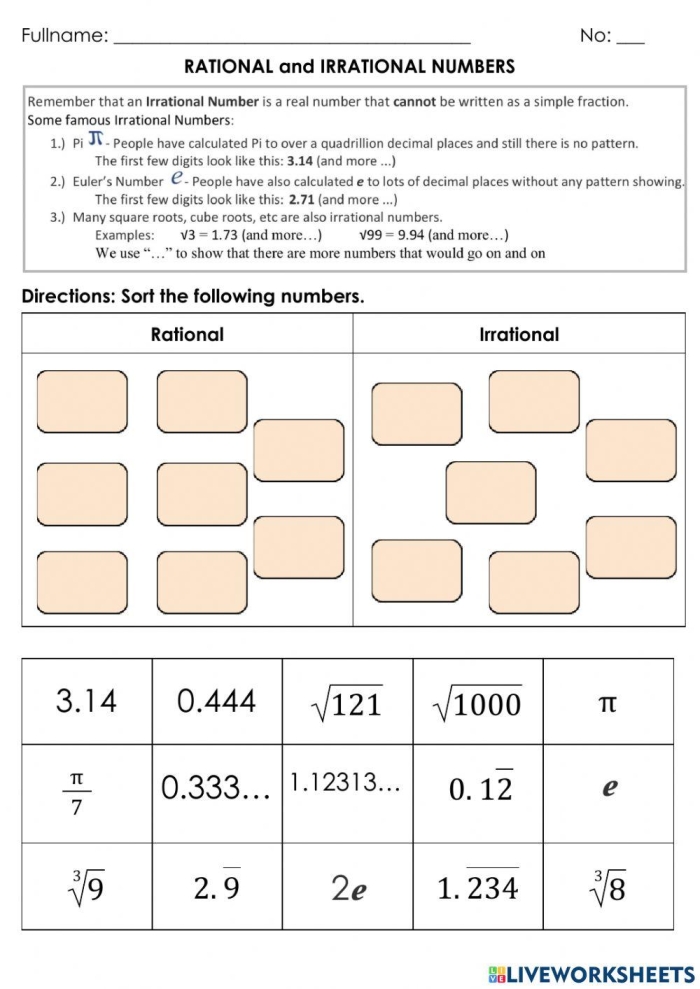
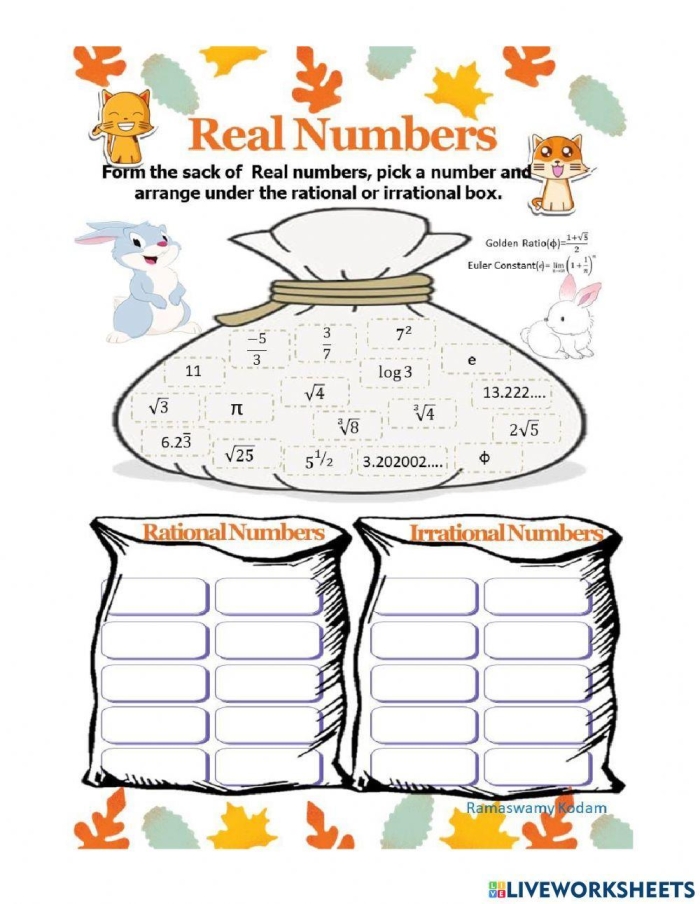
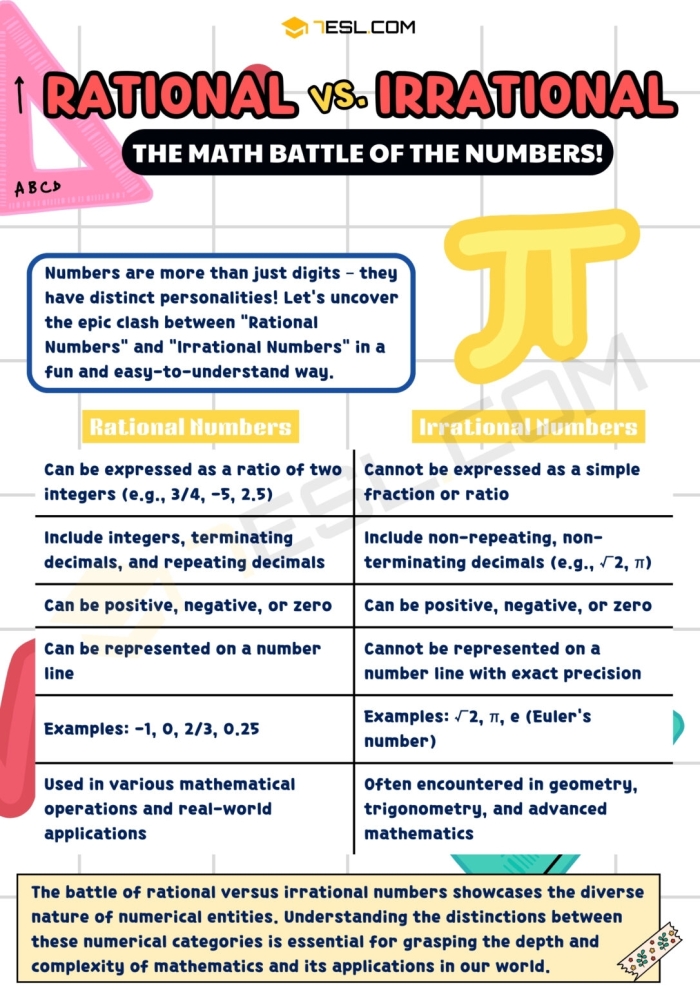
Rational numbers are those that can be expressed as a fraction of two integers, where the denominator is not zero. For instance, numbers like 1/2, 3, and -4.75 fall into this category. On the other hand, irrational numbers cannot be represented as a simple fraction. Examples include the square root of 2 and the number pi (π). These values have non-repeating, non-terminating decimal expansions, which can be perplexing for learners.
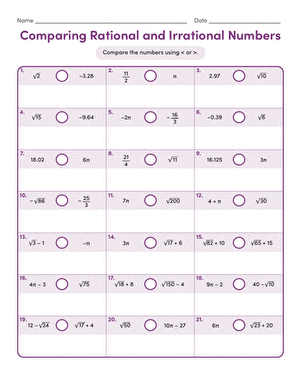
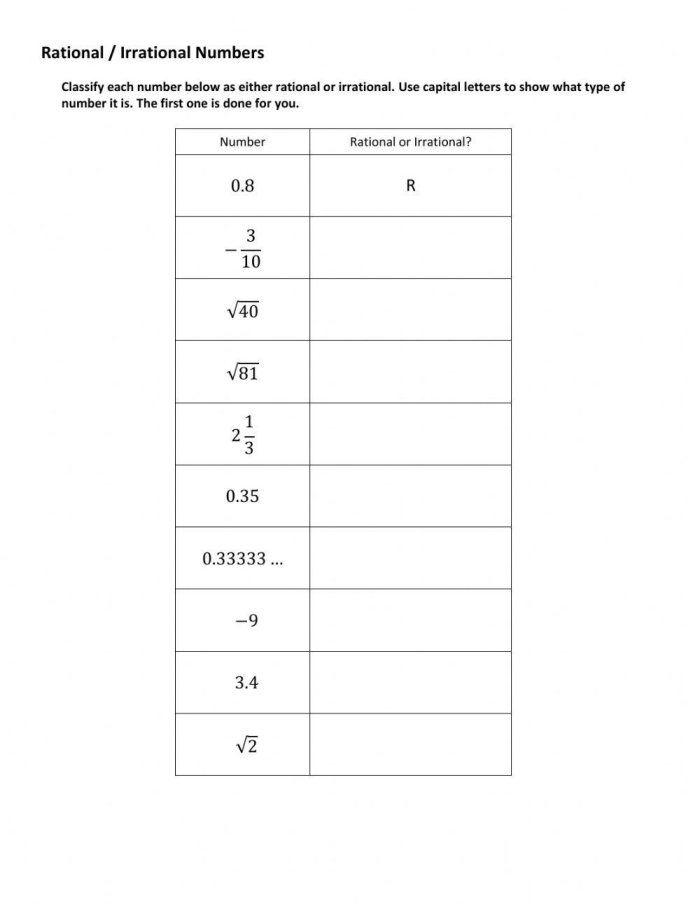
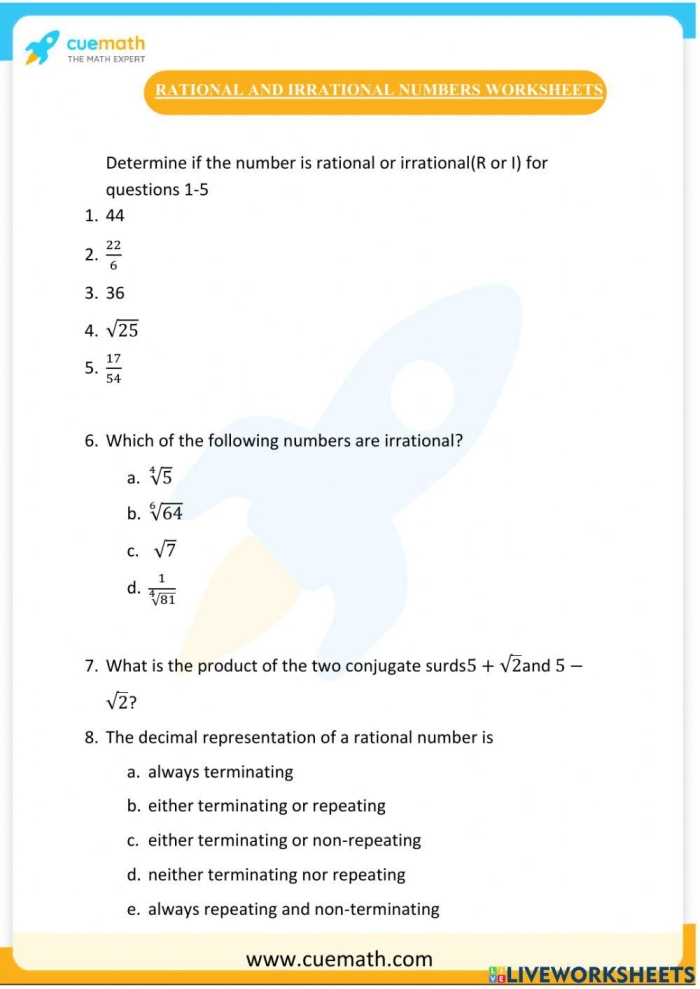
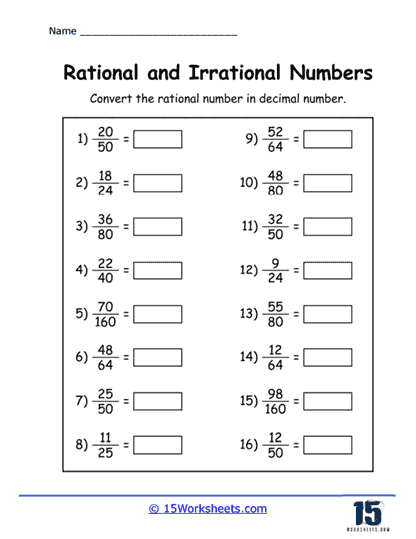
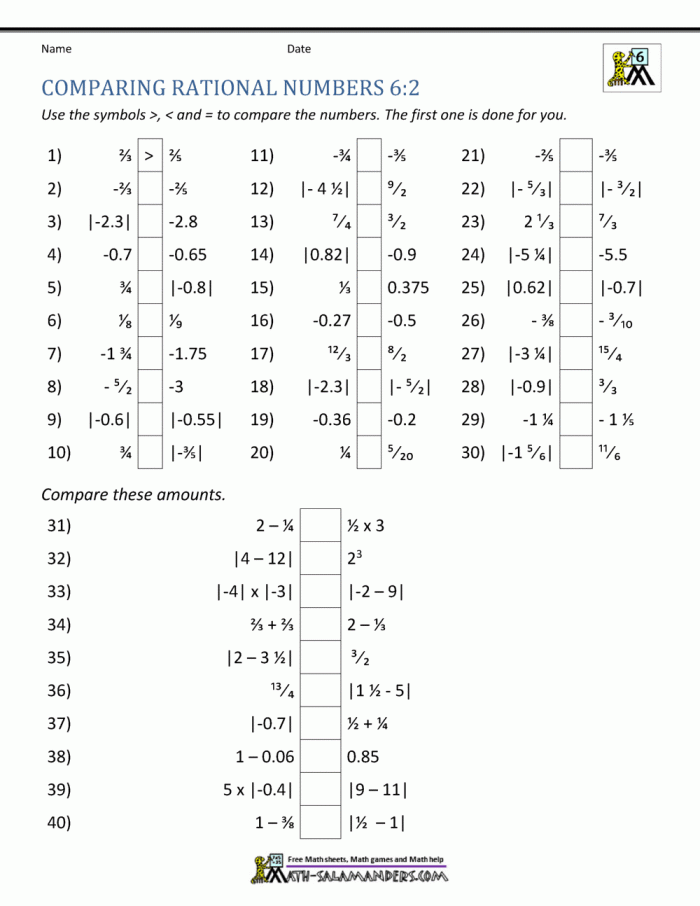
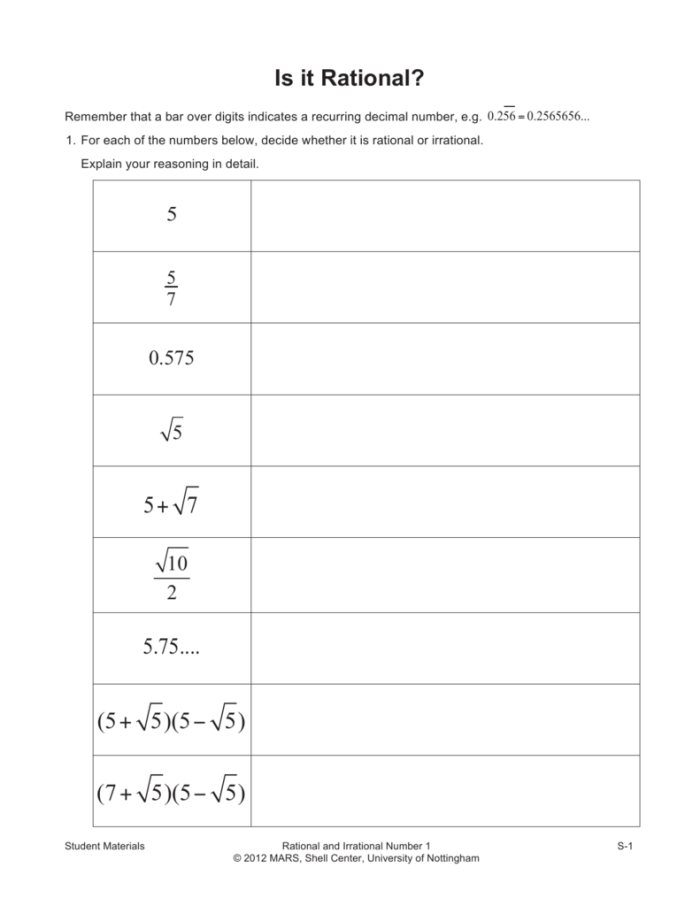
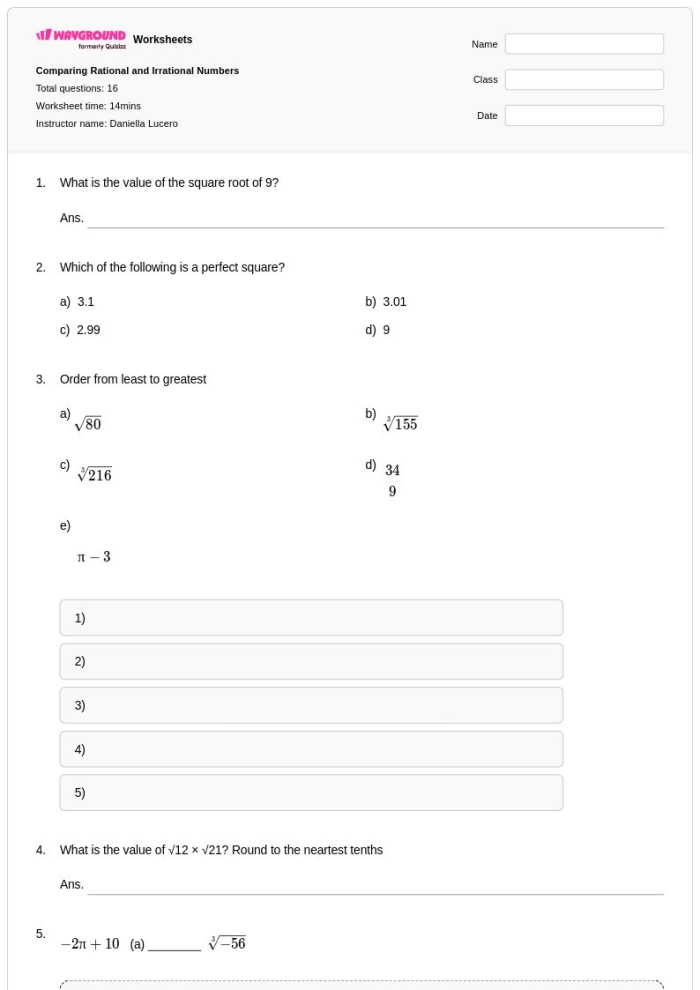
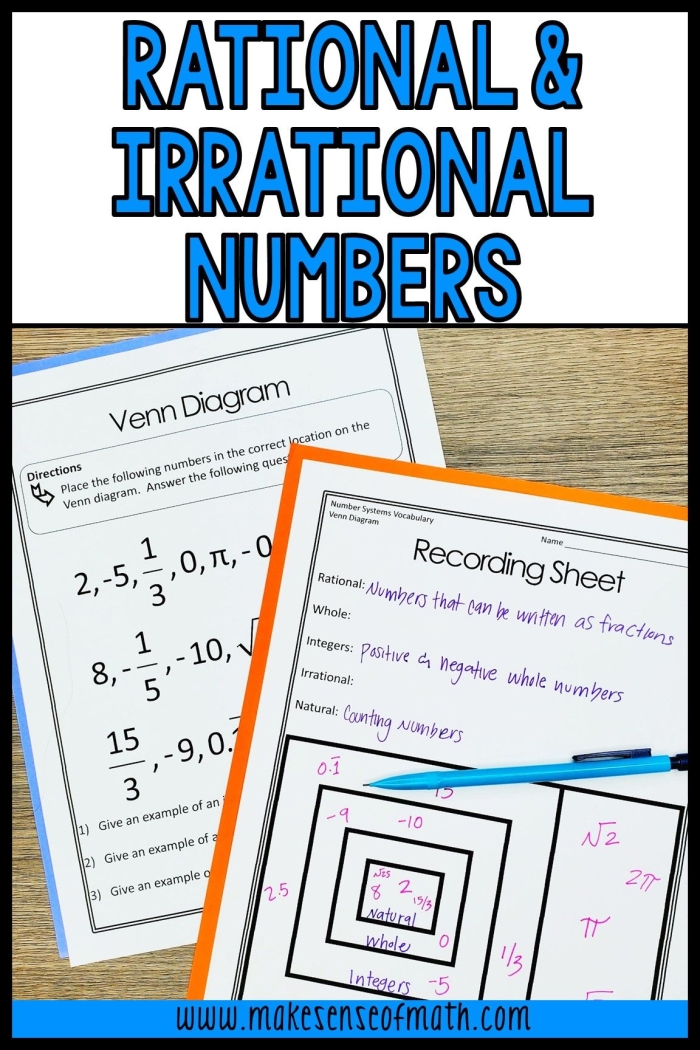
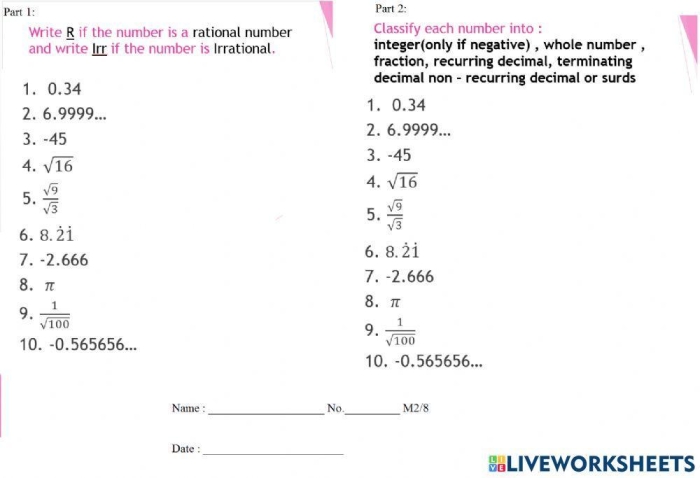
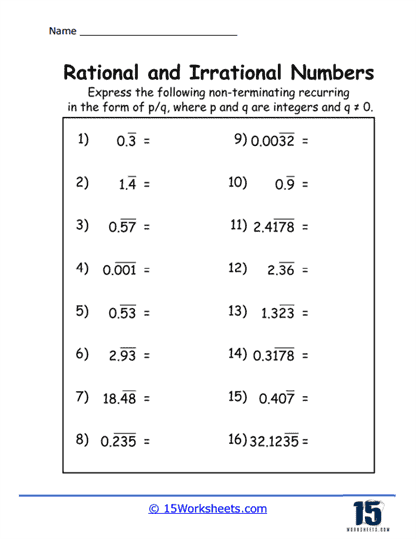
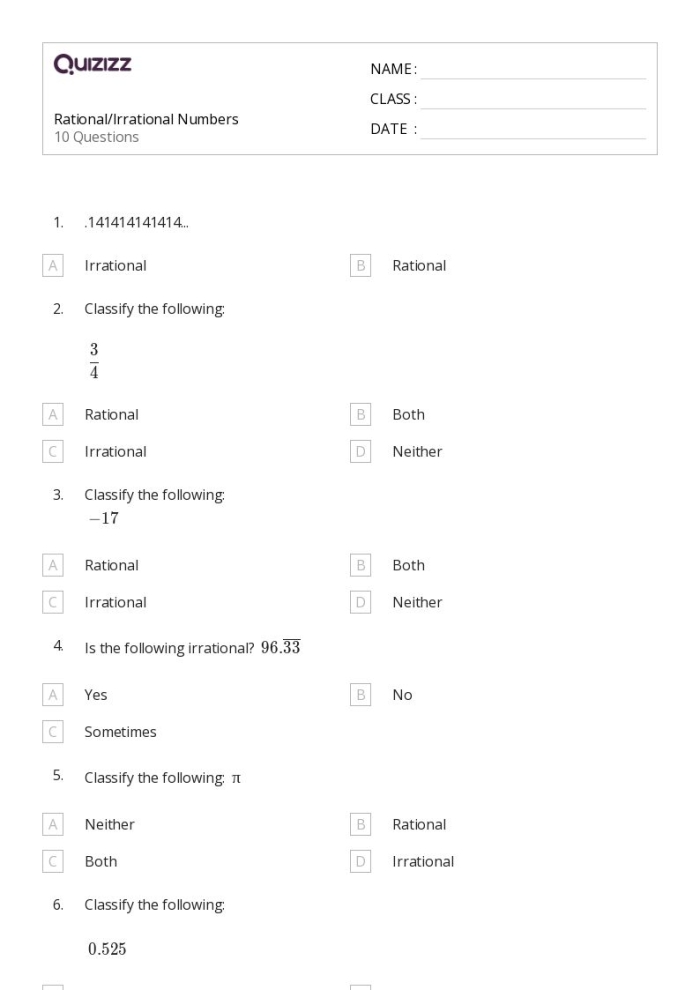
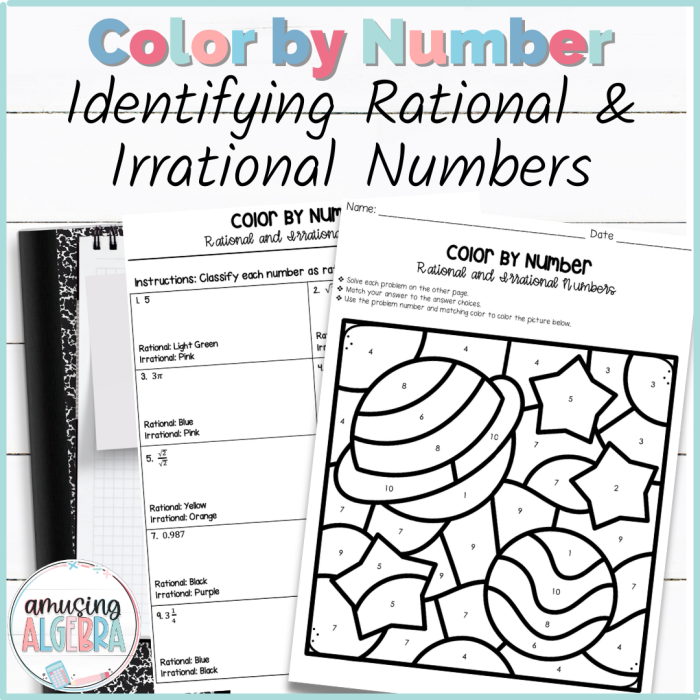
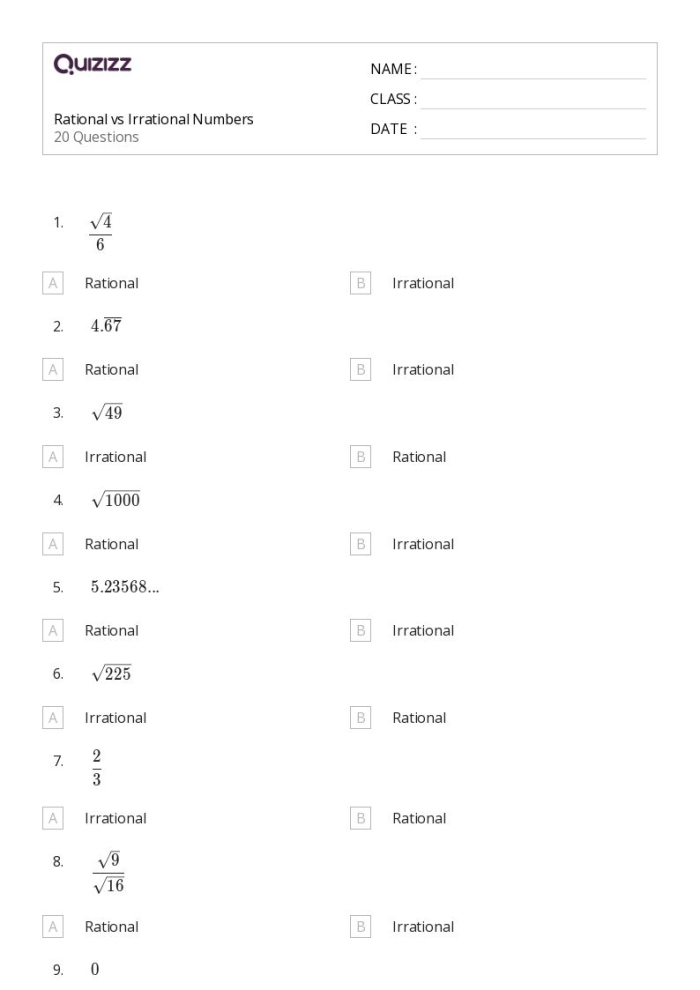
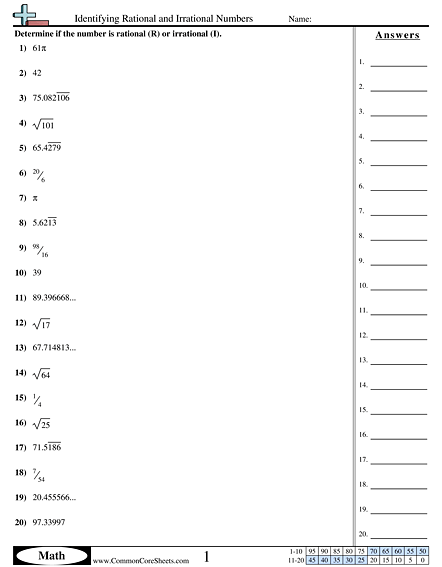
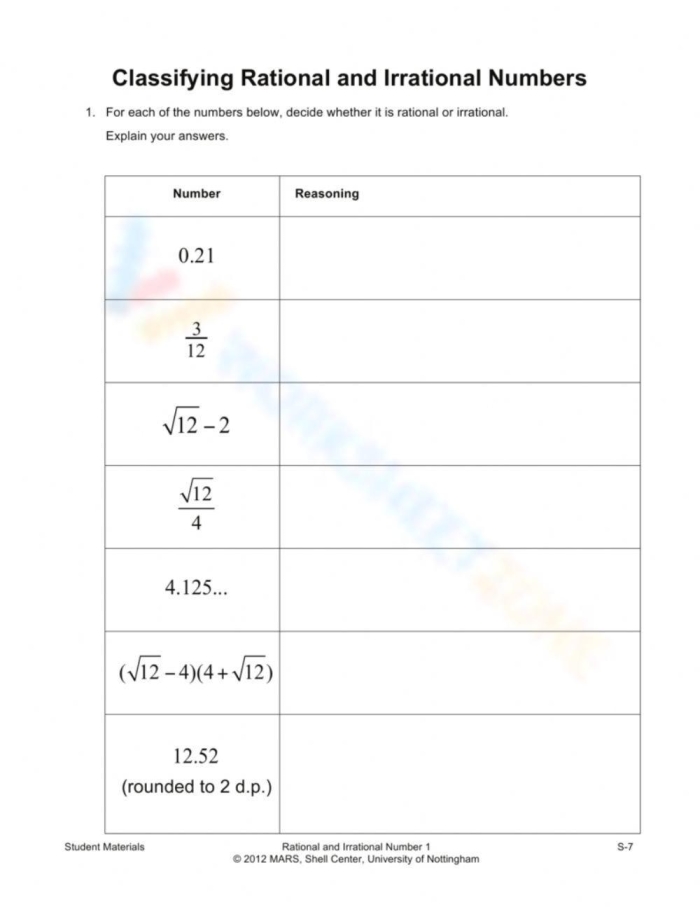
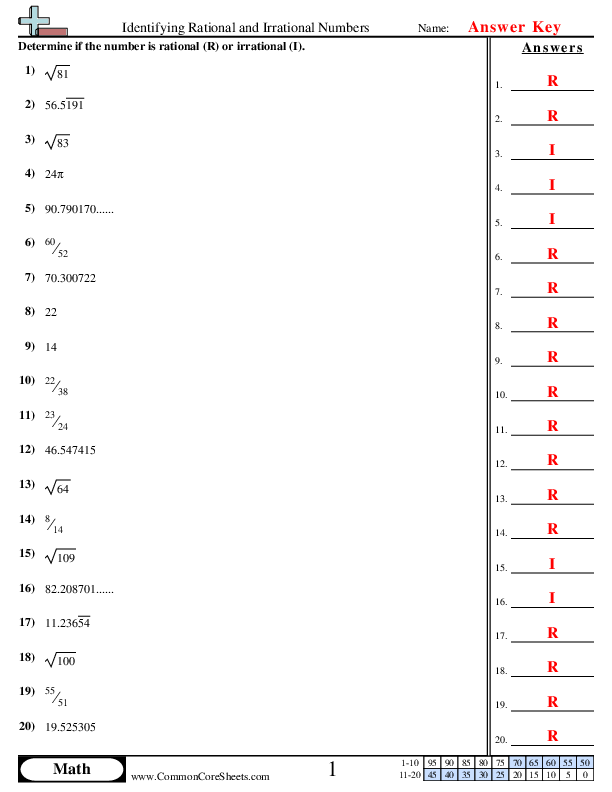
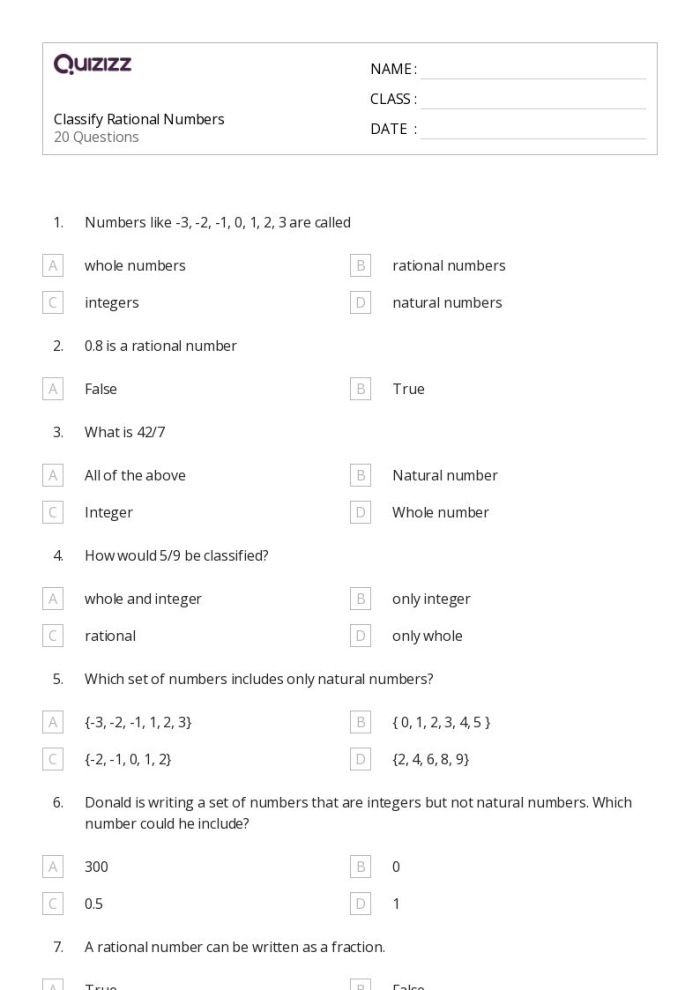
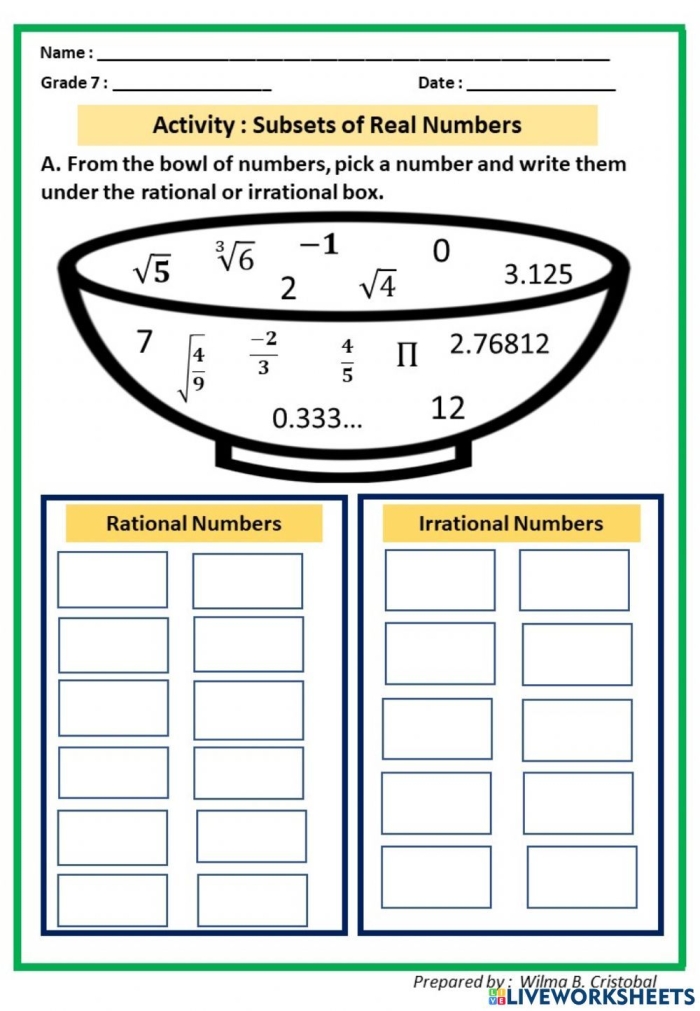
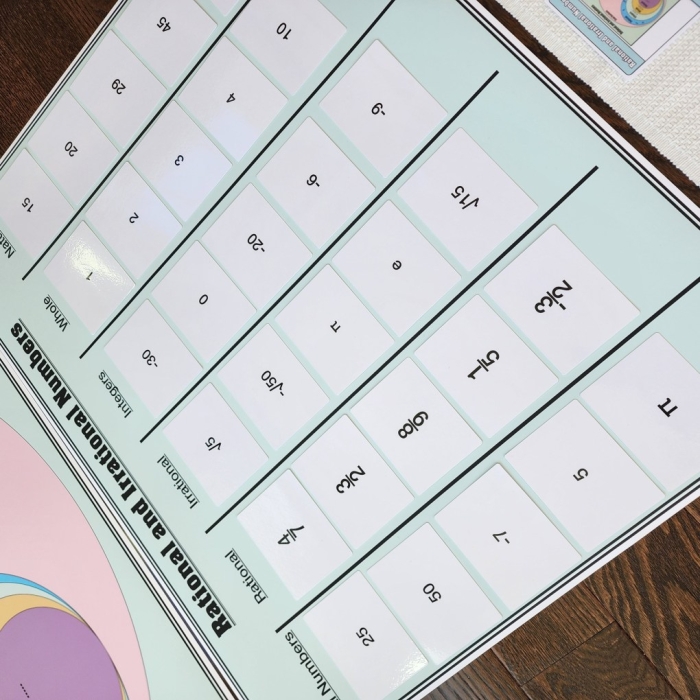
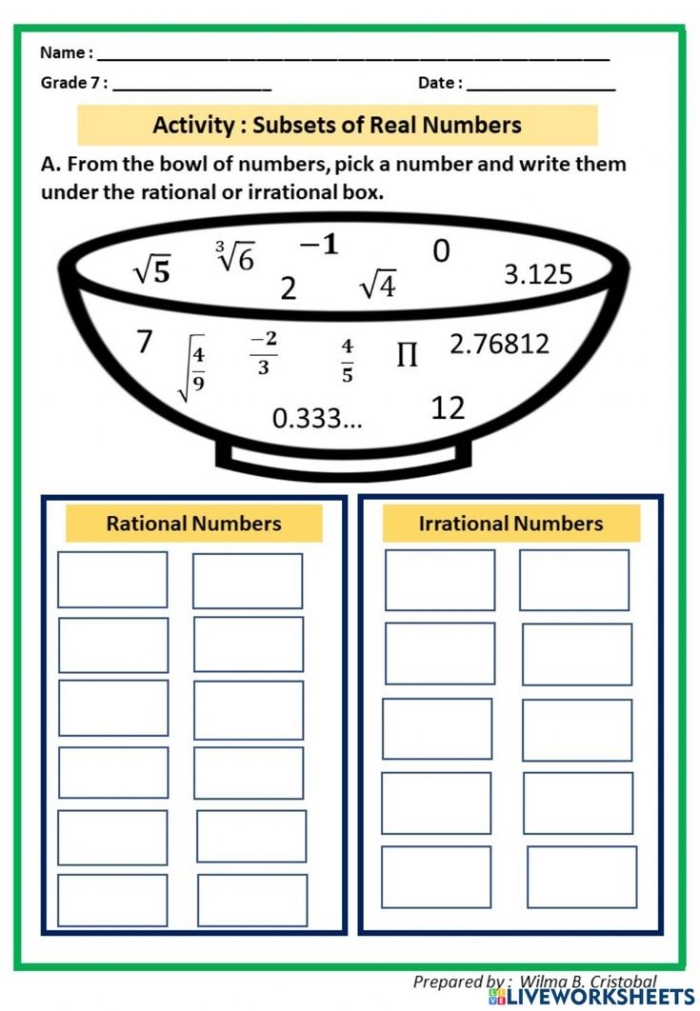
The eighth-grade math worksheet designed for this practice includes various exercises that challenge students to categorize numbers correctly. By engaging with these activities, learners can enhance their understanding and build confidence in identifying rational and irrational numbers. This practice not only prepares them for future math topics but also sharpens their analytical skills, which are invaluable in various aspects of life.
One useful aspect of the worksheet is its inclusion of real-world contexts where rational and irrational numbers appear. For instance, when measuring dimensions in geometry or calculating the area of a circle, students can see these concepts in action. Such connections make the learning experience more relatable and meaningful.
For those looking for additional resources, worksheets on graphing proportional relationships or calculating the volume of cones can complement the practice on rational and irrational numbers. These materials provide a comprehensive approach to eighth-grade math, ensuring that students get a well-rounded education.
As learners tackle these concepts through worksheets, they not only prepare for tests but also develop a deeper appreciation for mathematics as a whole. This understanding will serve them well in high school and beyond.
Hands-On Worksheet Activities