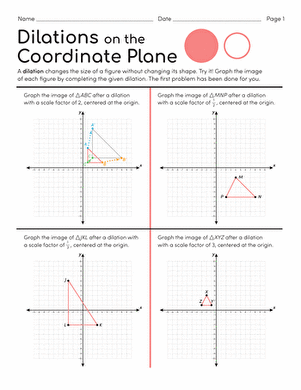
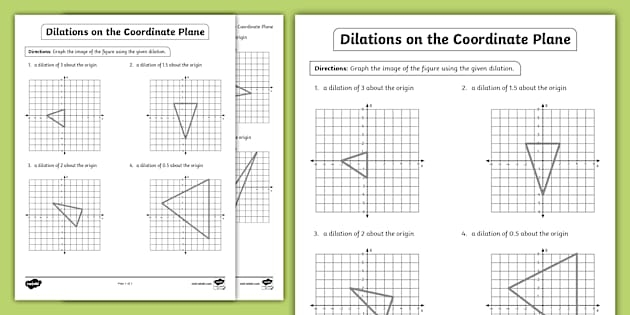
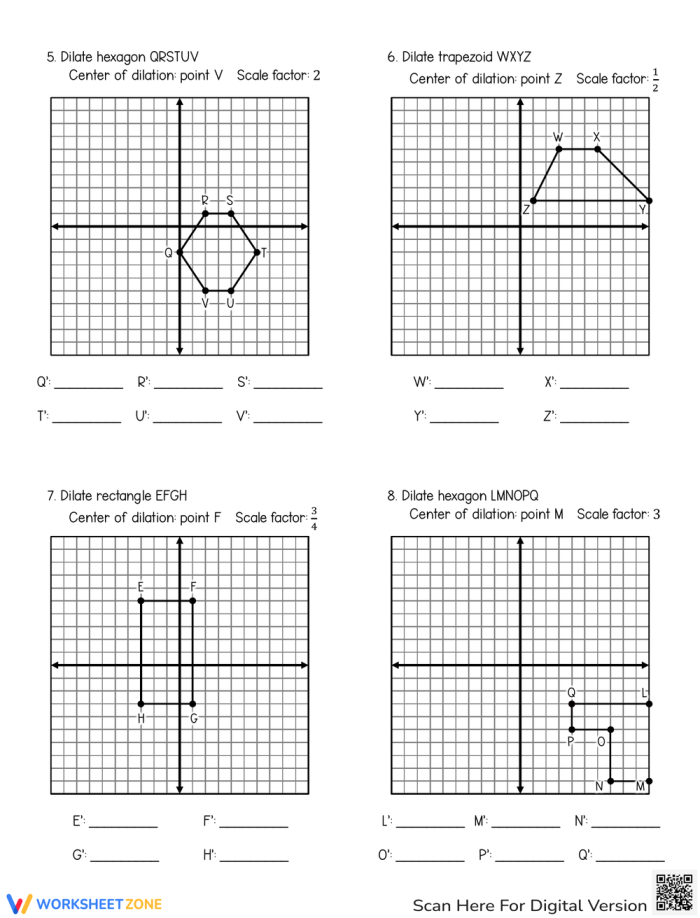
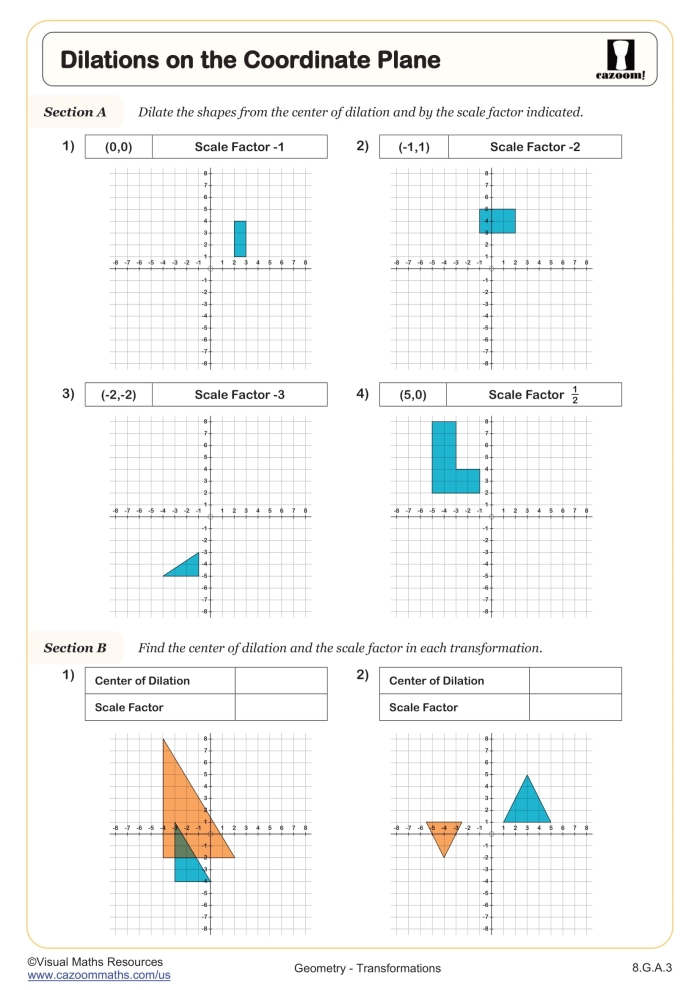
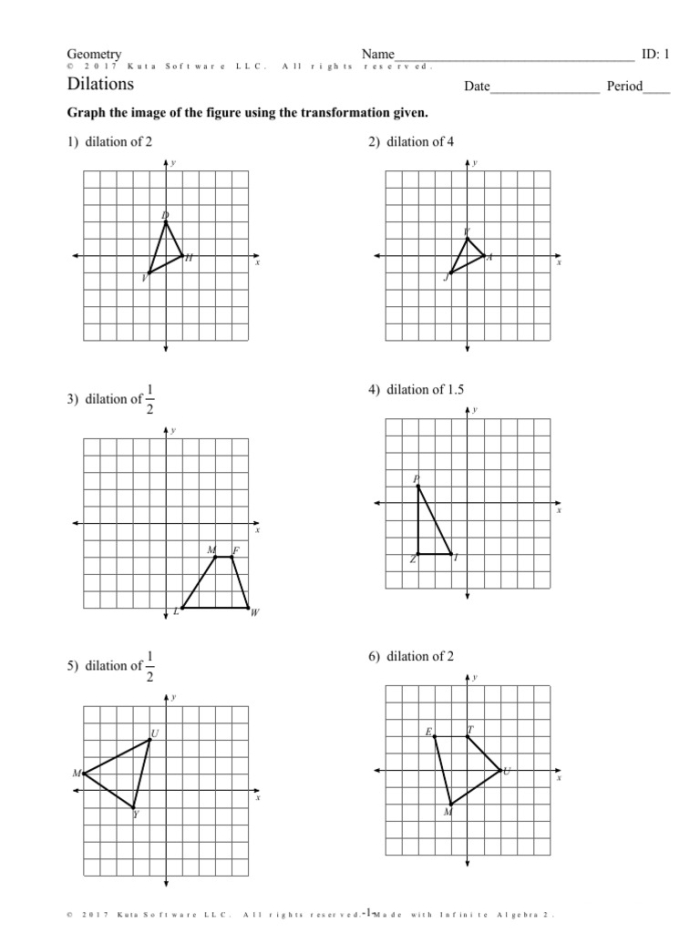
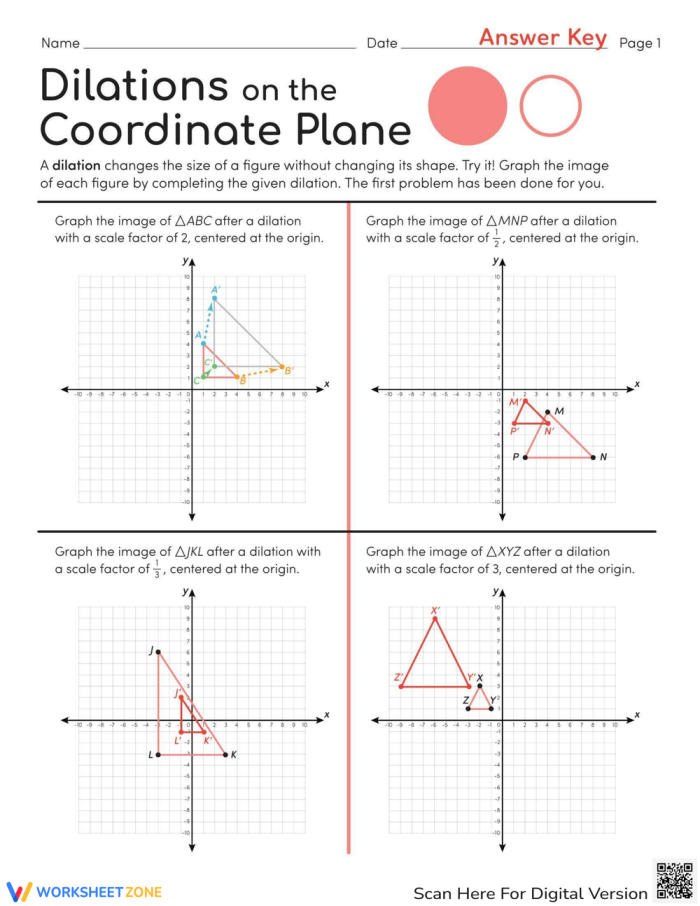
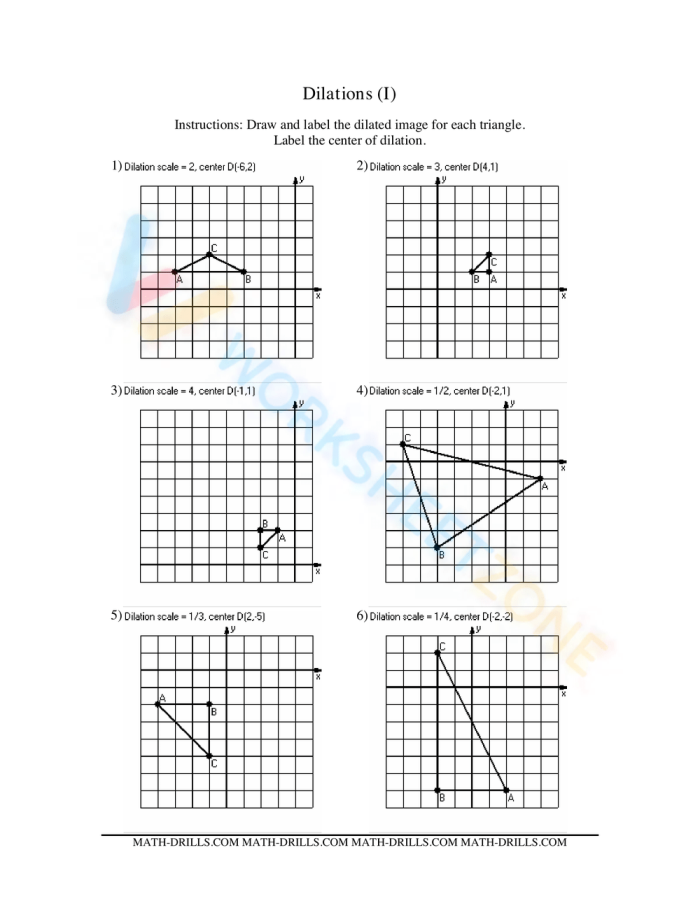
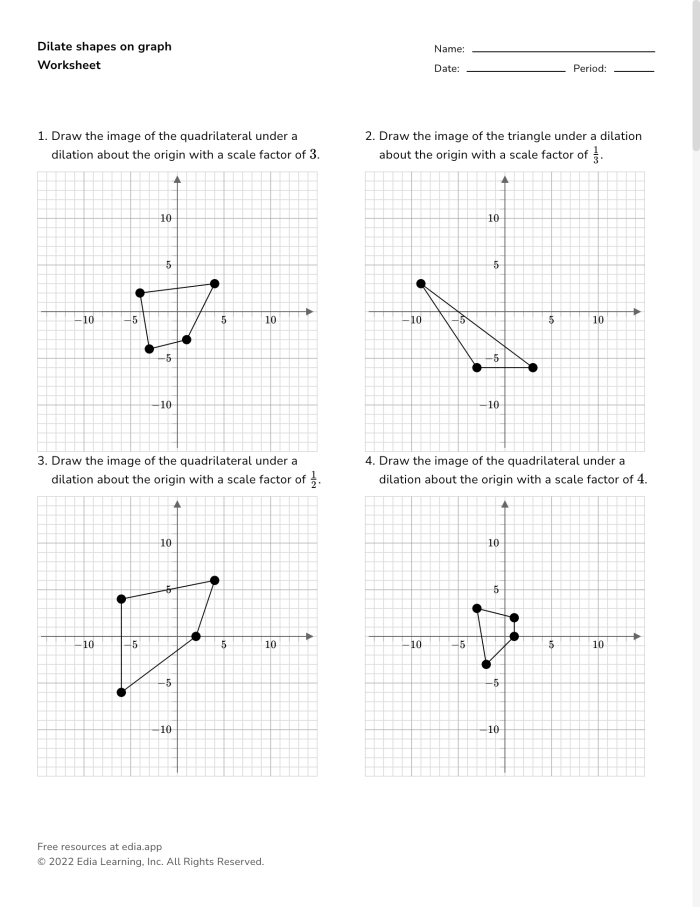
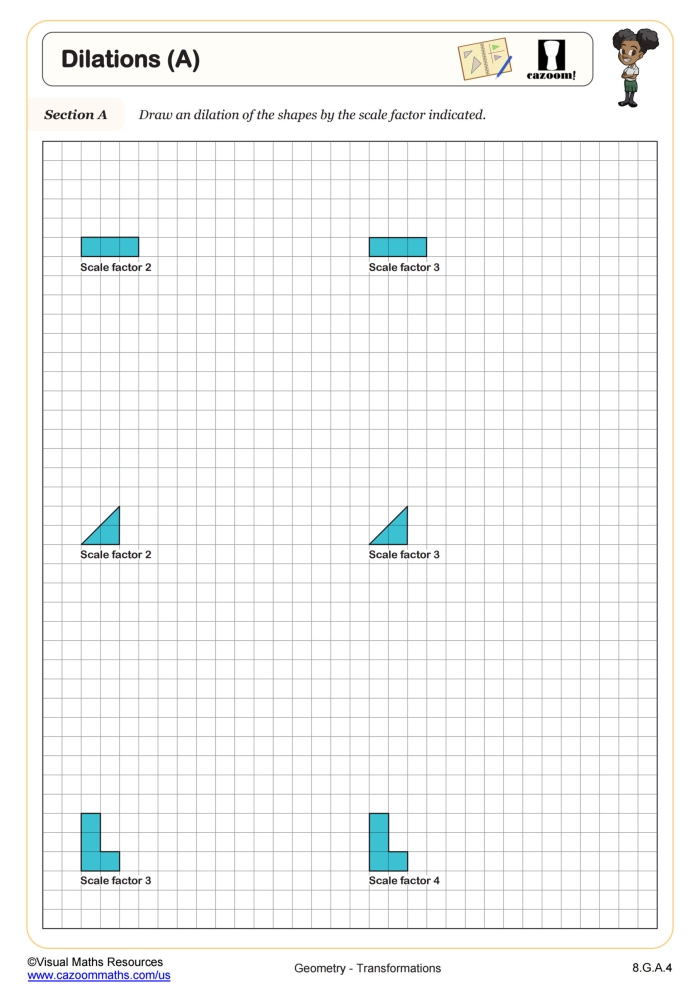
When eighth grade students first encounter dilations on the coordinate plane, they’re stepping into one of geometry’s most visual and intuitive concepts. A dilation is essentially a transformation that enlarges or reduces a figure while keeping its shape intact, and when that transformation centers at the origin, the mathematics becomes surprisingly clean and manageable.
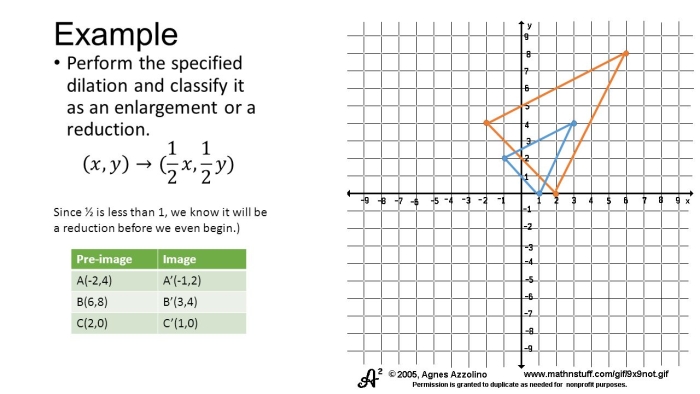
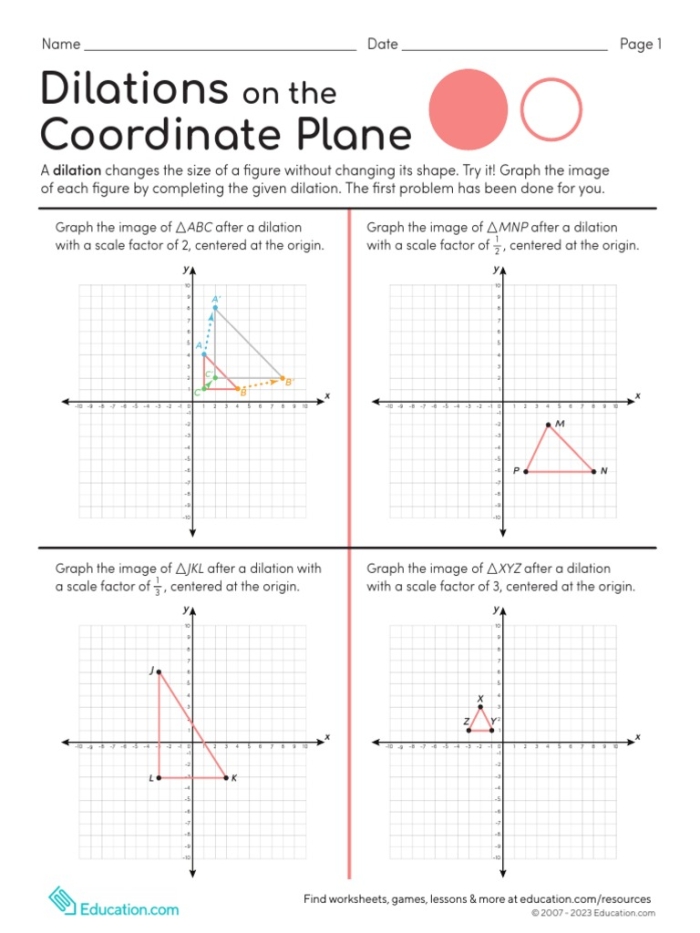
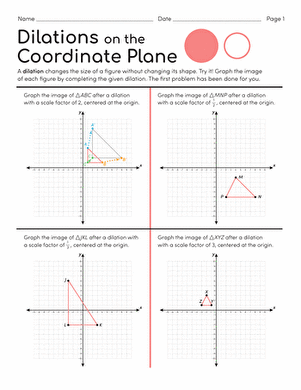
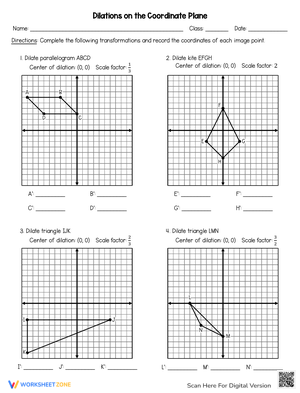
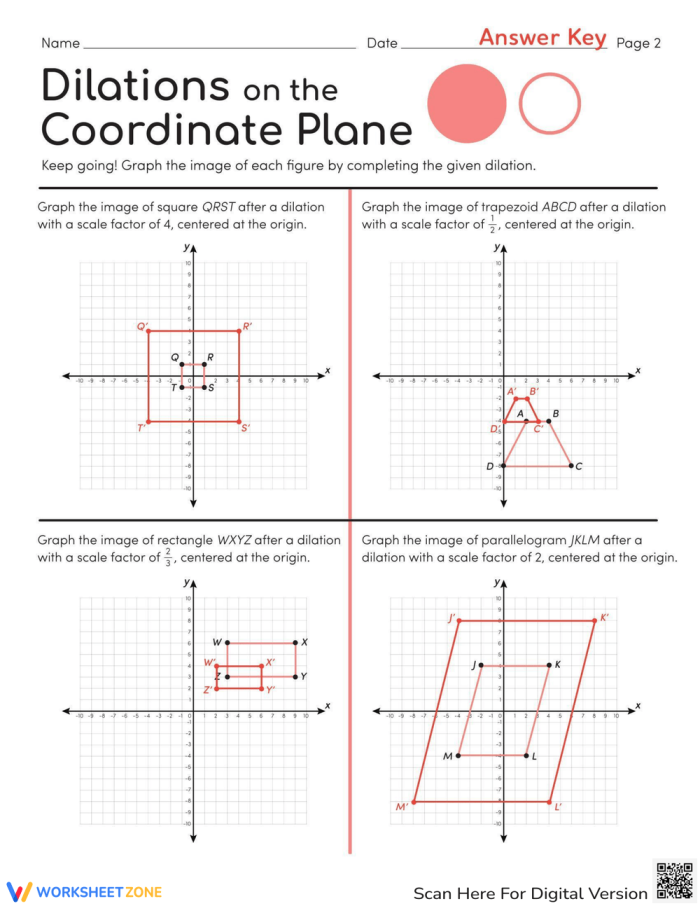
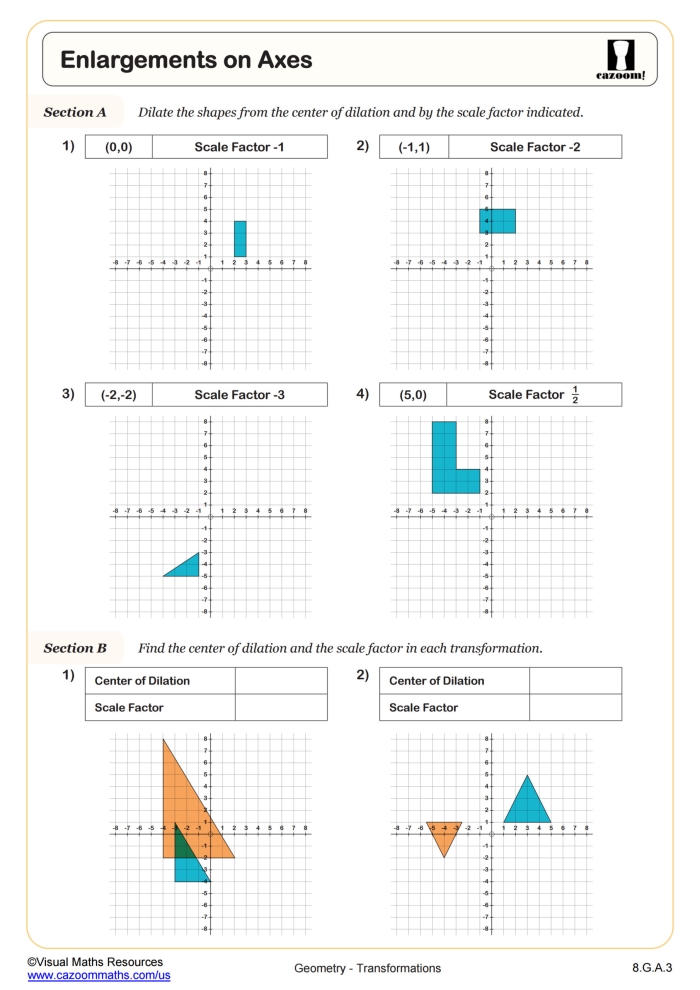
The core skill students develop in this unit involves taking a figure already plotted on a coordinate plane and applying a scale factor to create its image. If a point sits at (2, 3) and the scale factor is 2, the dilated point moves to (4, 6). Every coordinate gets multiplied by that same scale factor. This consistency makes the process predictable once students grasp the pattern.
What makes this topic particularly useful for eighth grade learners is how it bridges abstract algebra with concrete visual representation. Students aren’t just calculating new coordinates; they’re watching shapes grow or shrink right before their eyes on graph paper. A triangle becomes a larger triangle. A rectangle stays proportional but takes up more space. The angles never change, only the distances from the origin shift by the scale factor.
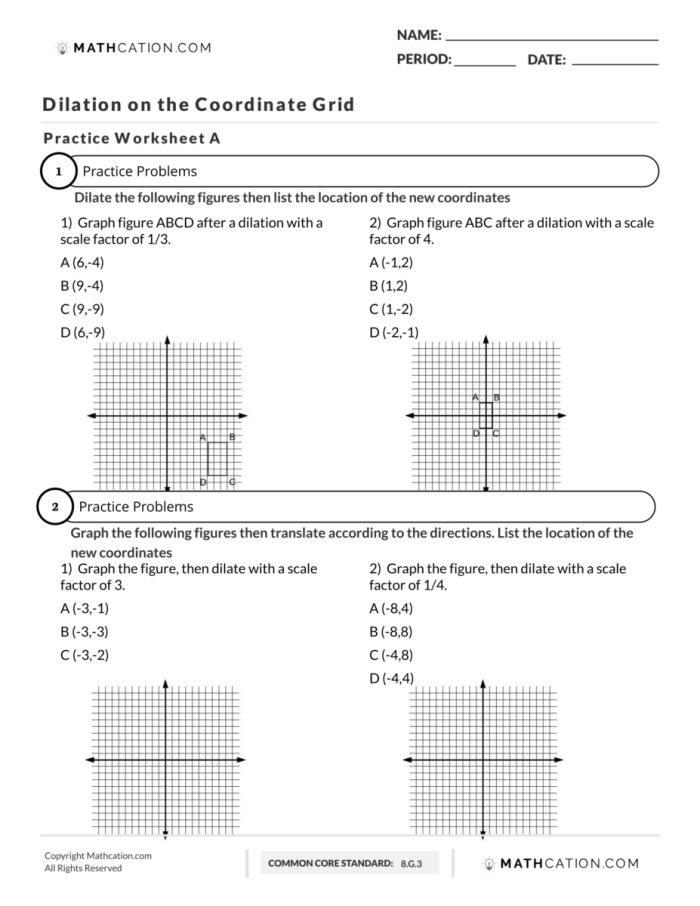
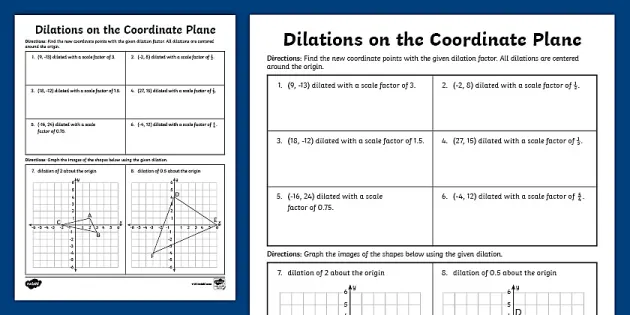
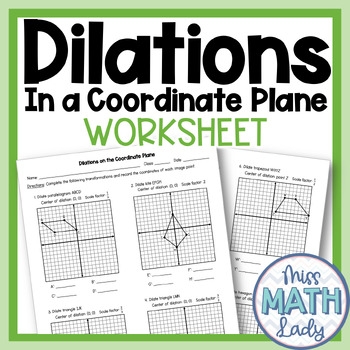
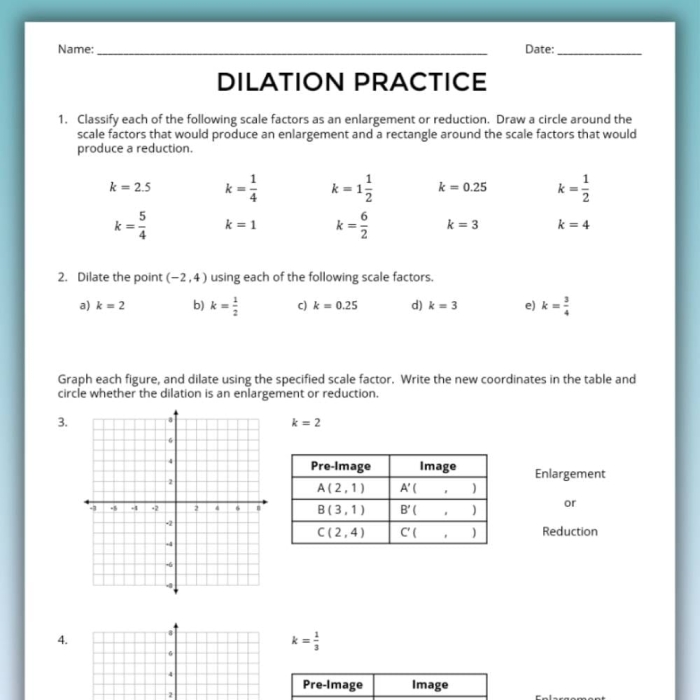
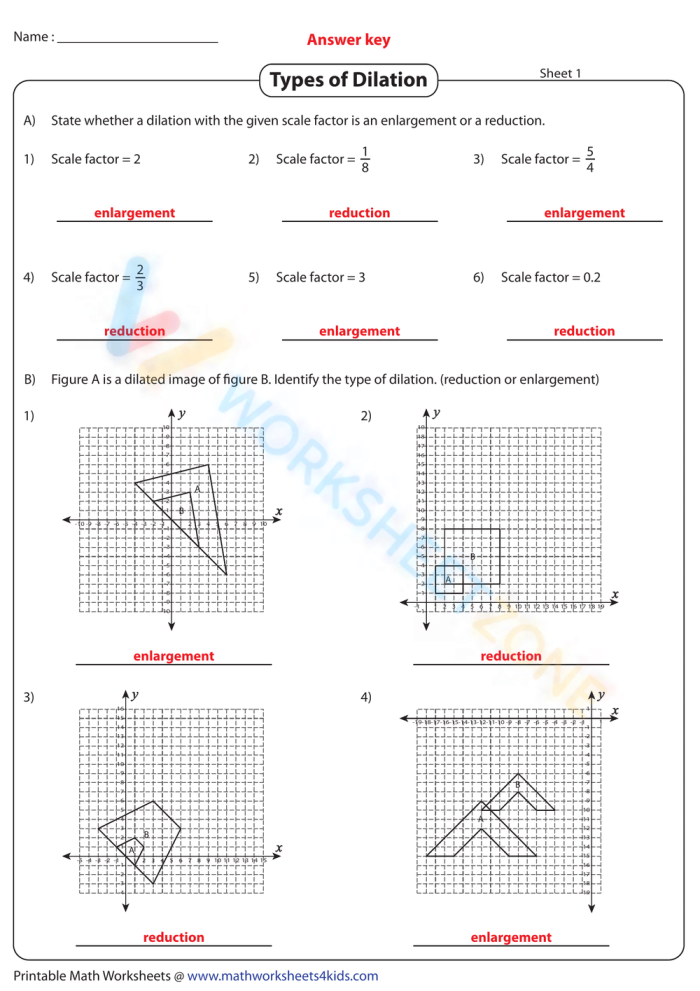
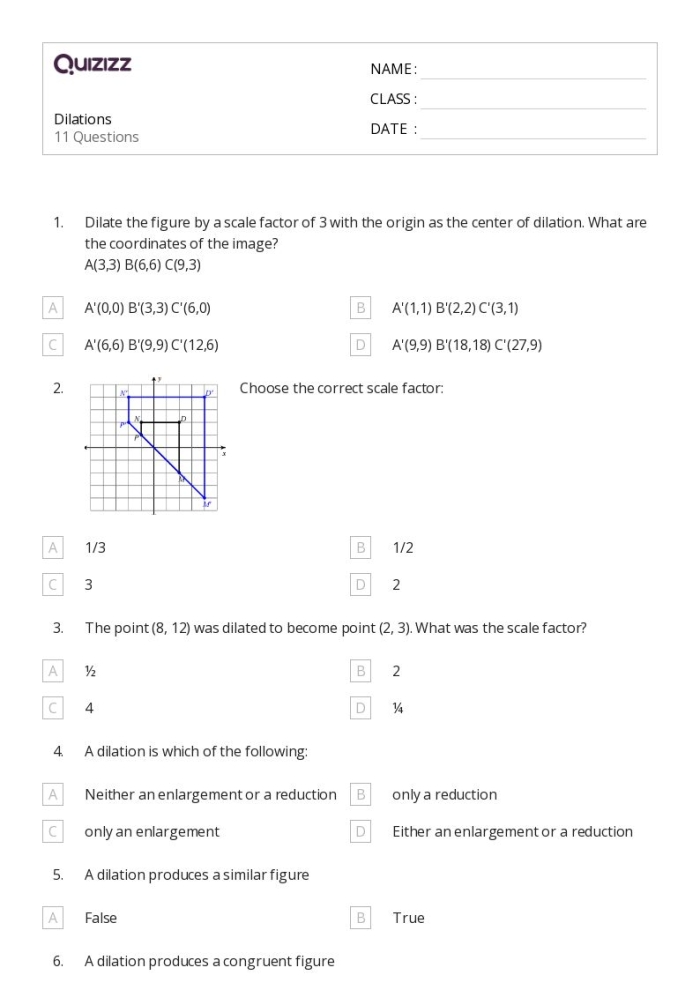
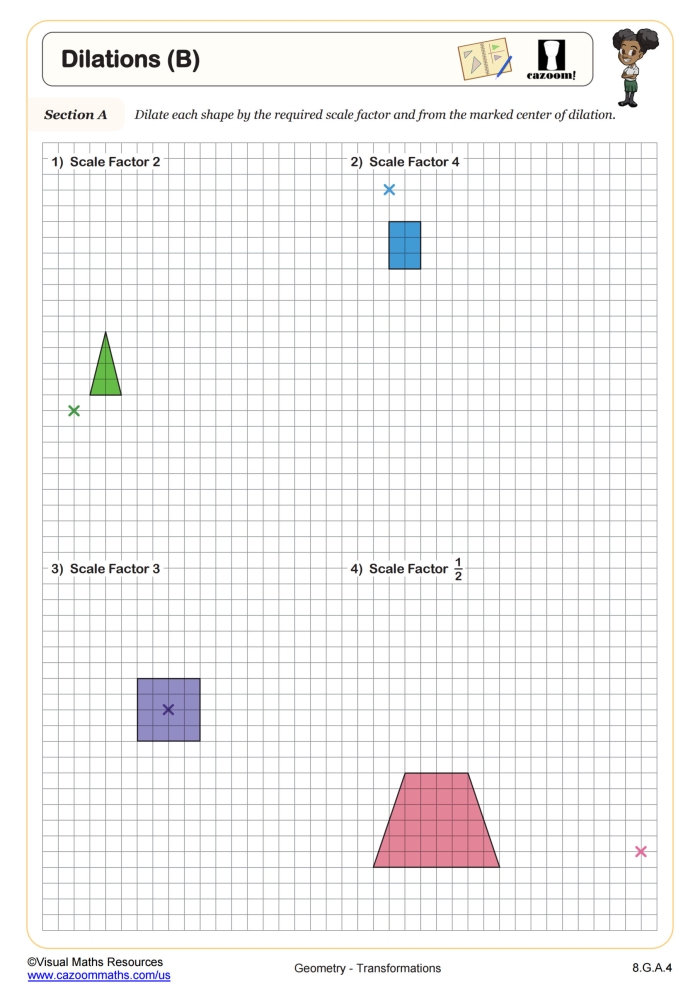
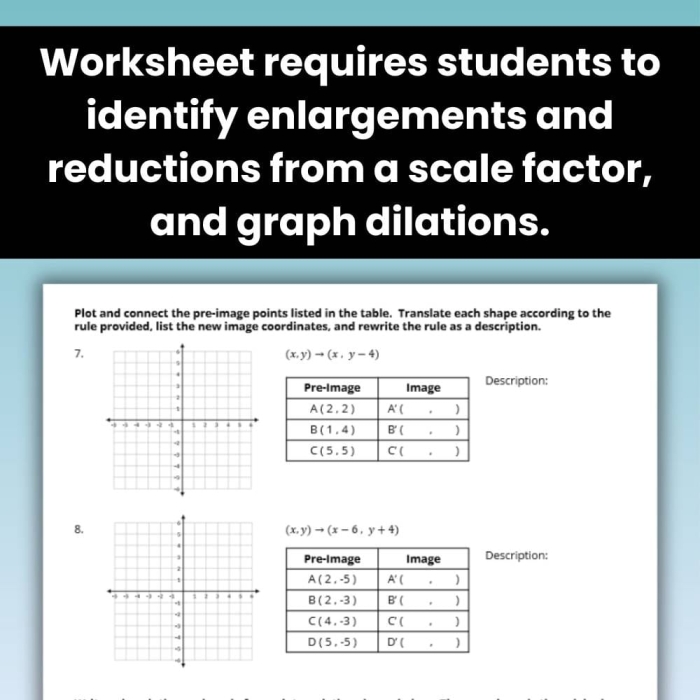
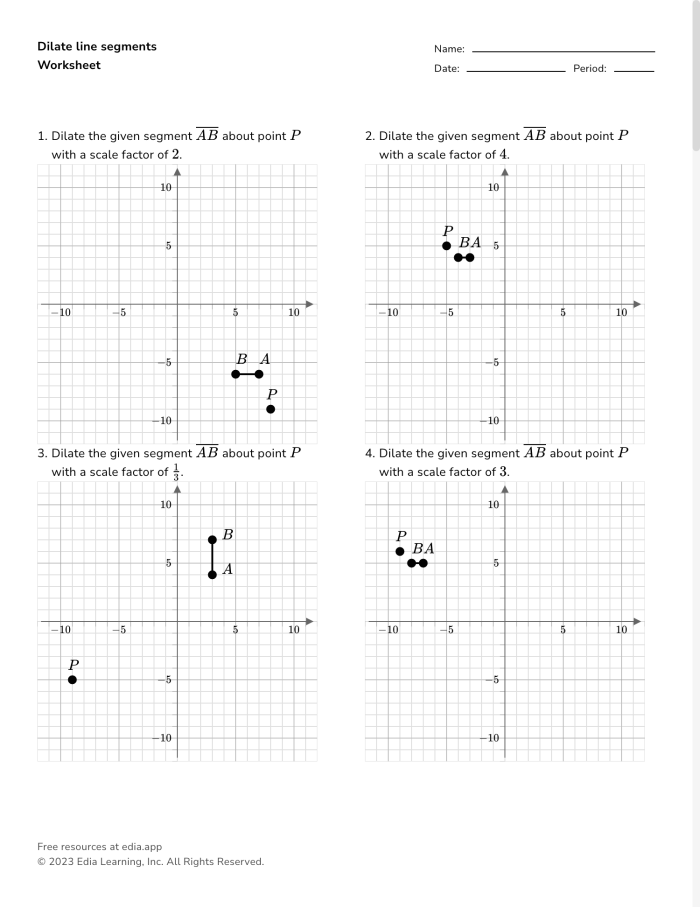
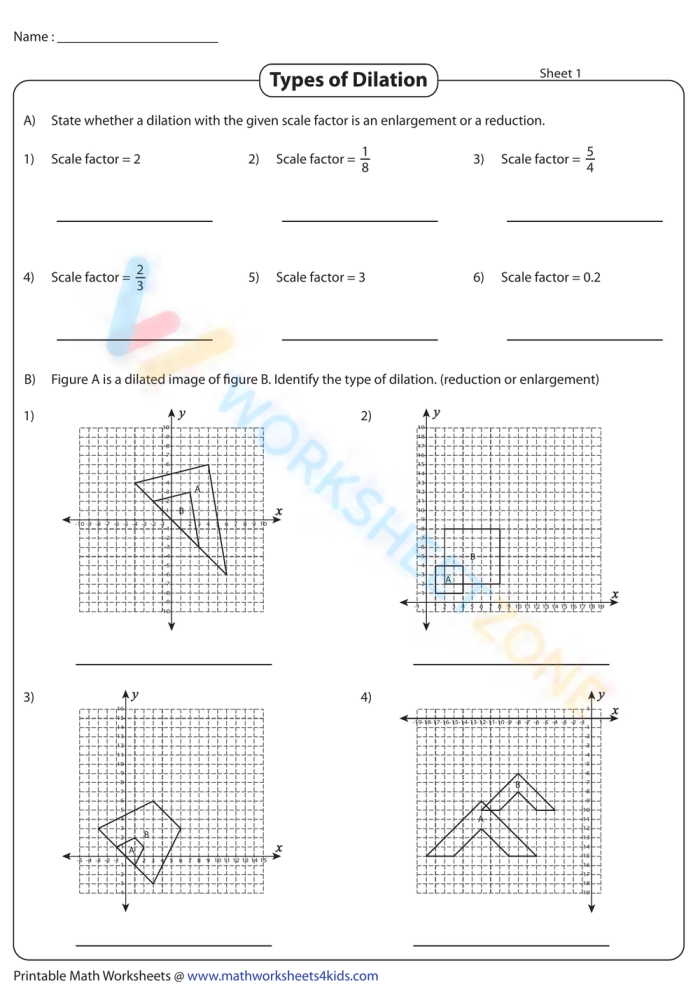
Practicing with printable dilations on the coordinate plane worksheets gives students the repetition needed to internalize this transformation. They work through multiple figures, trying different scale factors, both greater than one (enlargements) and between zero and one (reductions). This hands-on practice solidifies their understanding faster than lecture alone.
Students also benefit from seeing how dilations connect to other mathematical topics. Understanding scale factors here prepares them for similar figures and proportional reasoning. Teachers often pair dilation practice with work on multi-step equations to reinforce algebraic thinking across different contexts.
Try These Printable Worksheets