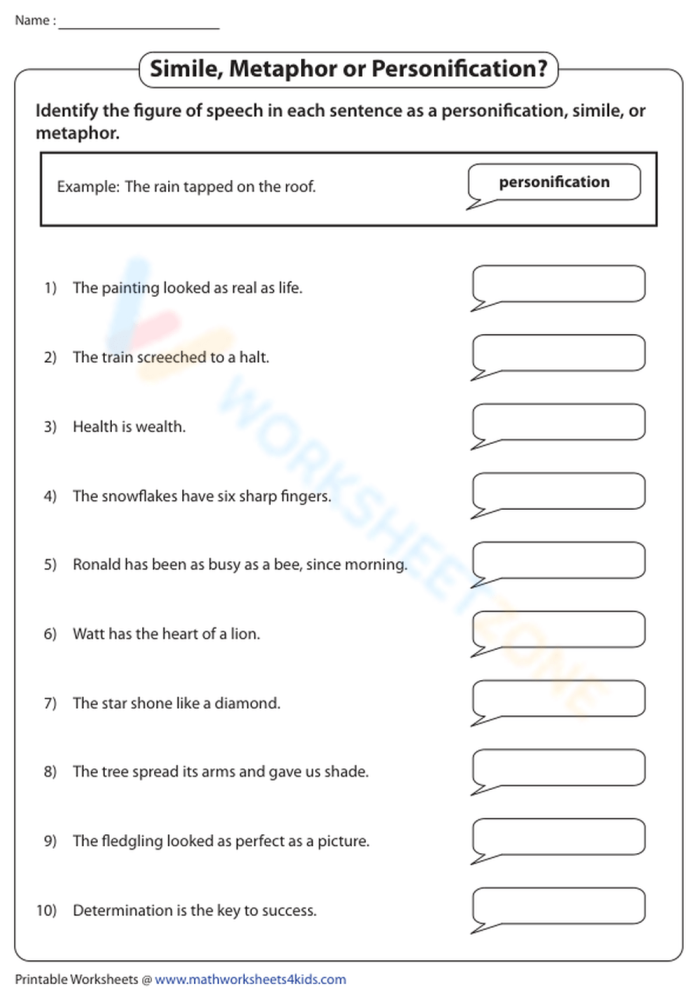
Most second grade students mix up similes and metaphors without realizing they’re using different tools to paint pictures with words. The confusion makes sense because both comparisons describe one thing by relating it to another. But once you spot the key difference, you’ll see how each one works in its own way.
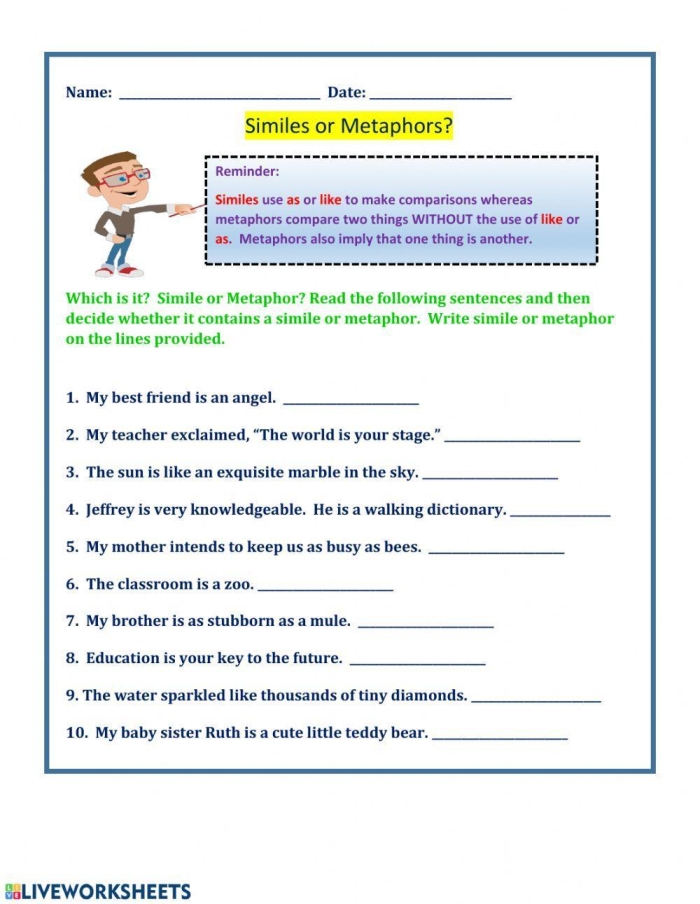
A simile uses “like” or “as” to make a comparison. When you say “Her smile is like sunshine,” you’re creating a simile. The word “like” signals that you’re comparing two things without saying one actually becomes the other. The smile stays a smile, but it reminds us of how warm and bright sunshine feels. Similes are gentler comparisons that acknowledge the difference between what you’re describing and what you’re comparing it to.
A metaphor drops the “like” or “as” entirely. Instead, it claims one thing actually is another thing. “Her smile is sunshine” works as a metaphor because you’re saying the smile literally becomes sunshine in meaning and feeling. Metaphors create a stronger, more direct connection between two ideas. They’re bolder statements that ask readers to accept the comparison without any cushioning words.
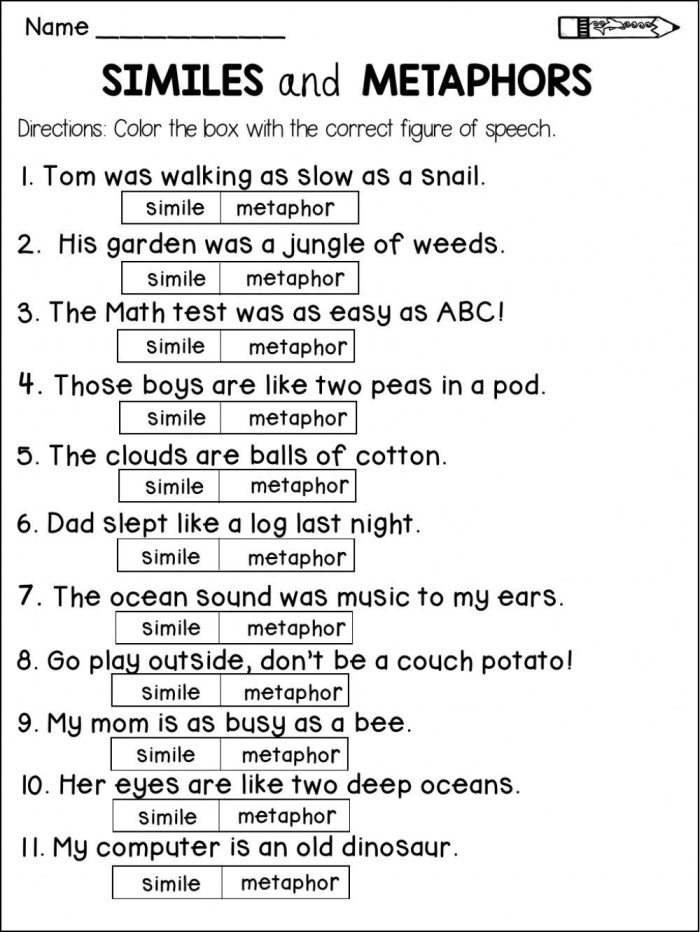
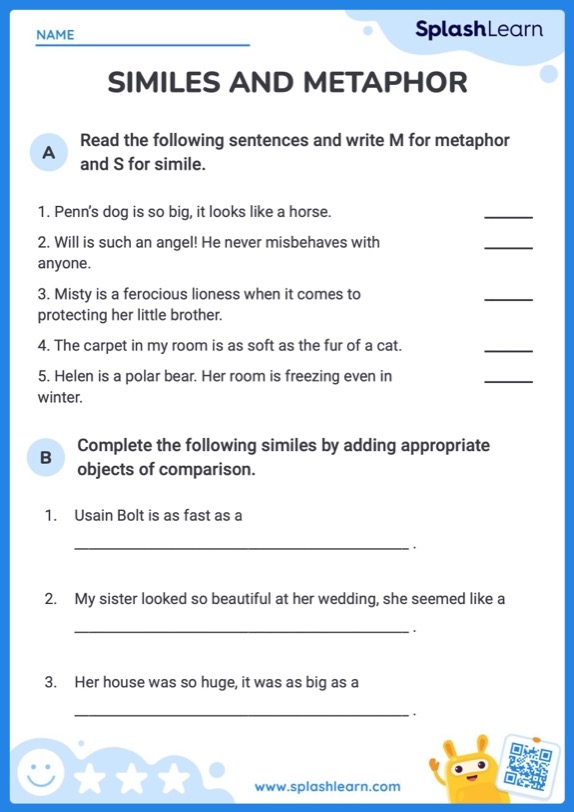
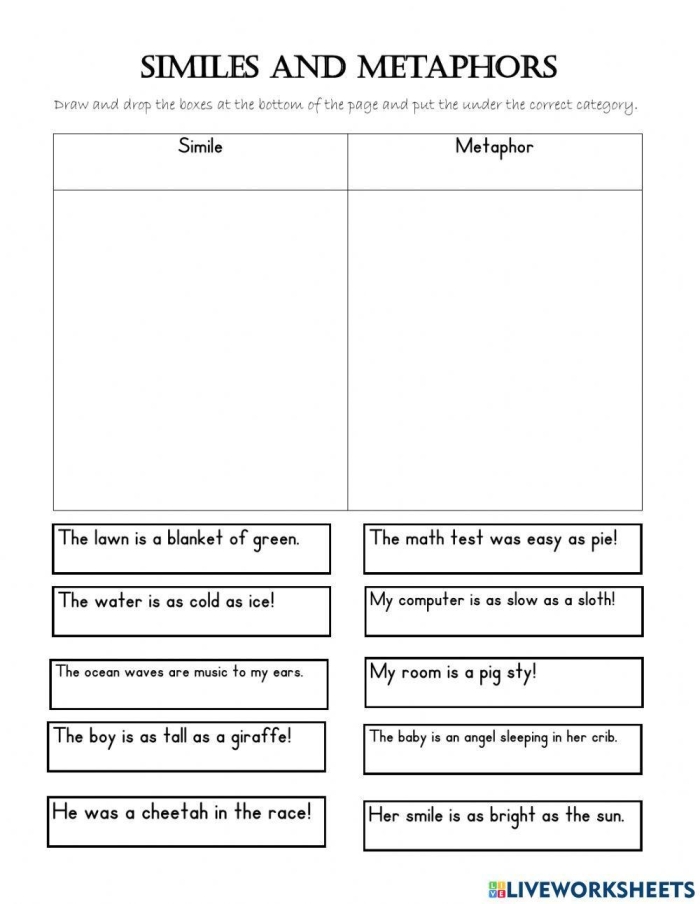
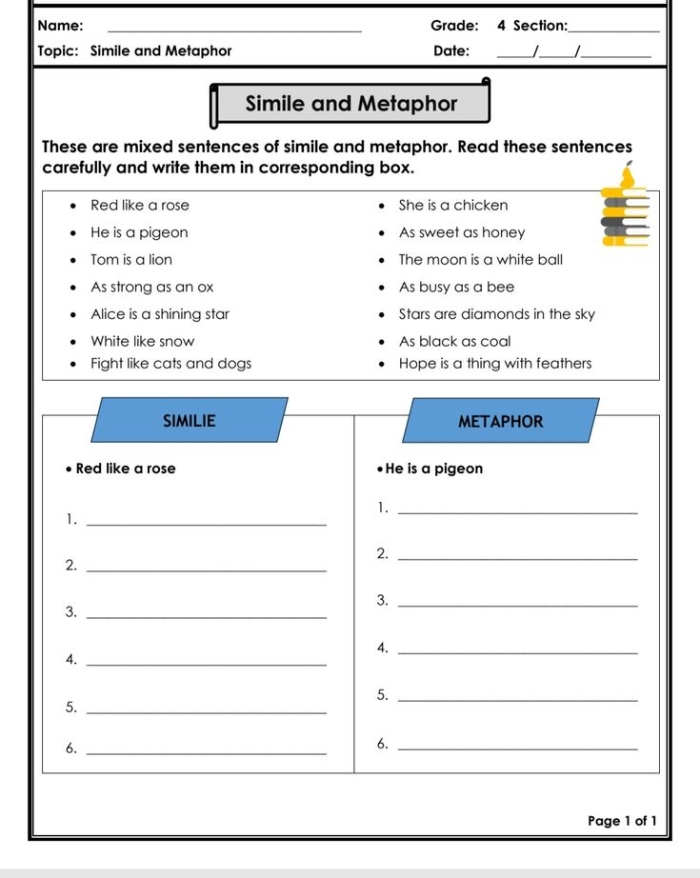
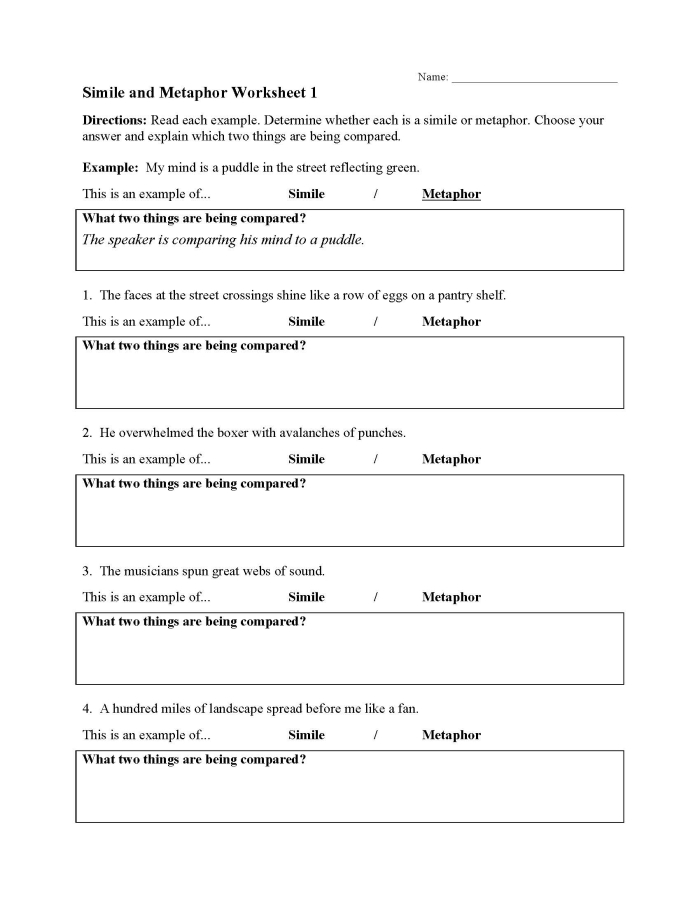
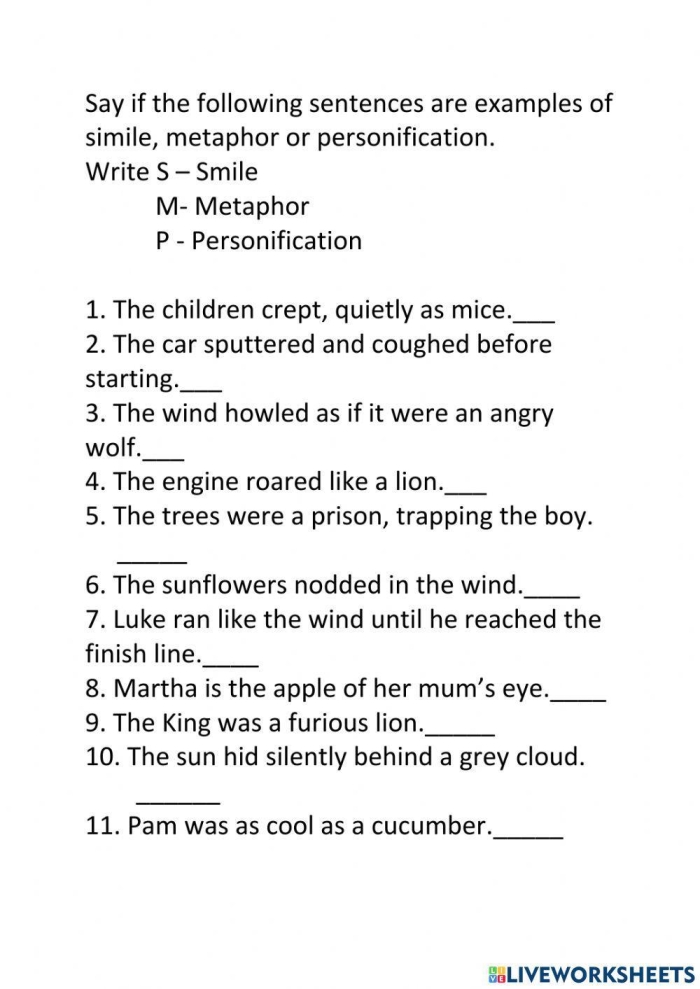
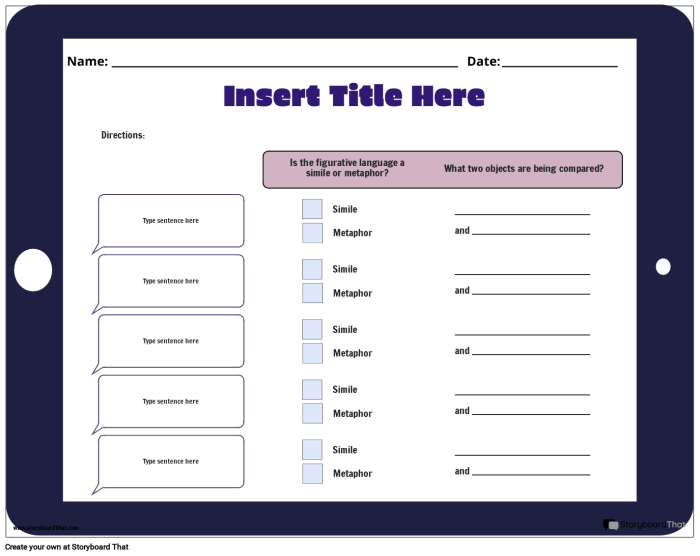
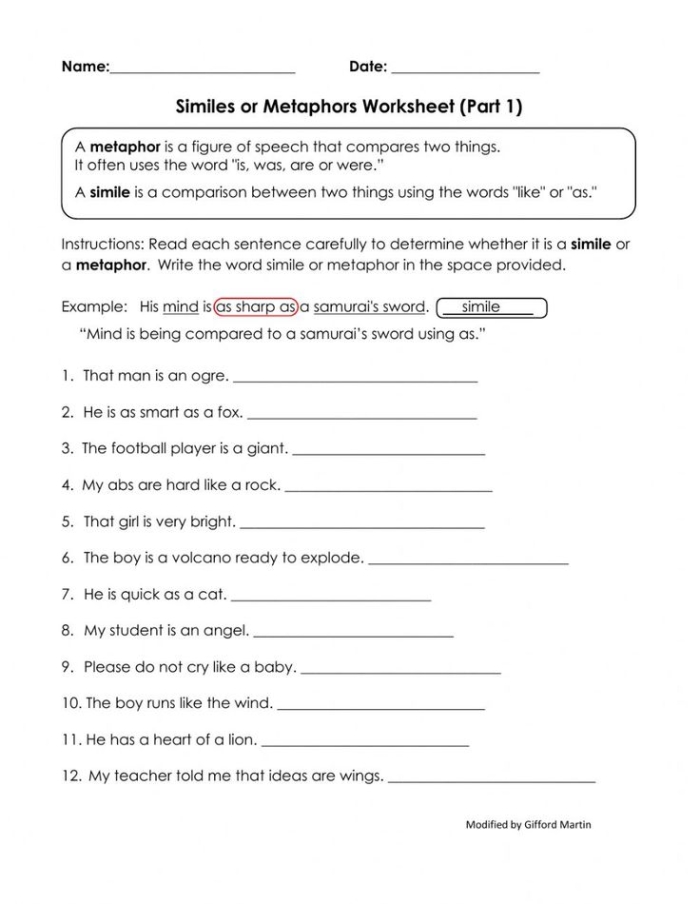
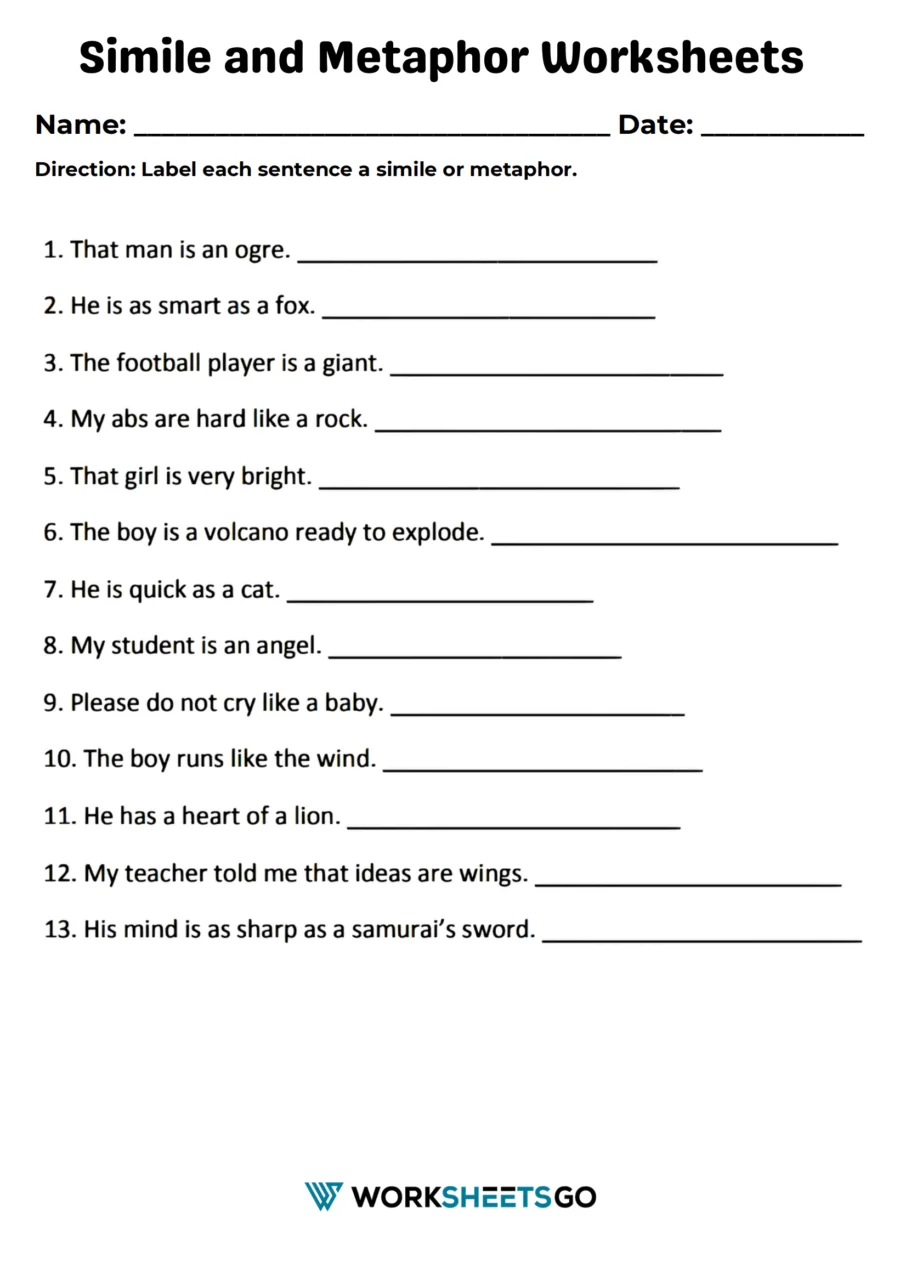
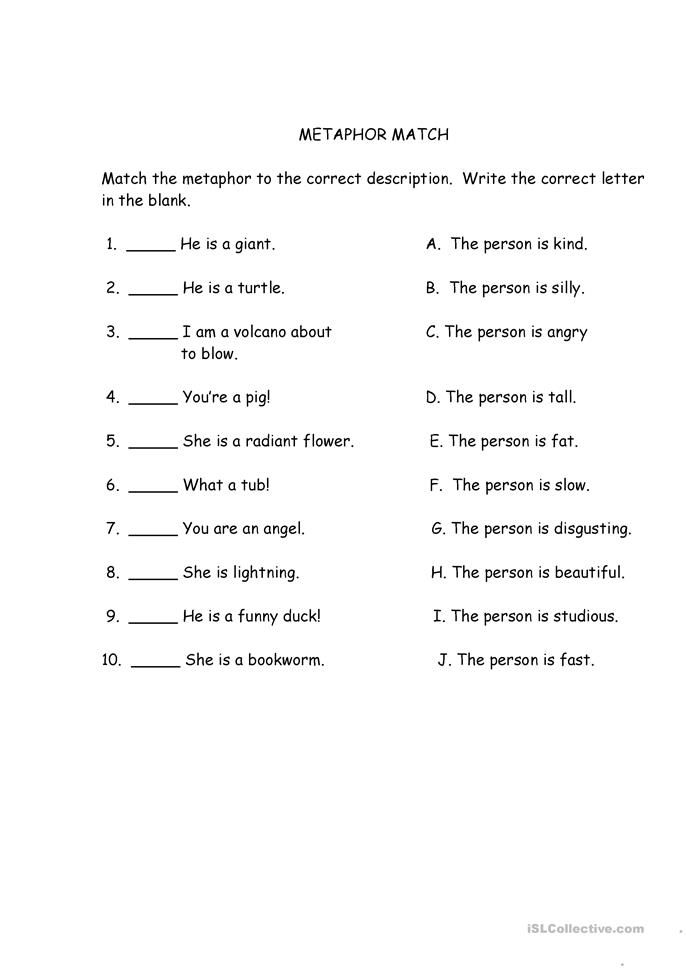
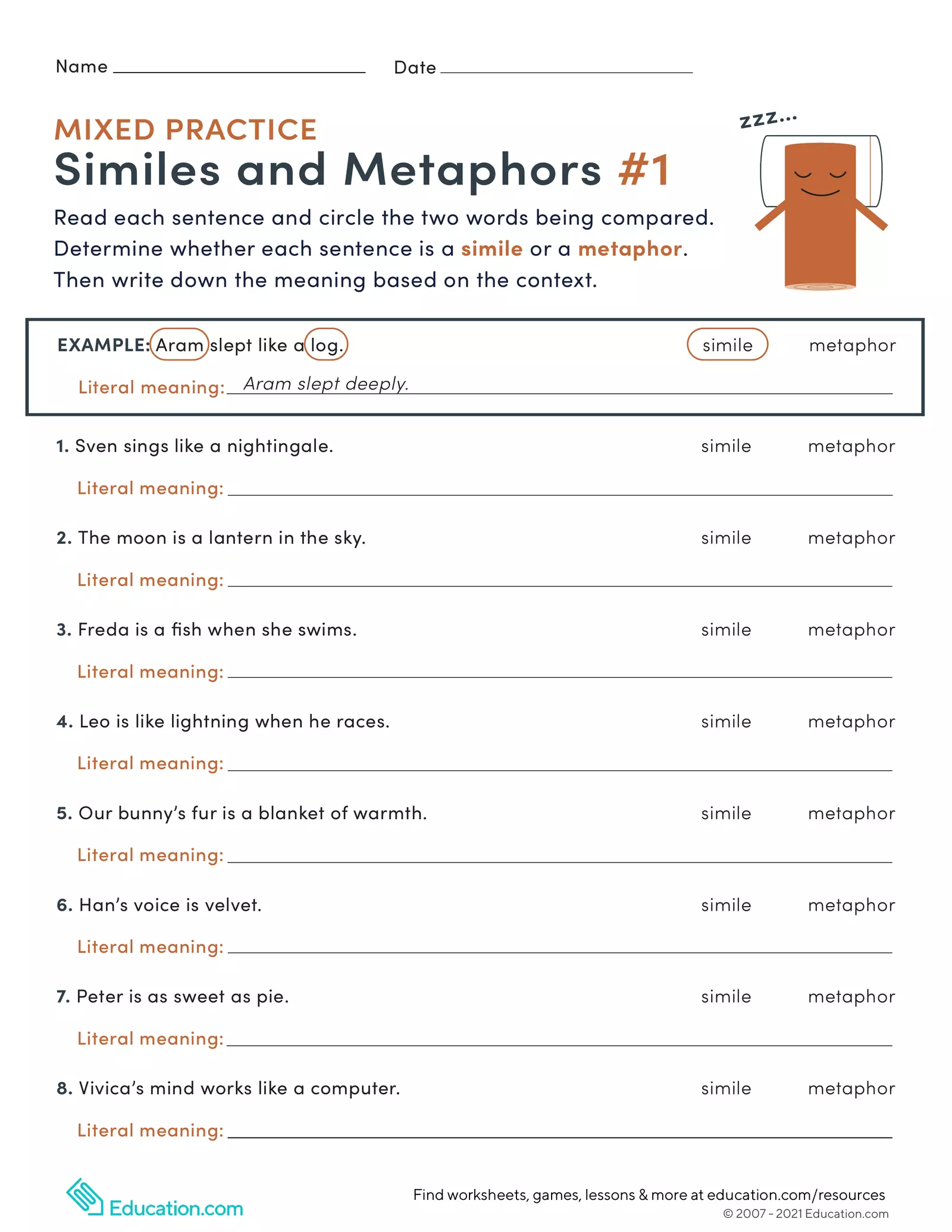
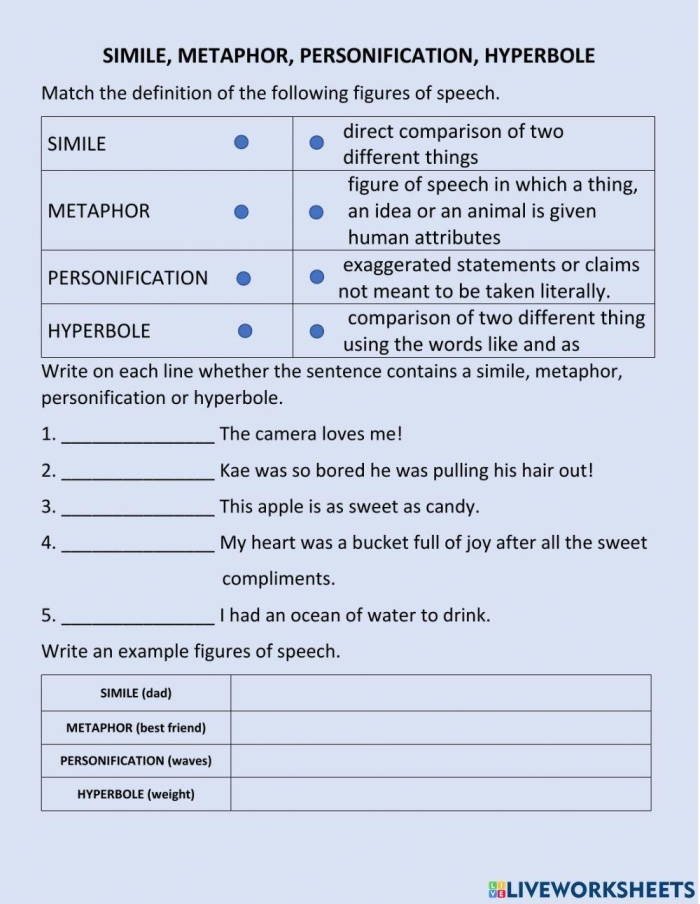
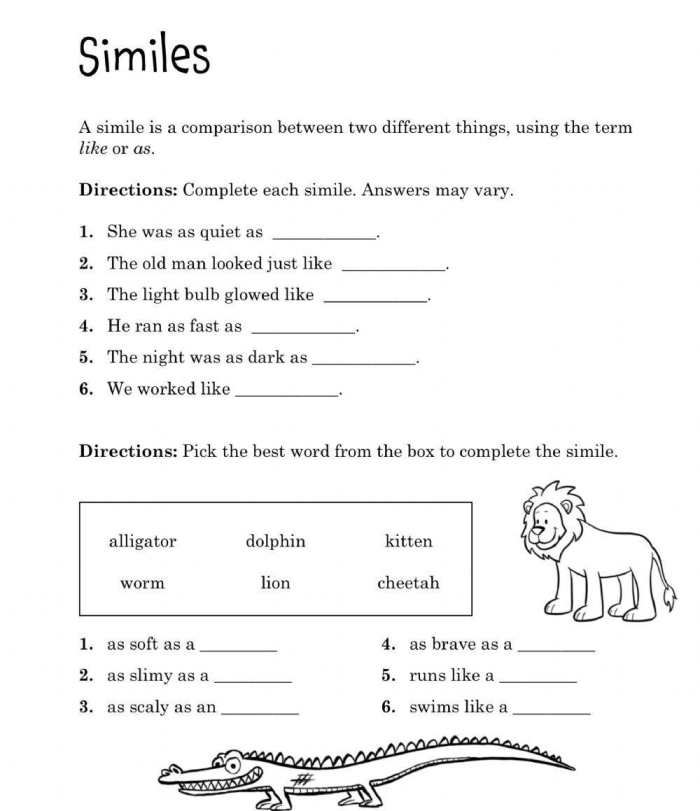
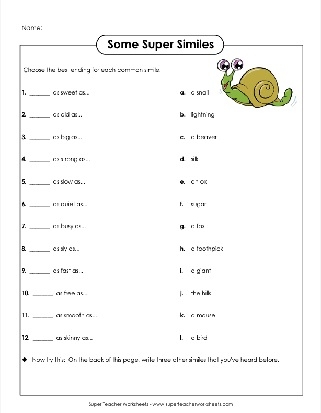
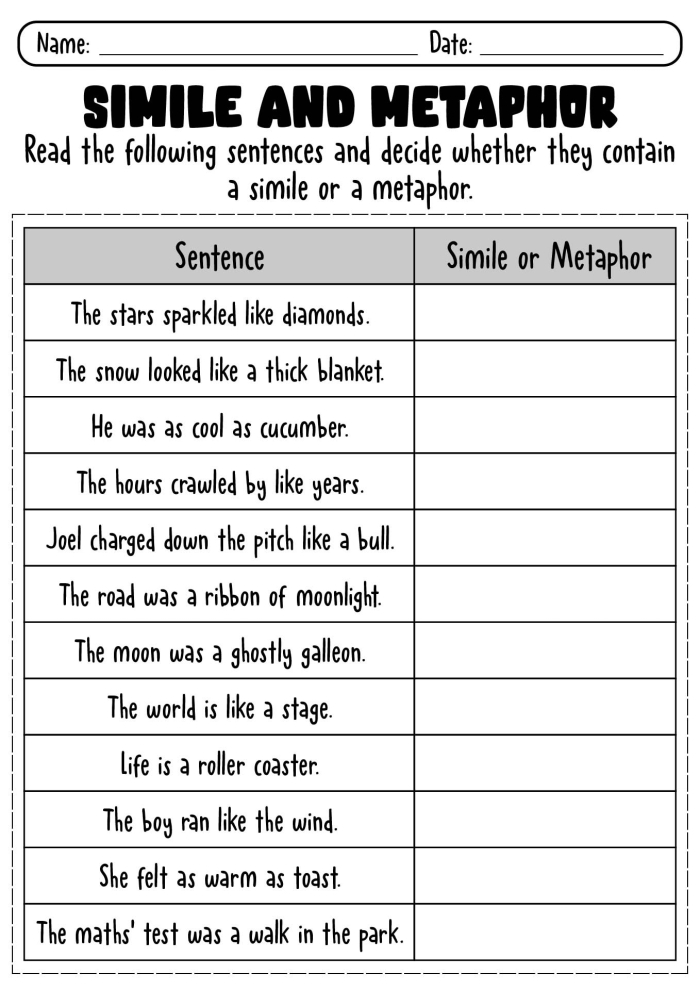
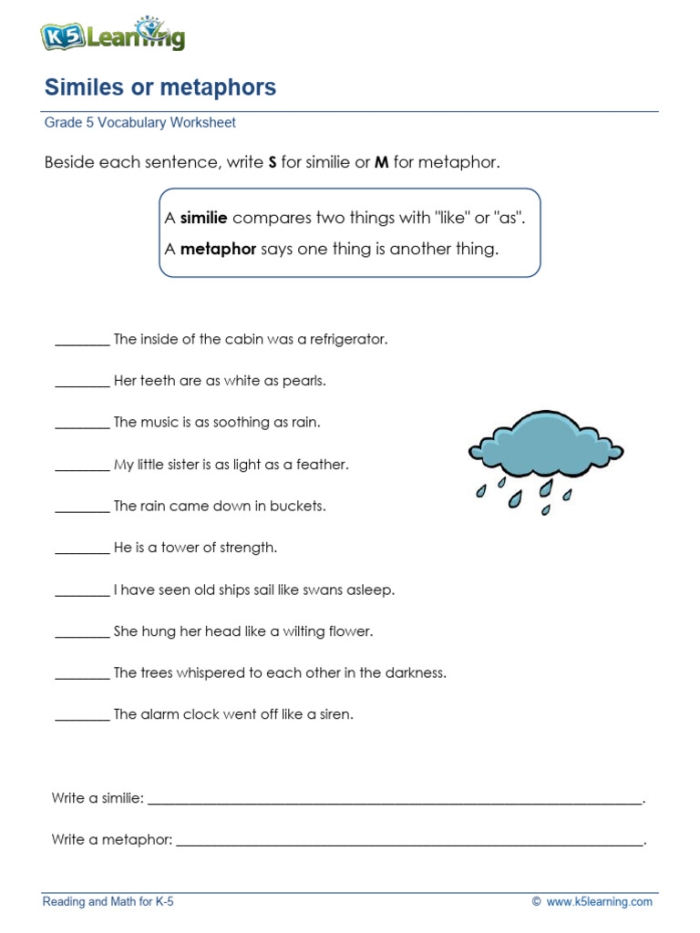
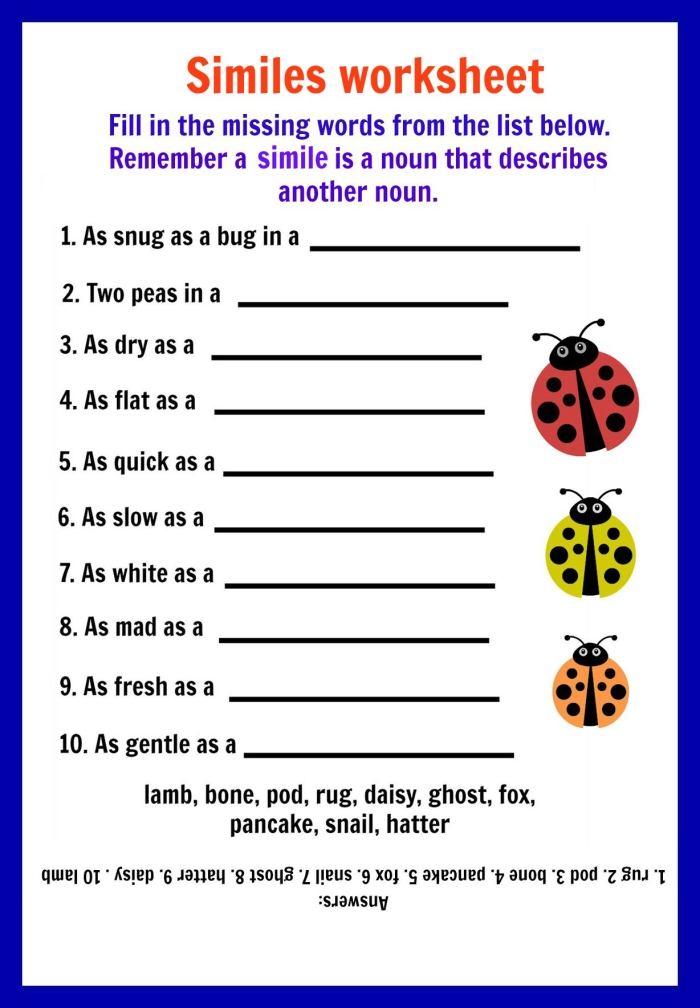
For second grade grammar and mechanics practice, multiple choice activities work well because they let students see both types side by side. When you present sentences and ask students to identify which ones use similes versus metaphors, they start recognizing the patterns. They learn to spot that crucial “like” or “as,” and they understand why metaphors feel more powerful.
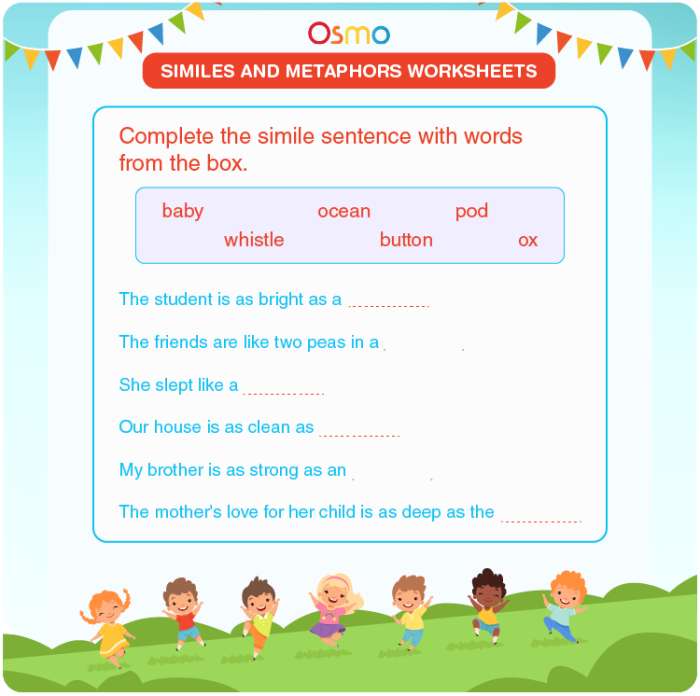
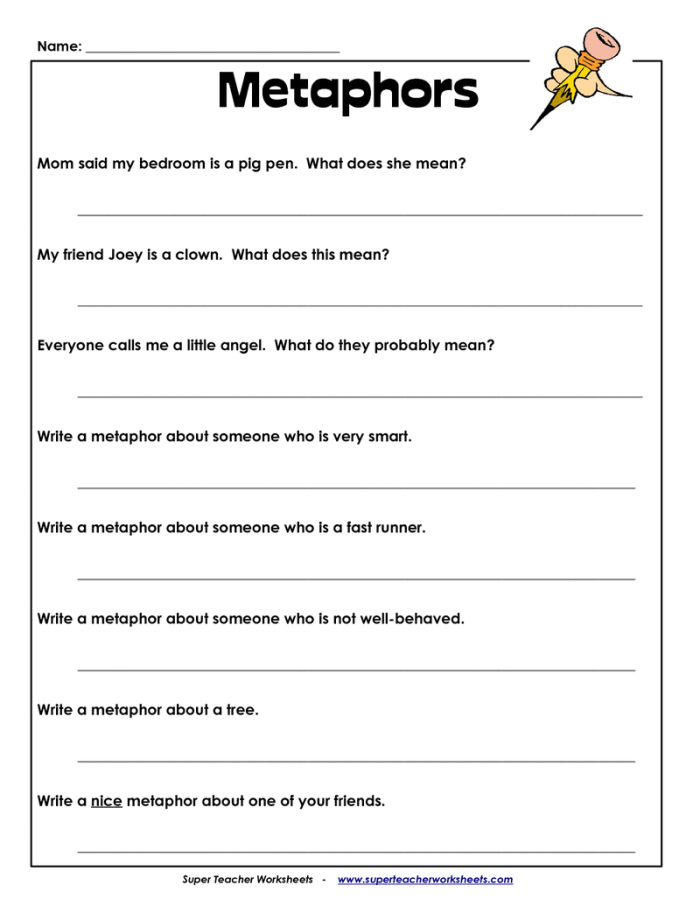
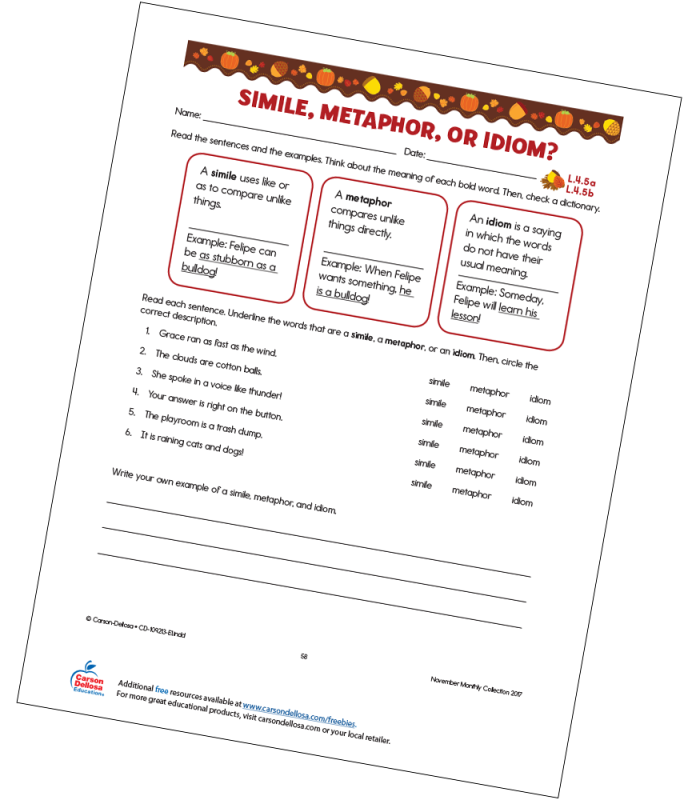
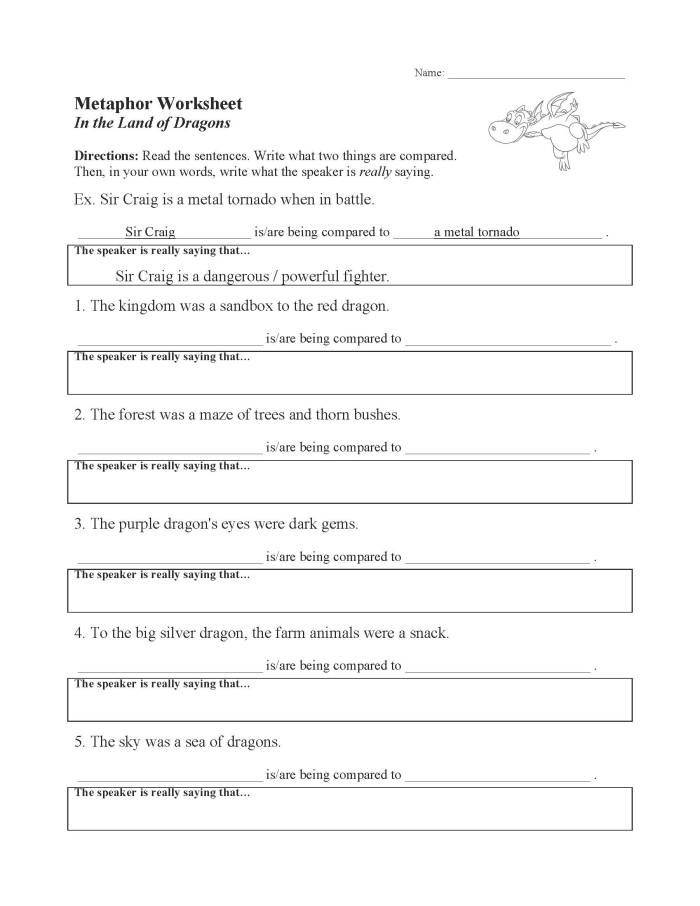
Try pairing this skill with other identifying cause and effect activities to help students understand how language choices affect meaning. You might also explore printable simile or metaphor worksheets that give students repeated chances to practice distinguishing between these two comparison techniques.
Practice with These Worksheets