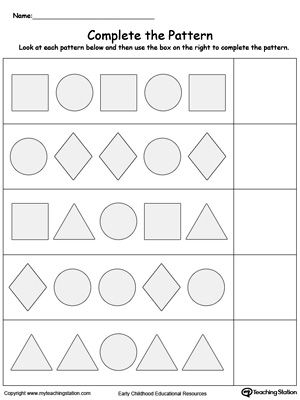
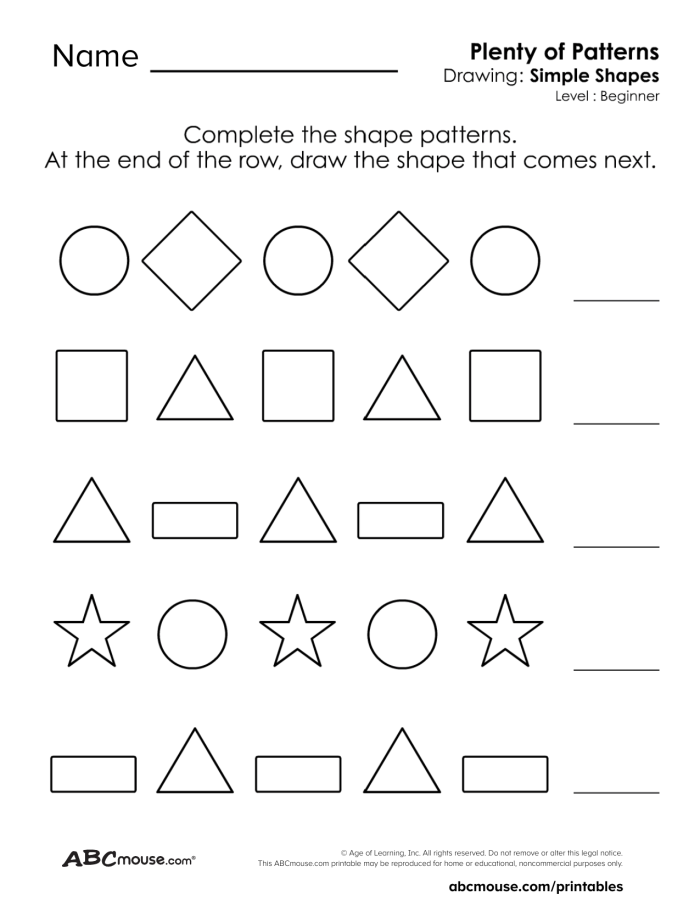
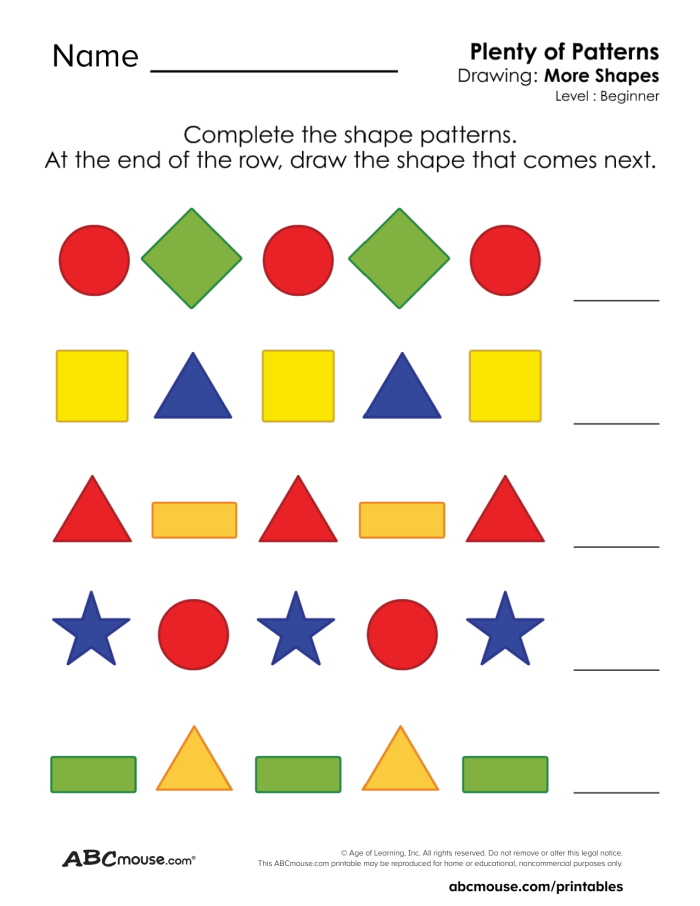
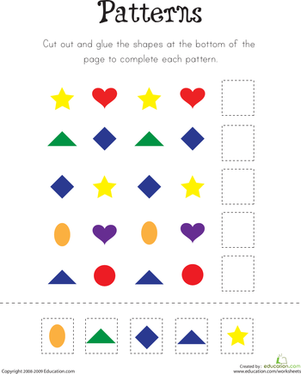
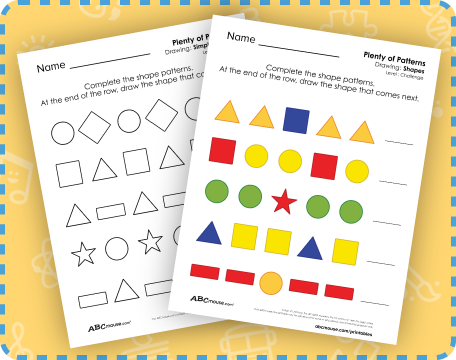
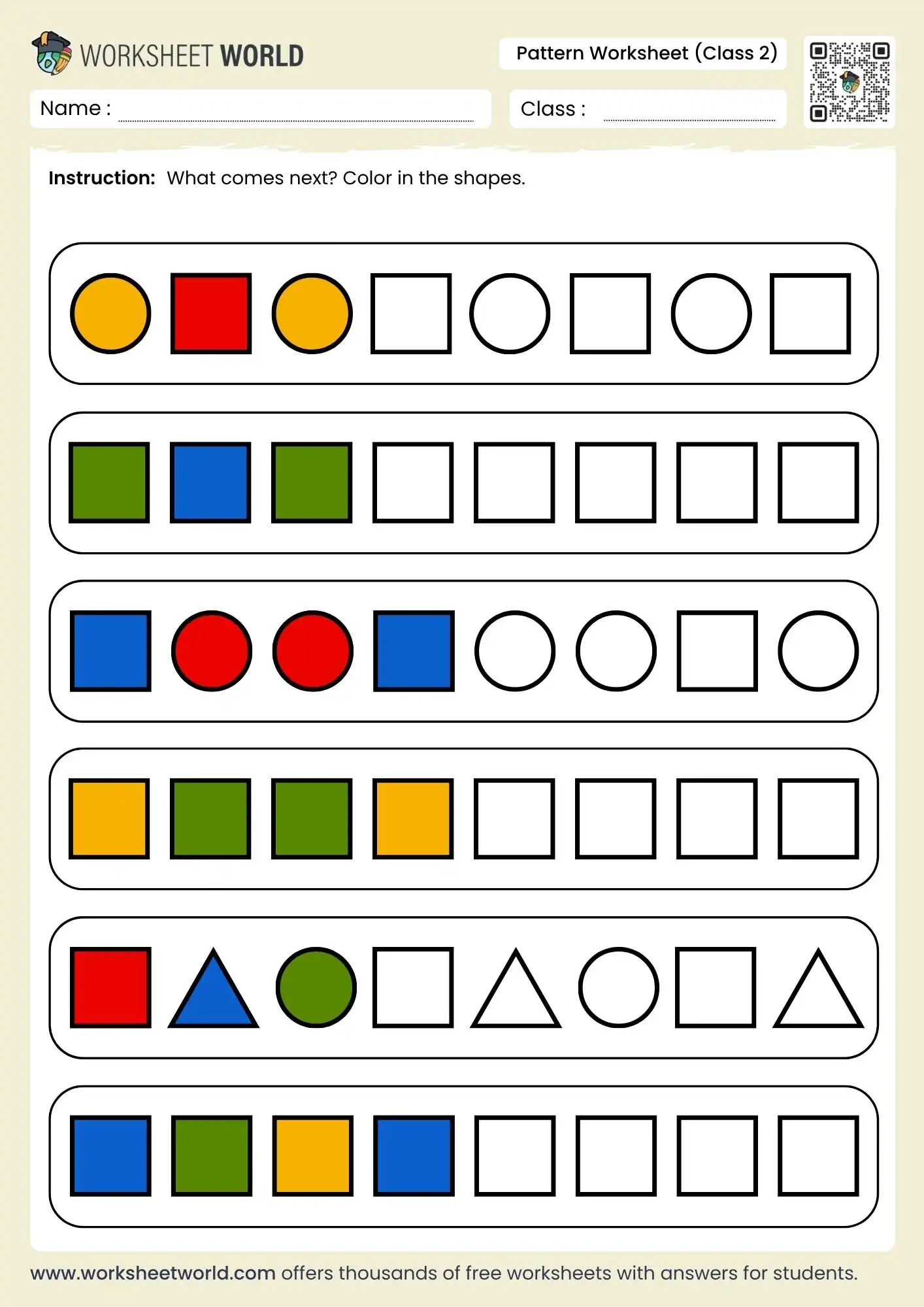
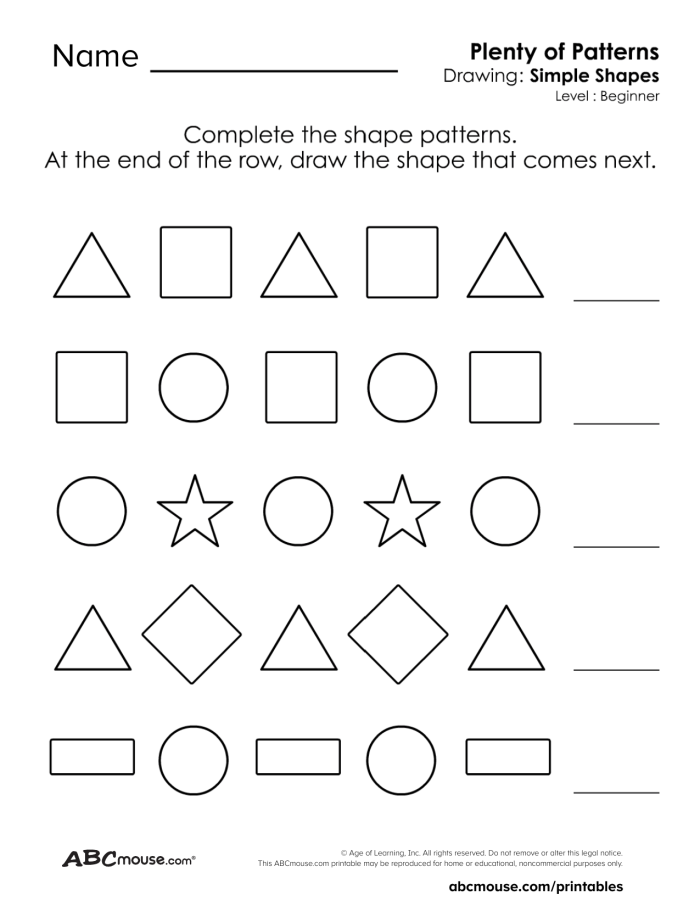
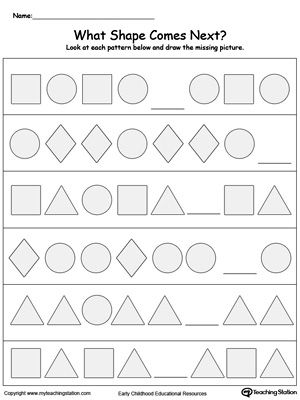
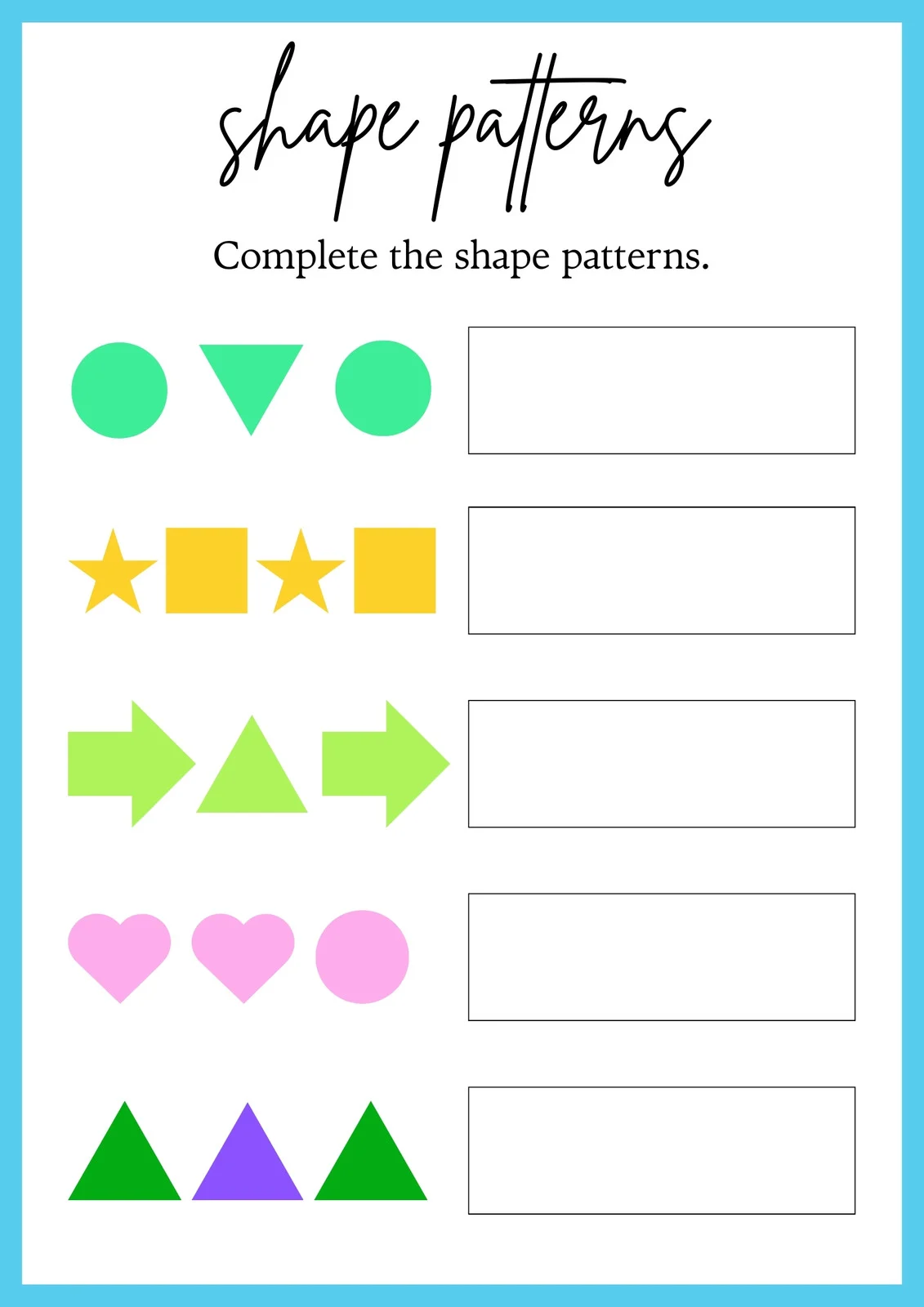
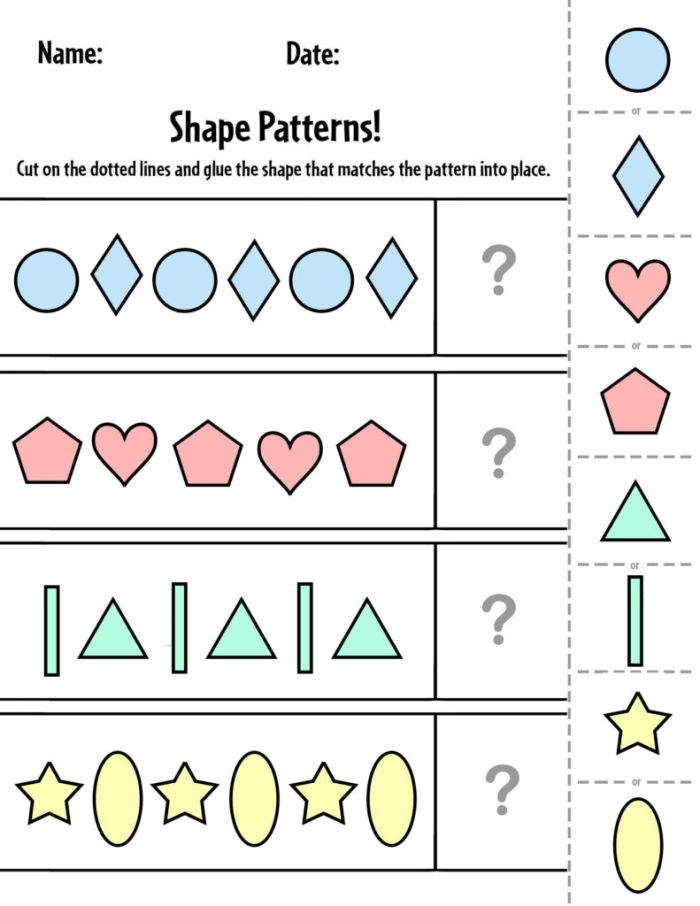
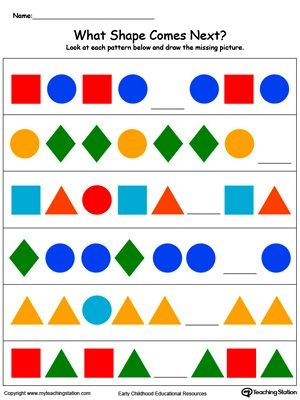
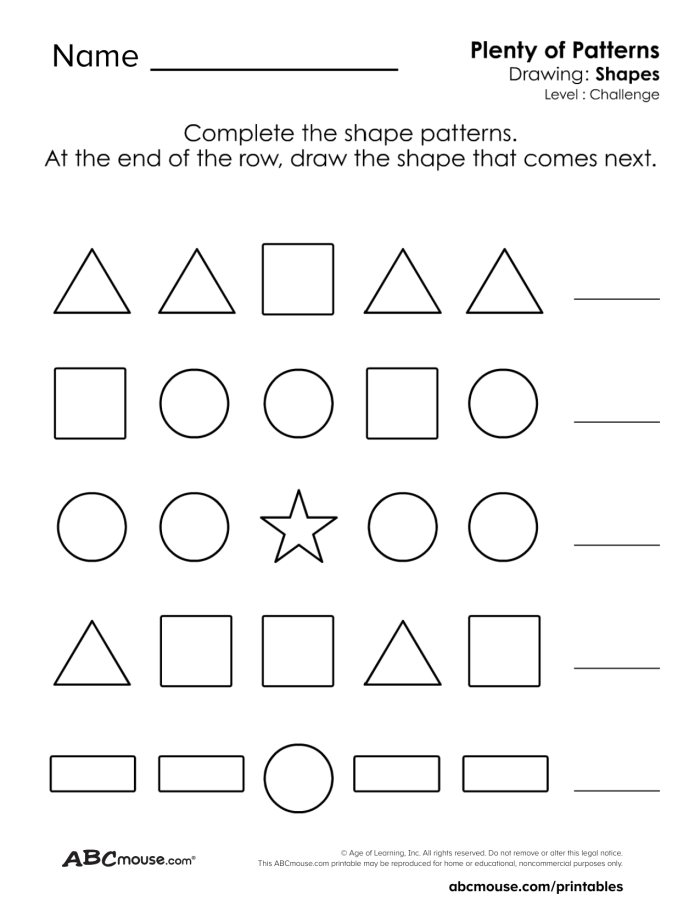
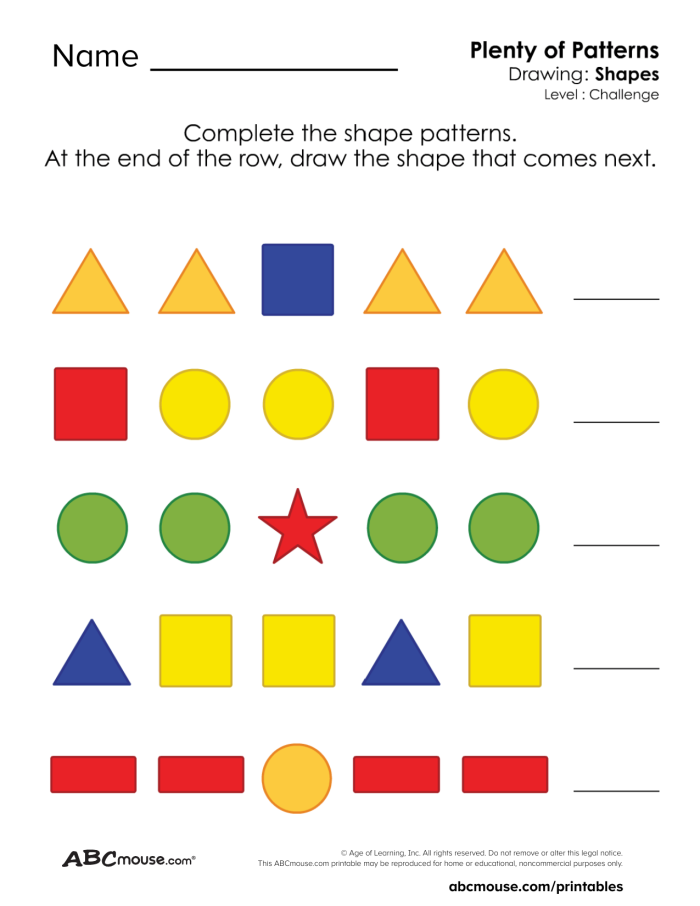
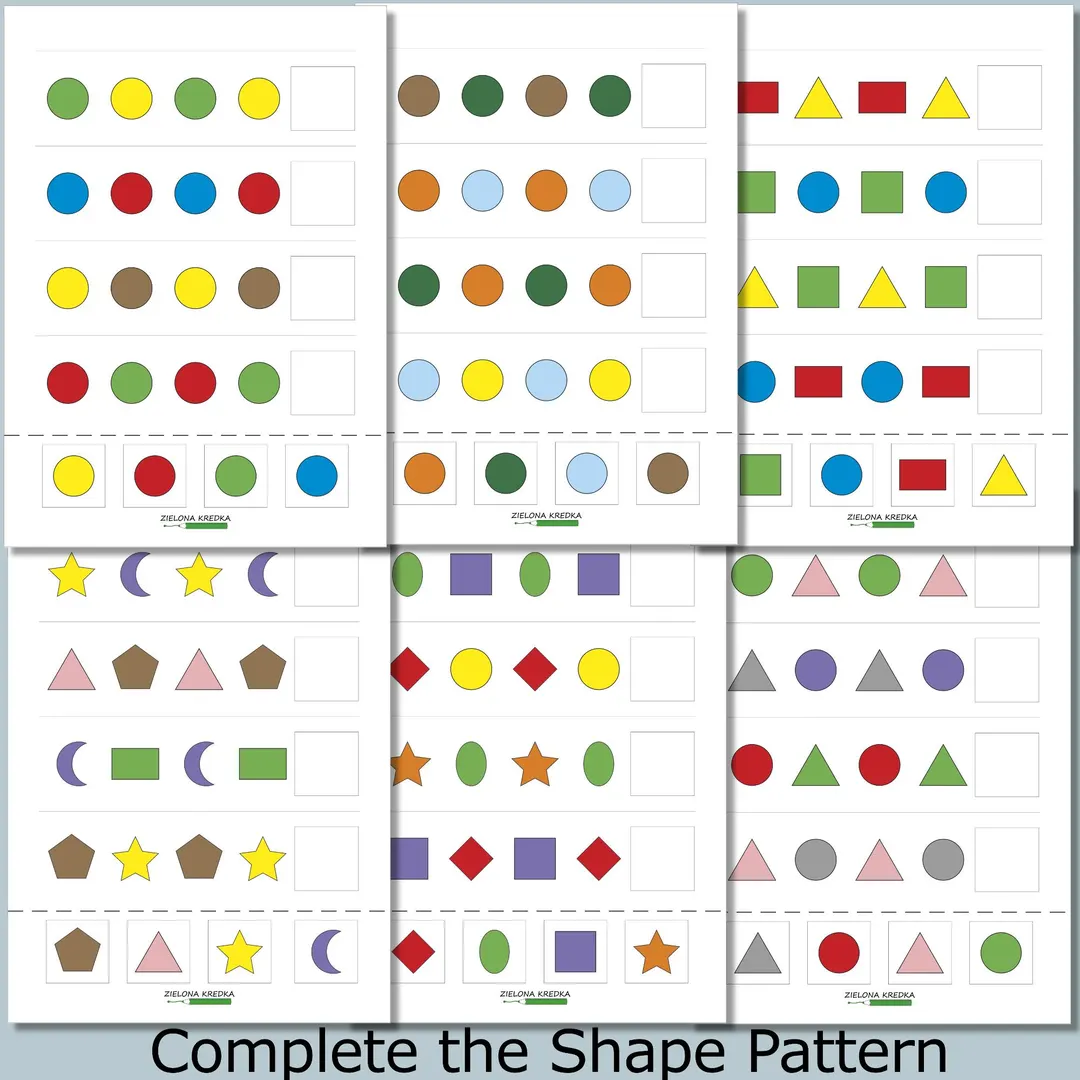
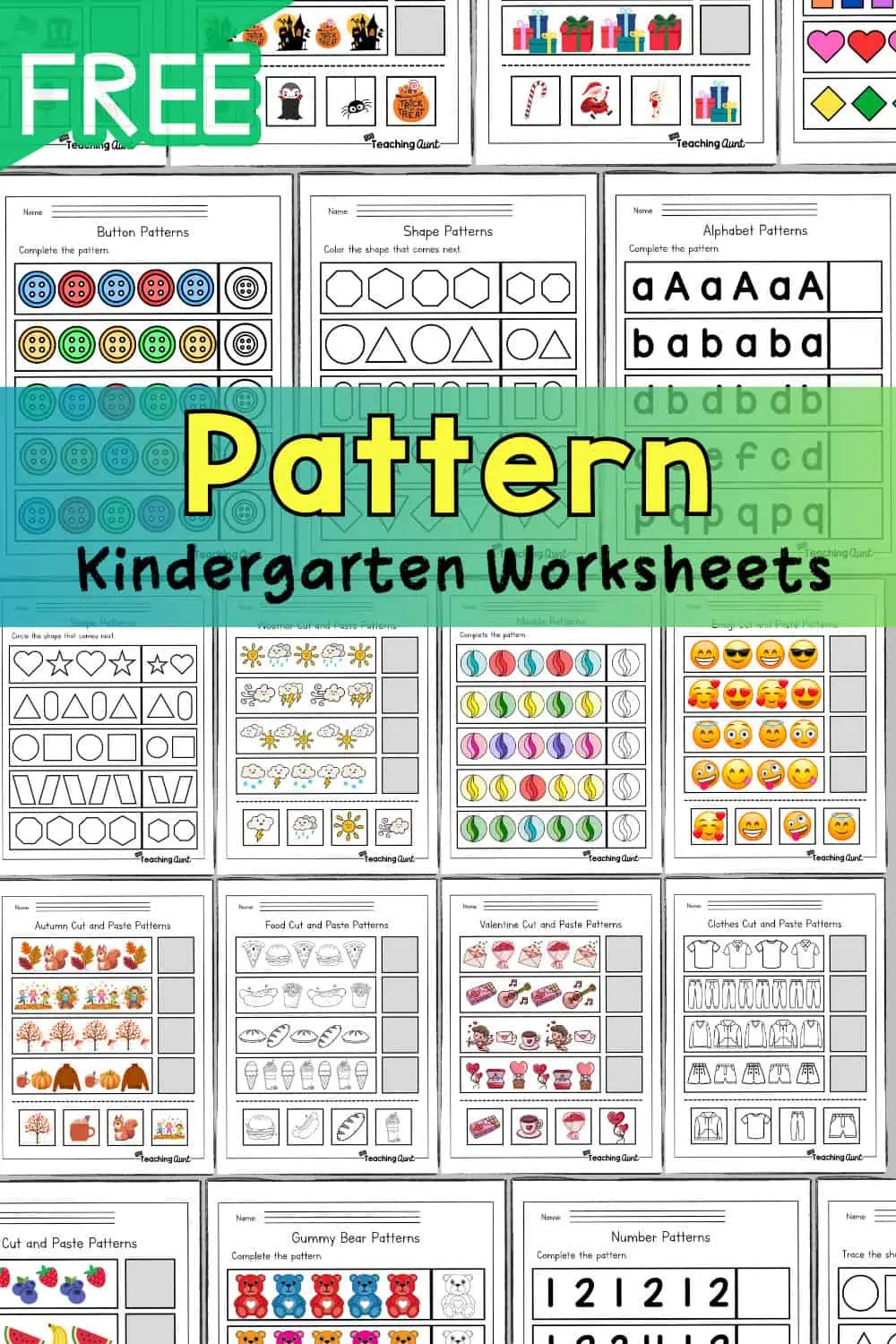
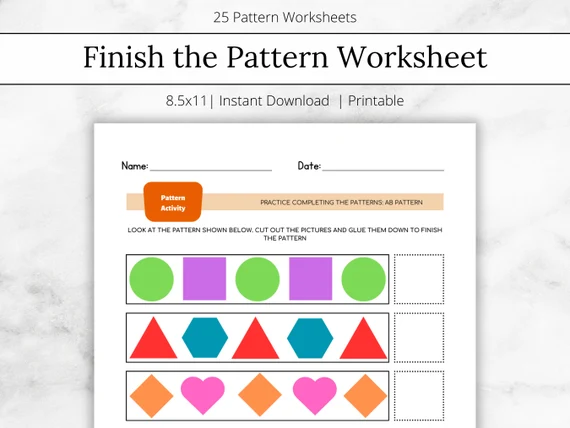
Pattern recognition forms one of the earliest mathematical skills children develop, and completing shape patterns offers a direct way to build this foundation. In this colorful geometry worksheet, Pre-K students encounter a series of shapes arranged in logical sequences, then identify what comes next and draw it themselves.
The activity works by showing children a repeating arrangement—perhaps a circle, square, triangle, circle, square, and then a blank space. Students must observe the sequence, understand the rule governing it, and apply that rule to fill in the missing element. This type of visual reasoning strengthens their ability to recognize relationships and predict outcomes based on patterns they observe.
What makes this approach effective for Pre-K learners is the combination of looking and doing. Rather than simply pointing to the correct answer, children physically draw the next shape. This hands-on element reinforces their learning and develops fine motor skills alongside mathematical thinking. The colorful design keeps young learners engaged, making the worksheet feel more like play than formal instruction.
Pattern work also introduces foundational concepts related to fractions and spatial reasoning. When children understand that shapes repeat in predictable ways, they’re beginning to grasp how parts relate to wholes and how objects can be organized systematically. These early experiences with patterns support later learning in geometry and basic mathematical thinking.
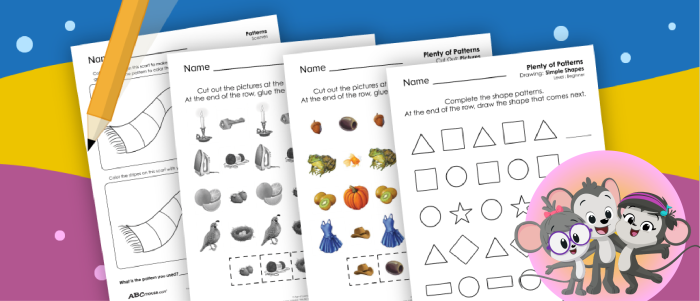
You might pair this worksheet with other Pre-K activities that build visual skills. For instance, line tracing exercises develop the pencil control needed for drawing shapes, while color-based worksheets reinforce visual discrimination. These complementary activities create a well-rounded approach to early learning that keeps children motivated and progressing steadily.
Use These Worksheets Today