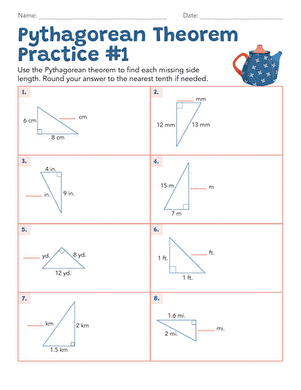
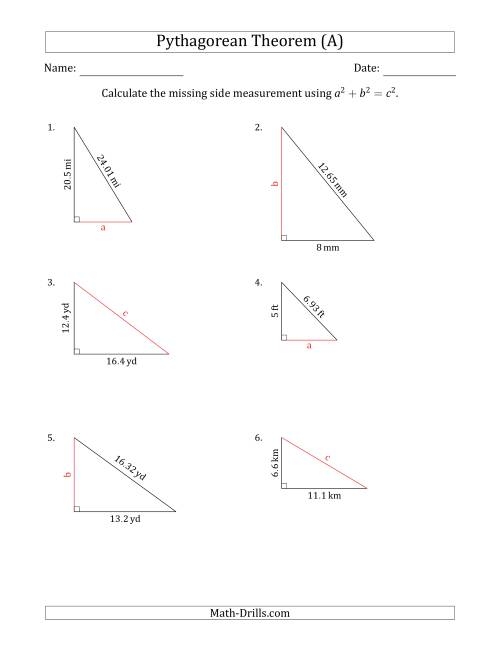
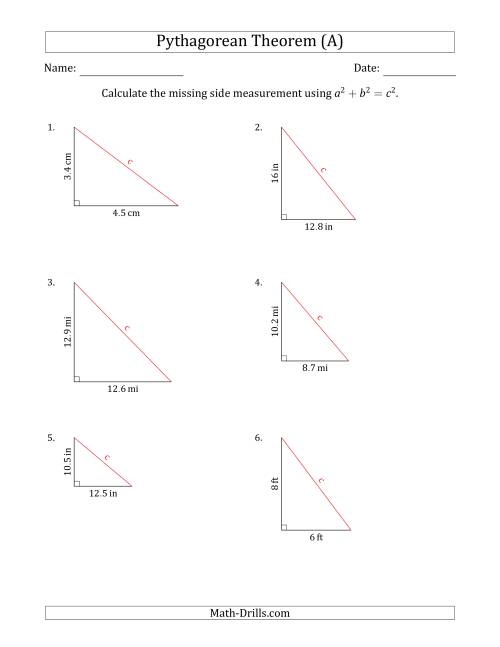
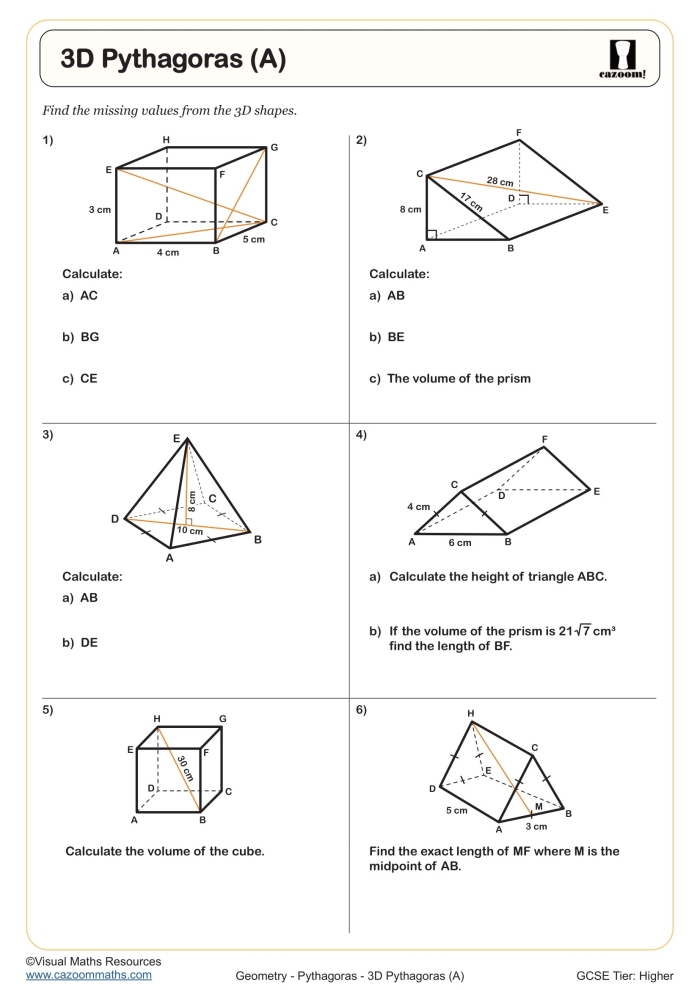
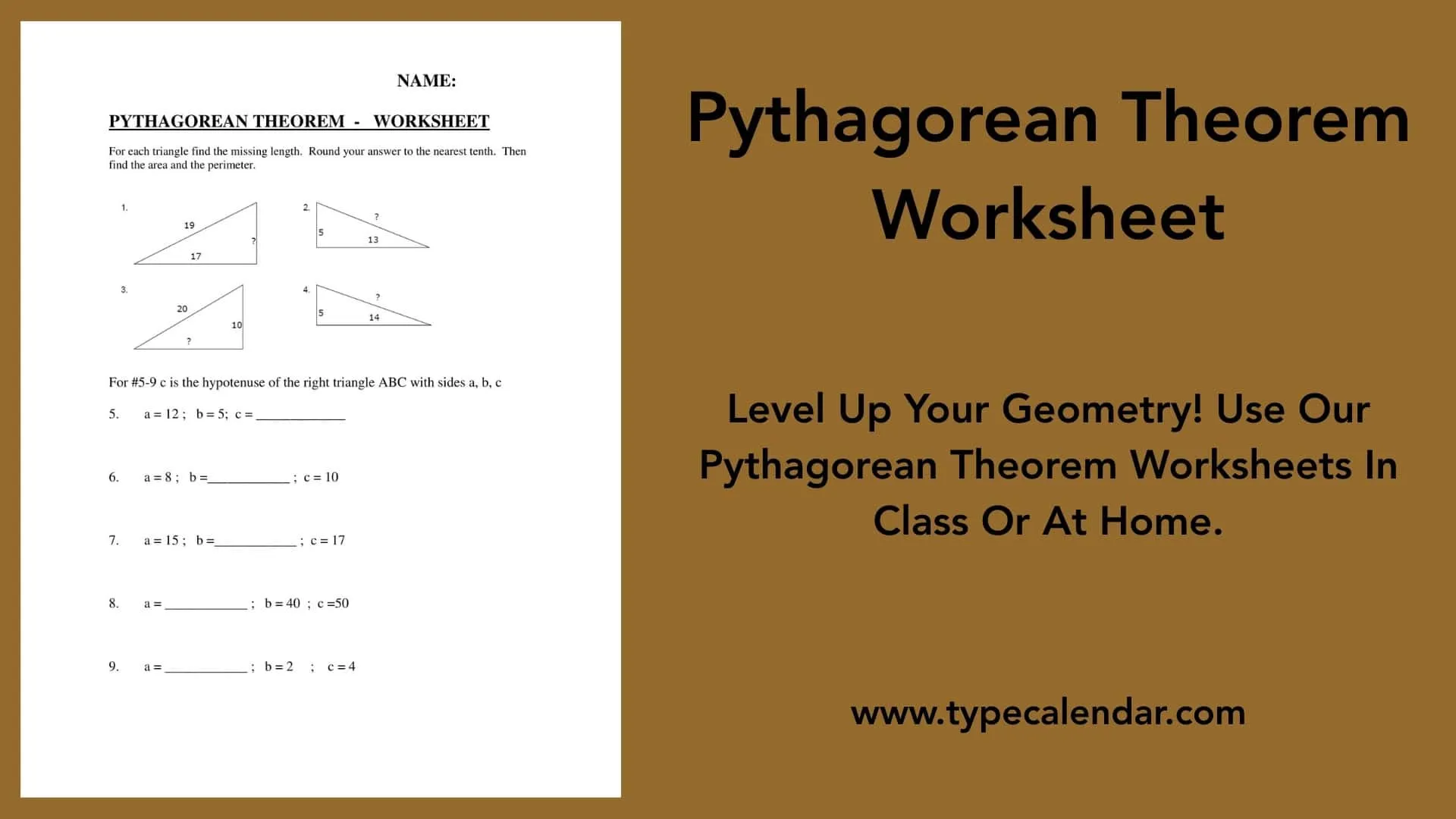
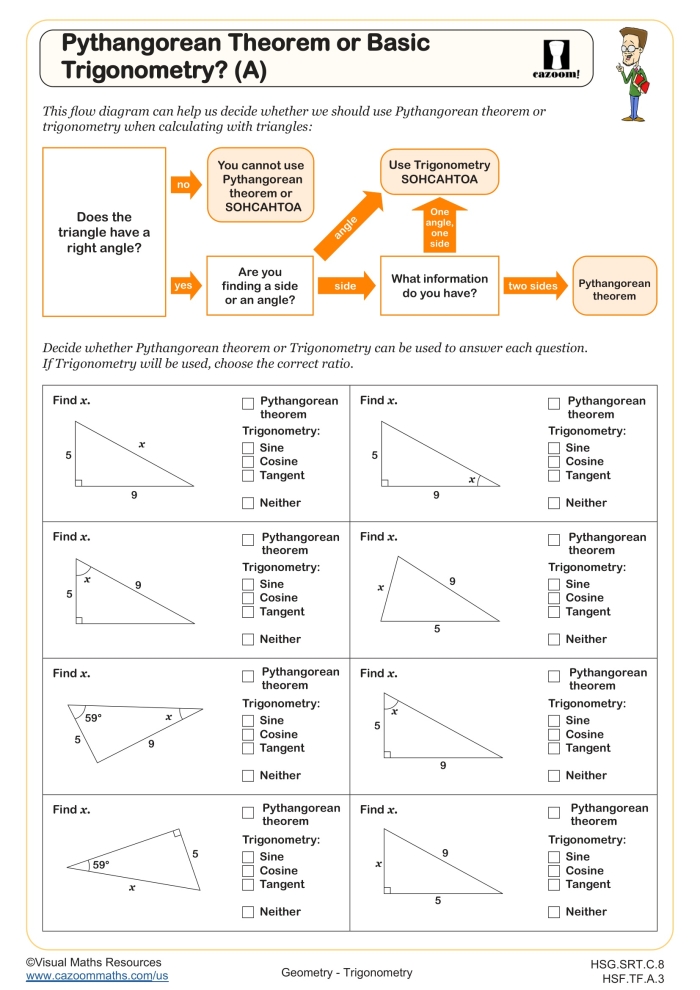
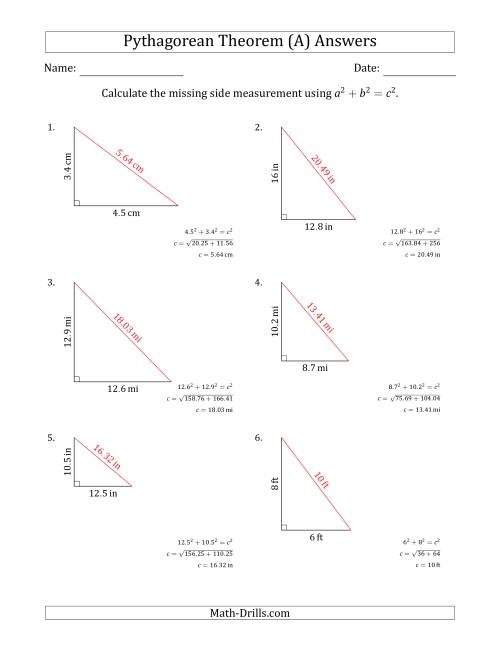
Right triangles show up everywhere in eighth-grade geometry, and mastering the Pythagorean theorem opens the door to solving real problems with them. Whether you’re finding a missing leg or calculating an unknown hypotenuse, this fundamental relationship between the sides of a right triangle becomes second nature with consistent practice.
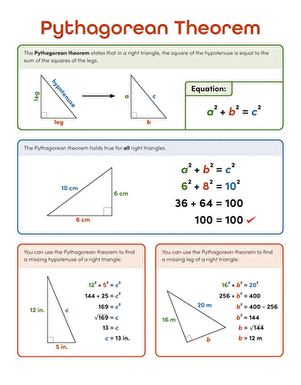
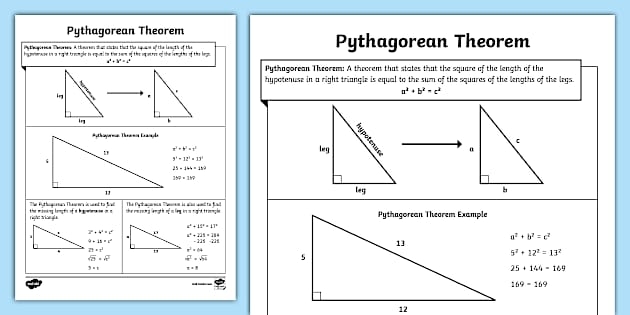
The Pythagorean theorem states that in any right triangle, the square of the hypotenuse equals the sum of the squares of the other two sides: a² + b² = c². This simple formula works every single time, but students often struggle with the setup and the algebra that follows. The key is working through enough examples to recognize the pattern and build confidence in your calculations.
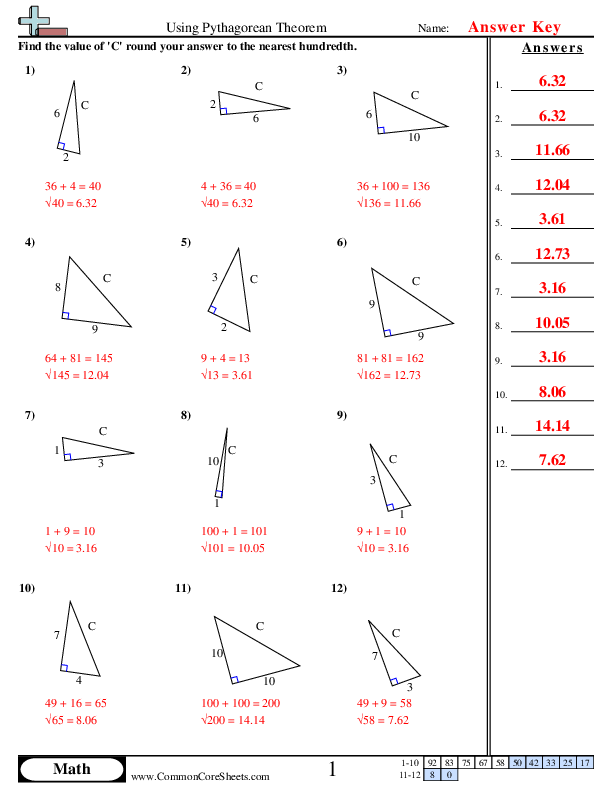
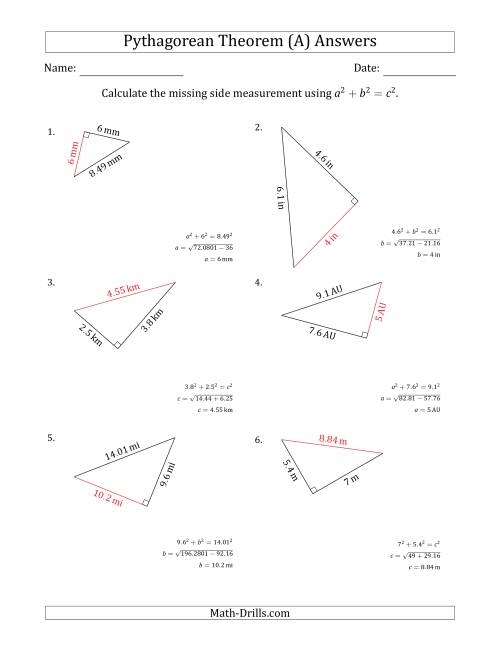
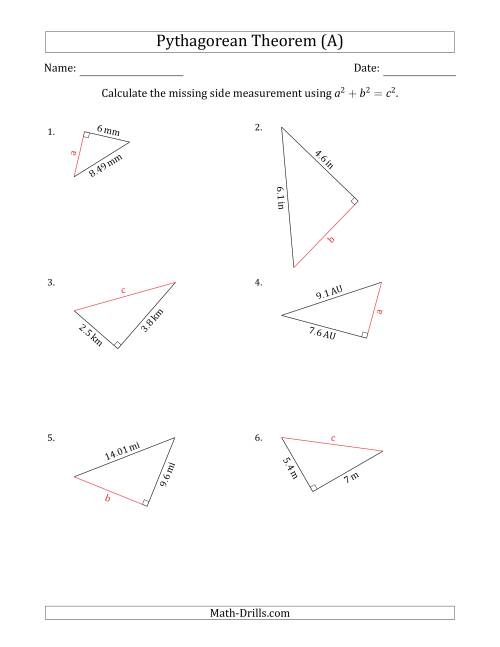
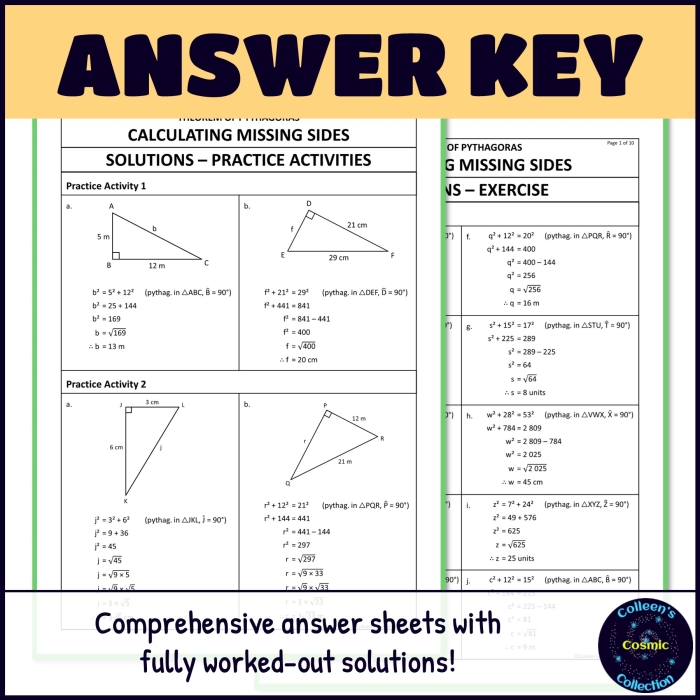
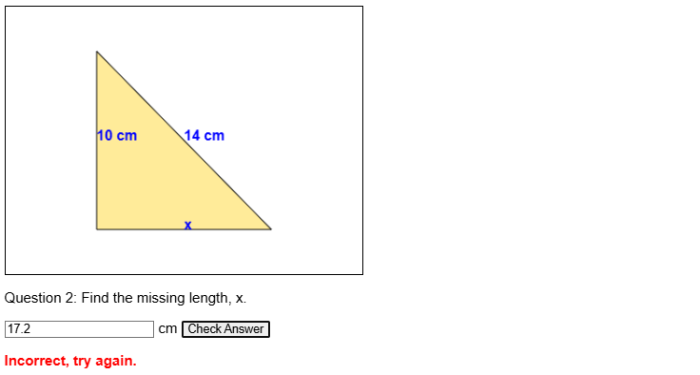
When you’re solving for a missing leg, you rearrange the formula to isolate that variable. If you know the hypotenuse and one leg, subtract the known leg’s square from the hypotenuse’s square, then take the square root. Finding a missing hypotenuse is often more intuitive: add the squares of both legs and find the square root of that sum. The process feels different, but the underlying relationship stays constant.
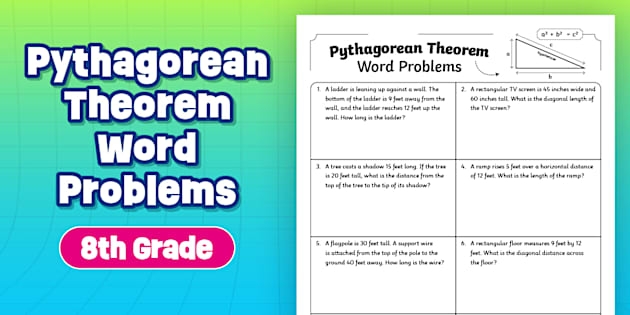
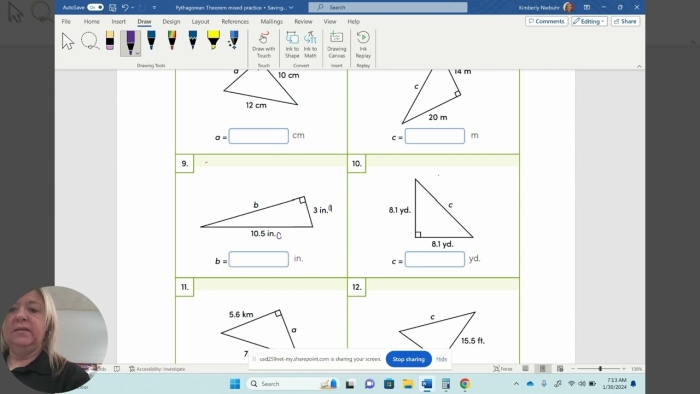
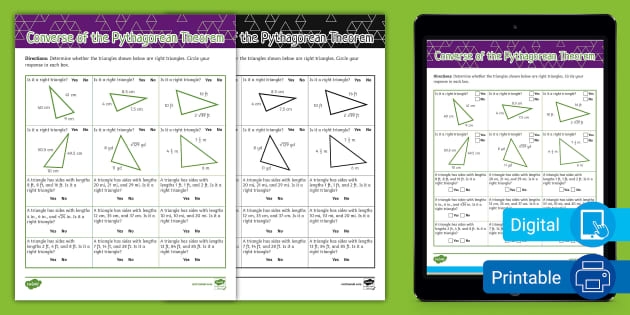
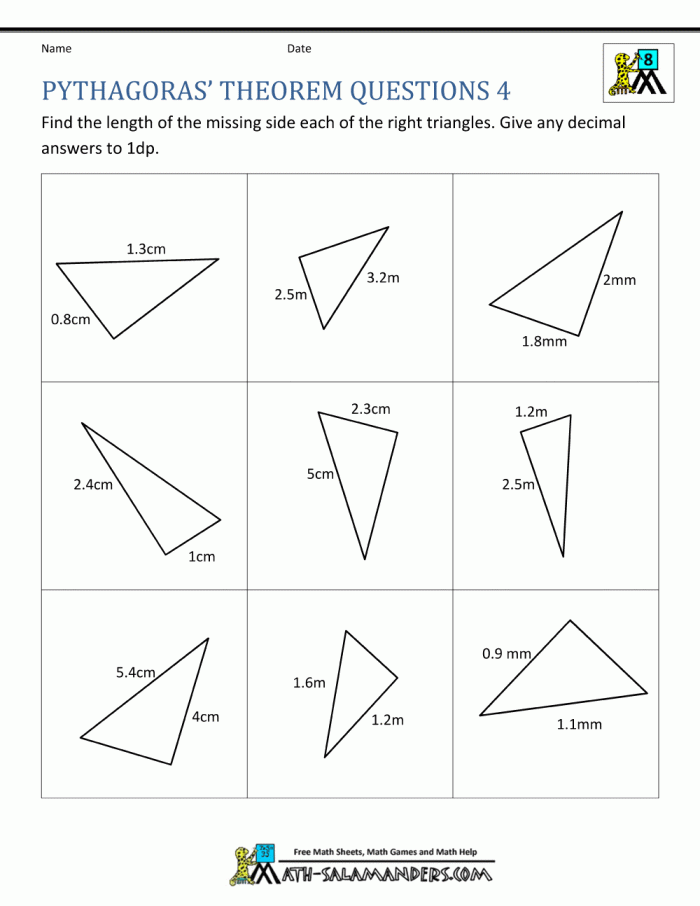
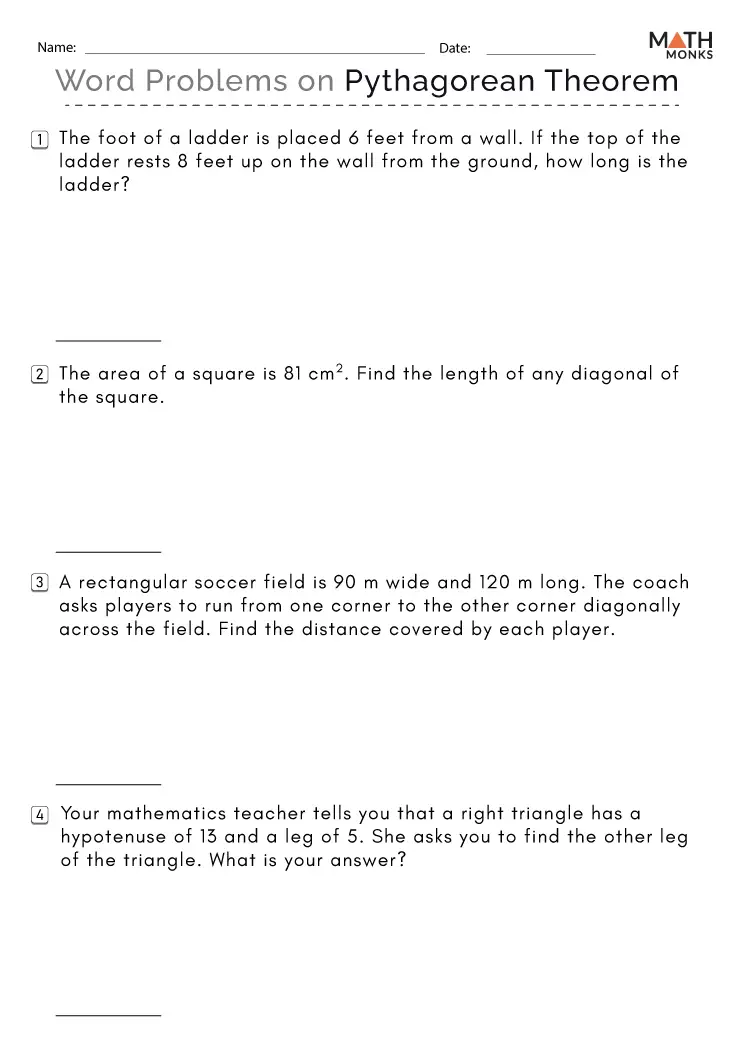
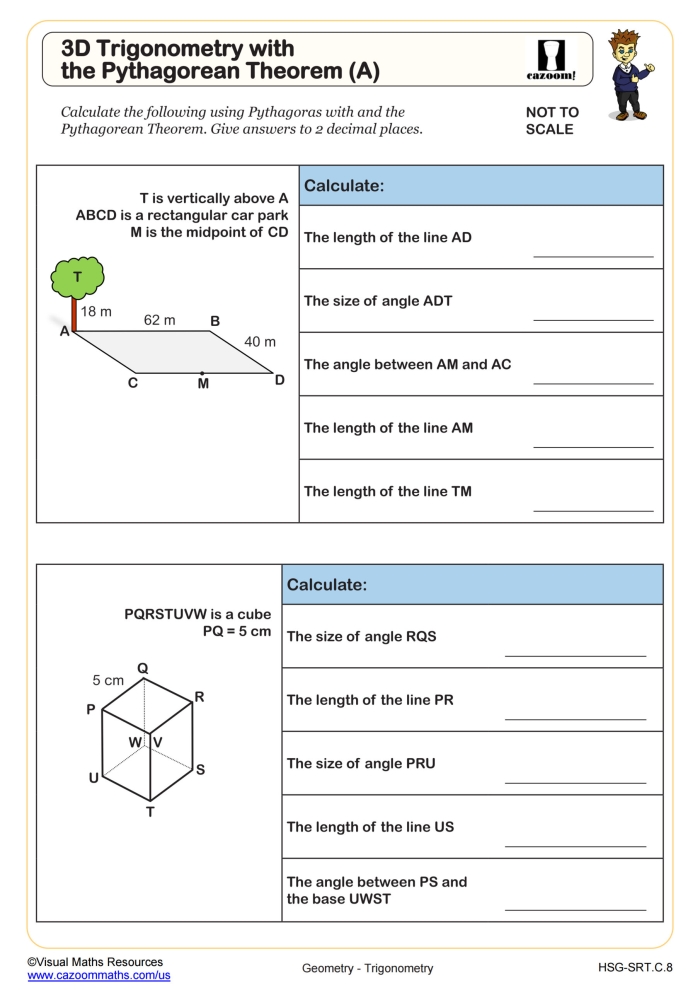
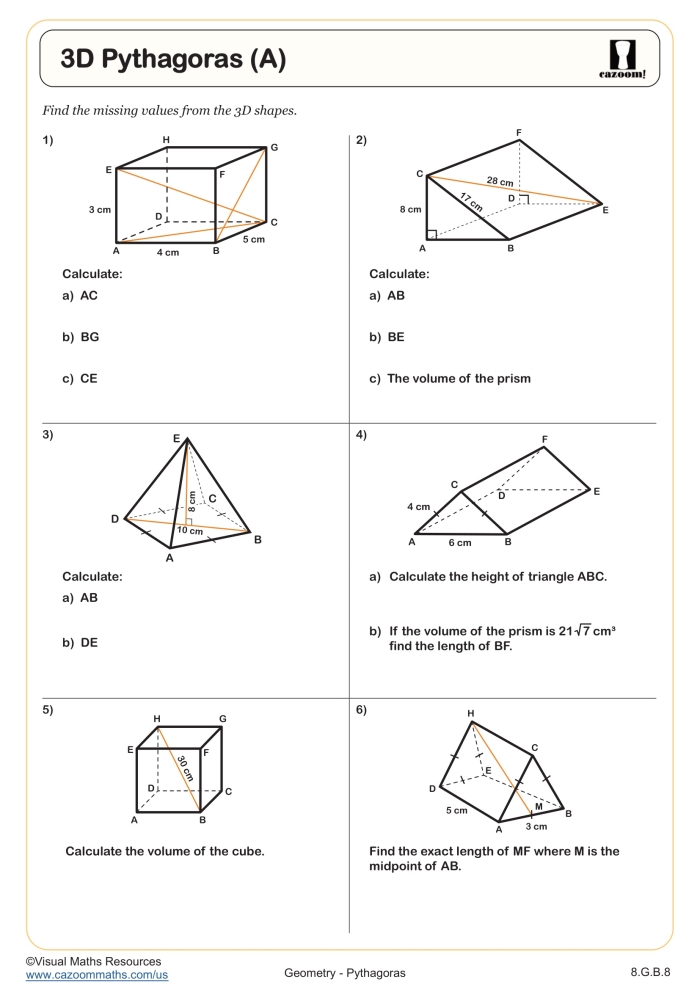
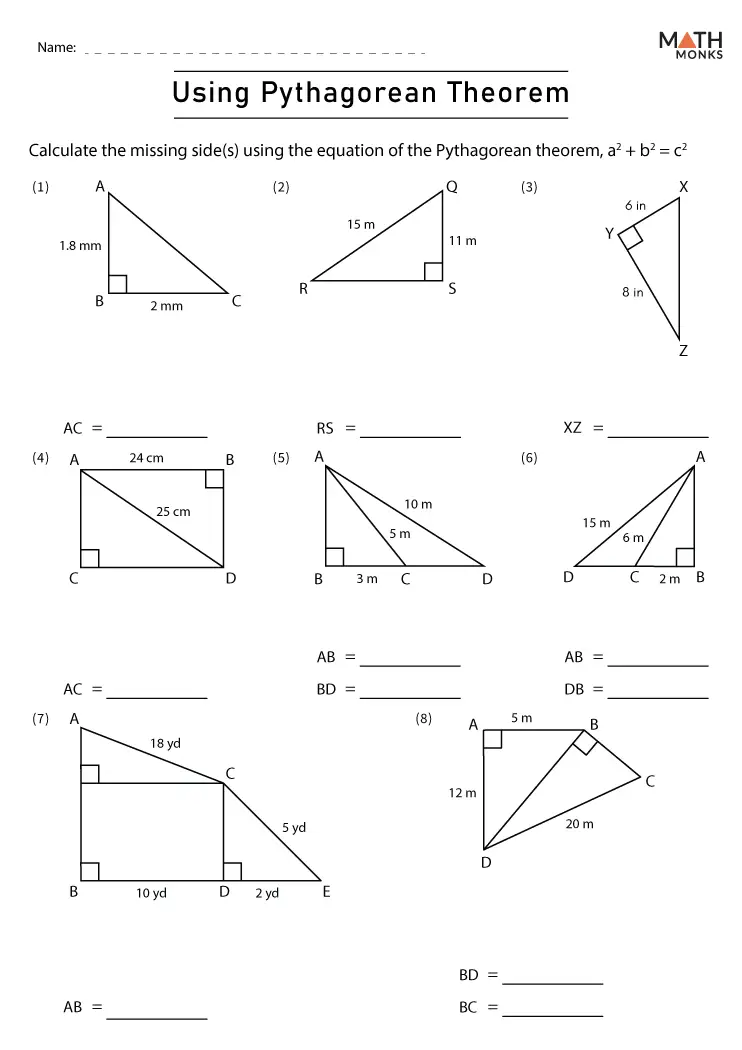
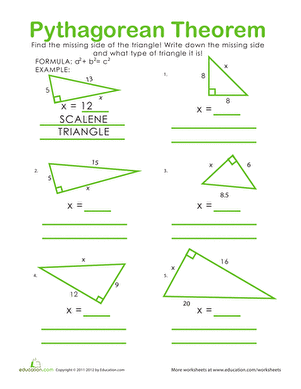
A printable worksheet designed for eighth-grade students gives you the repetition needed to internalize these steps. You’ll encounter problems where the numbers work out cleanly, like a 3-4-5 triangle, alongside messier calculations that require a calculator. This variety prepares you for the mixed practice you’ll see on assessments.
Beyond geometry class, understanding the Pythagorean theorem helps with other math concepts. If you’re comparing numbers in scientific notation or working with different geometric shapes like finding the volume of spheres, the spatial reasoning skills you develop here transfer directly. Working through mixed practice problems with the Pythagorean theorem strengthens your overall mathematical foundation for eighth grade and beyond.
Hands-On Worksheet Activities