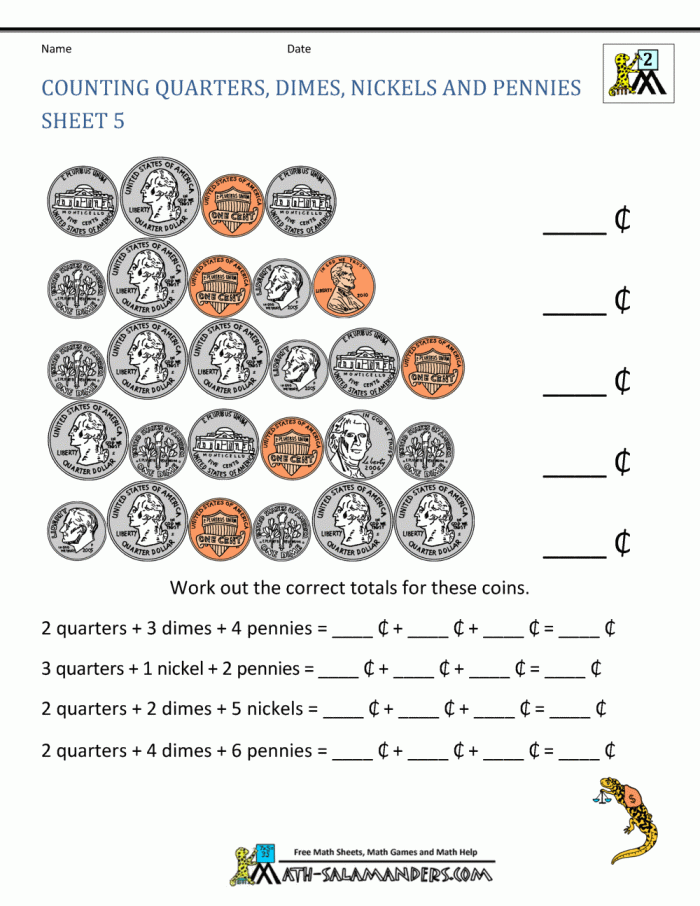
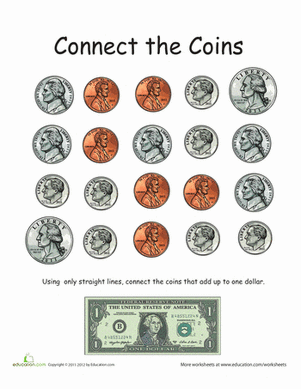
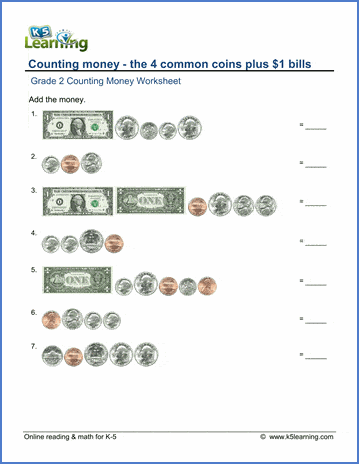
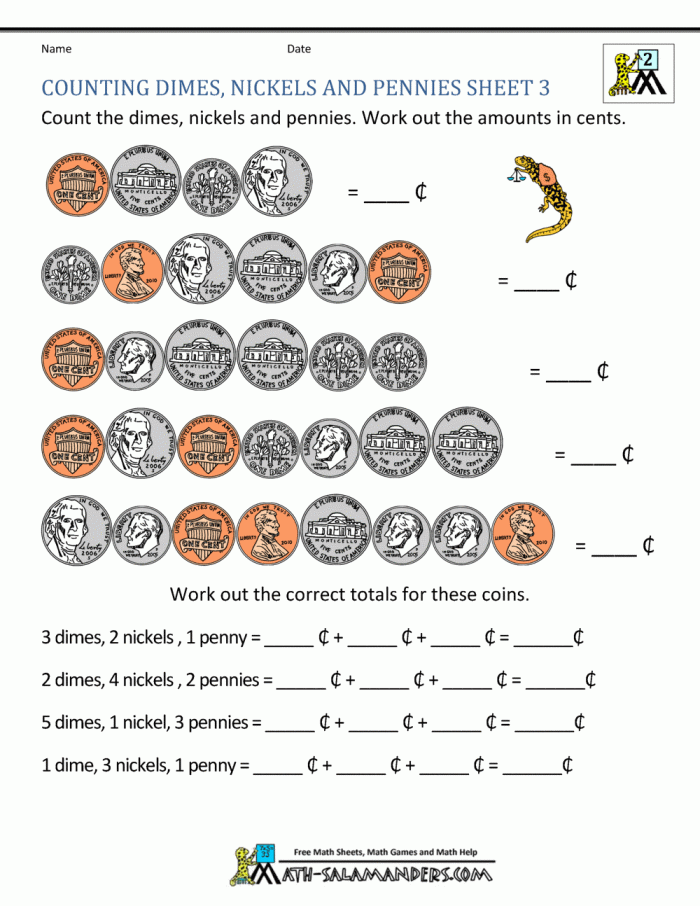
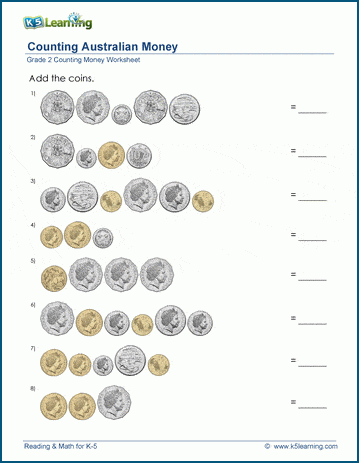
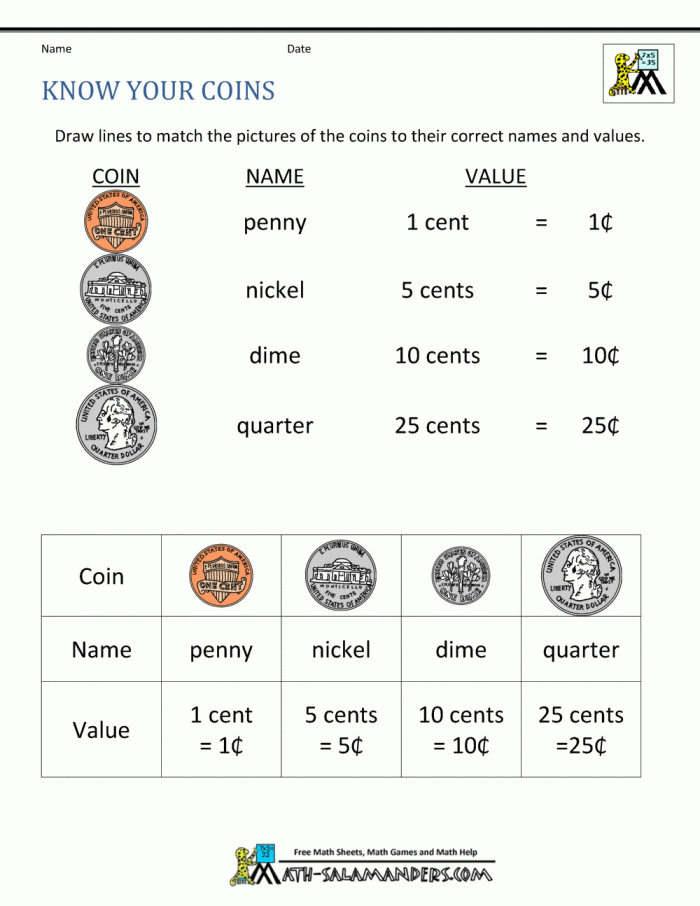
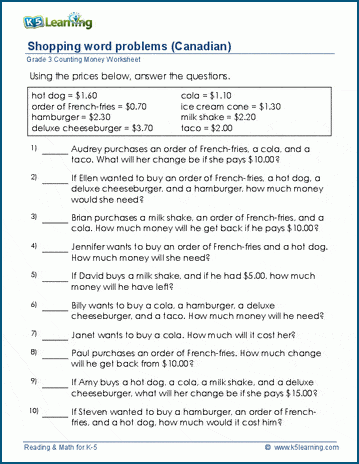
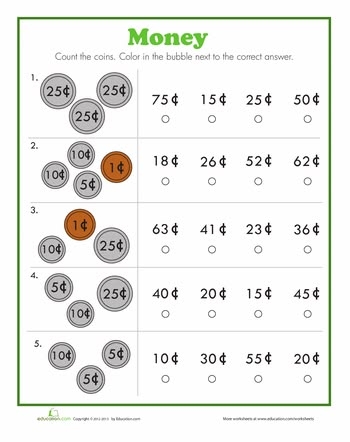
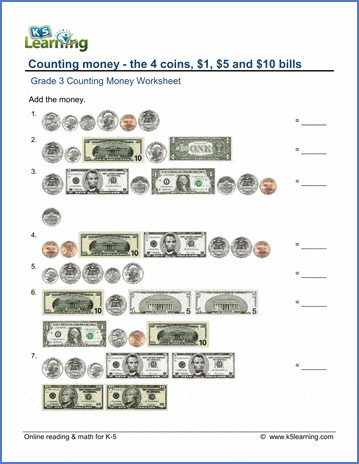
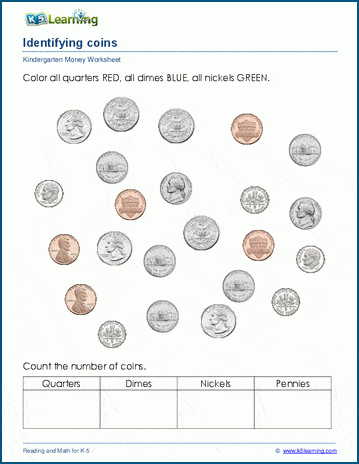
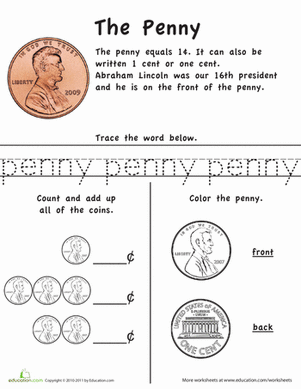
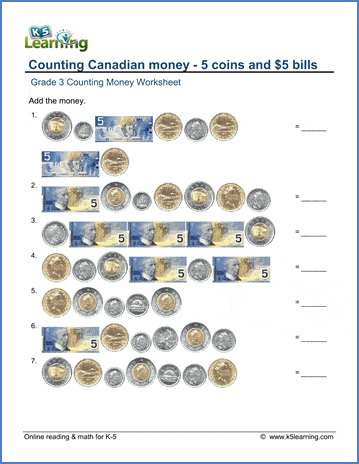
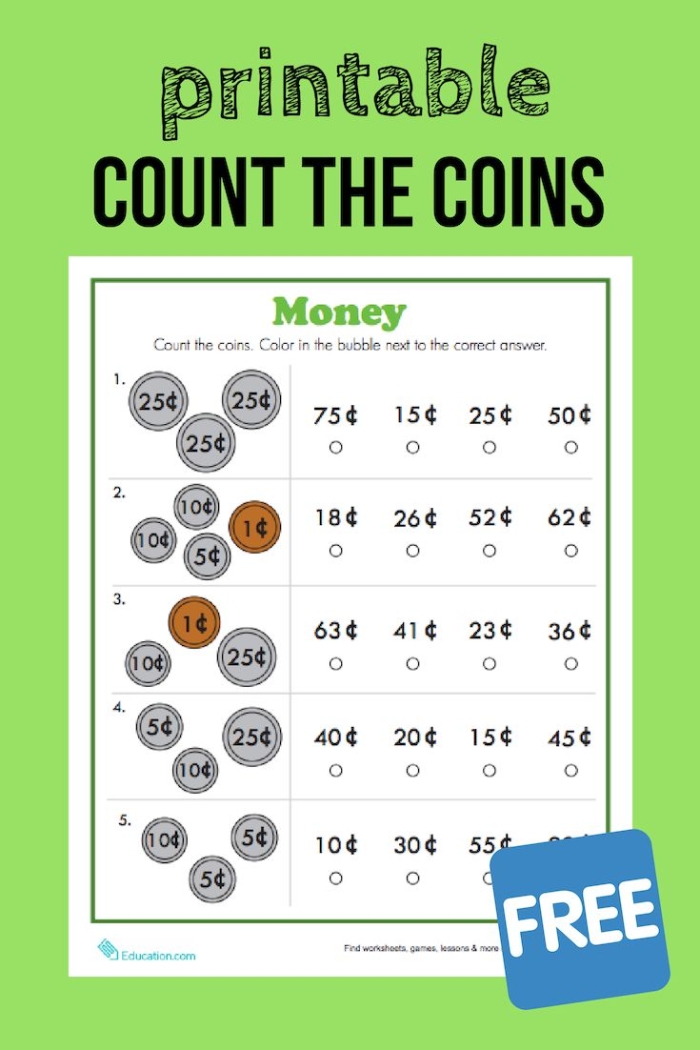
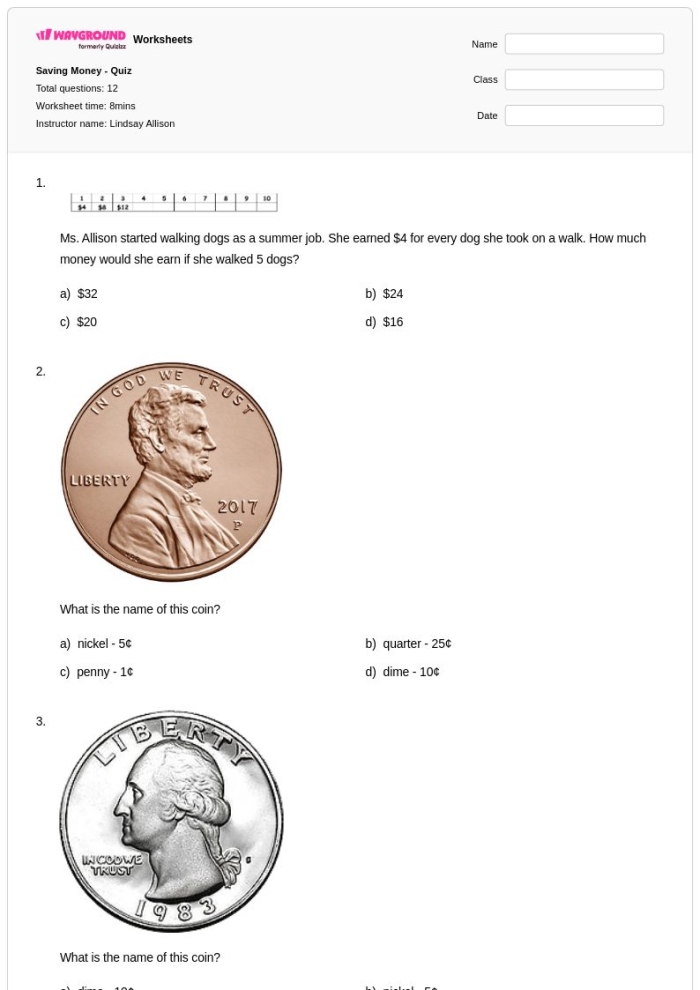
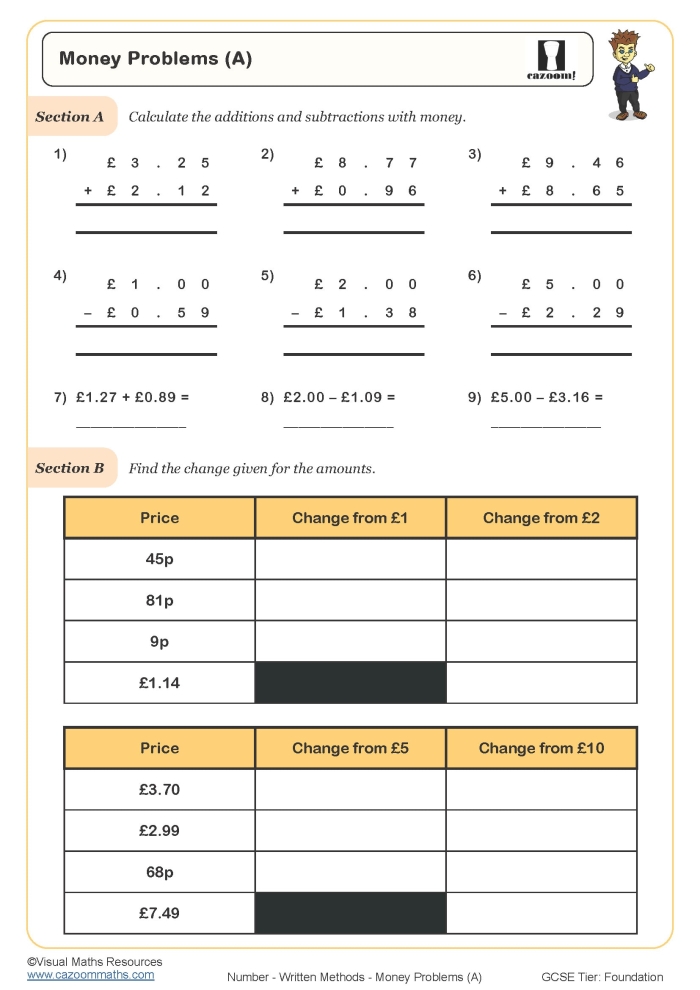
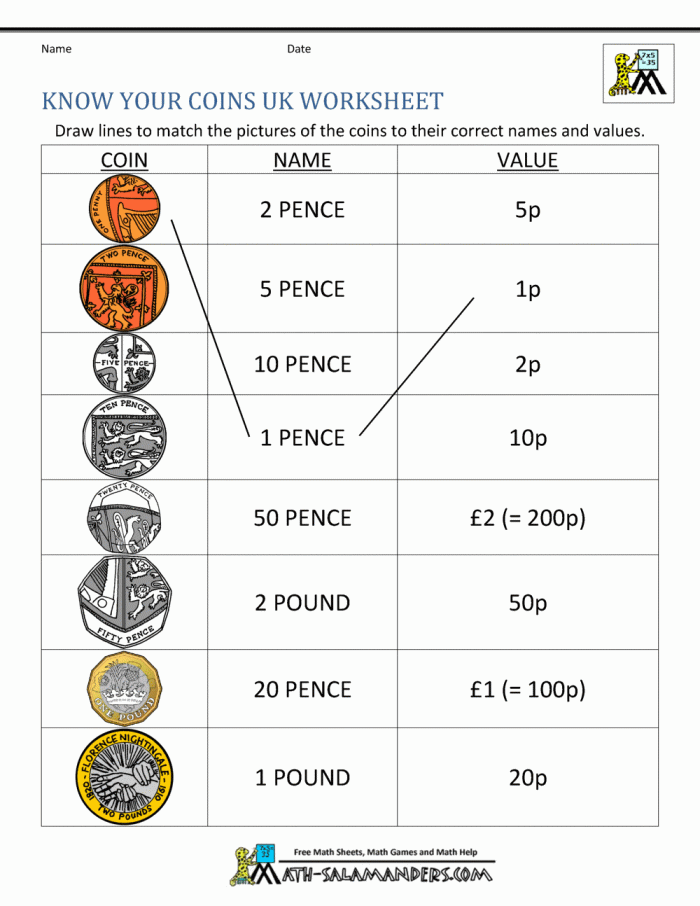
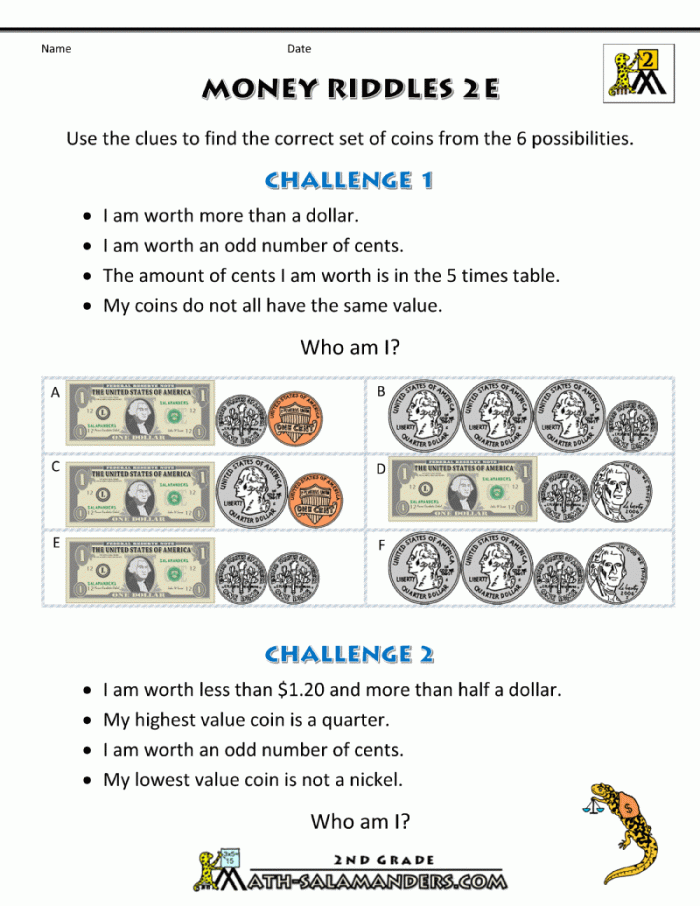
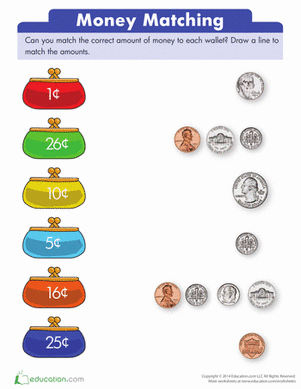
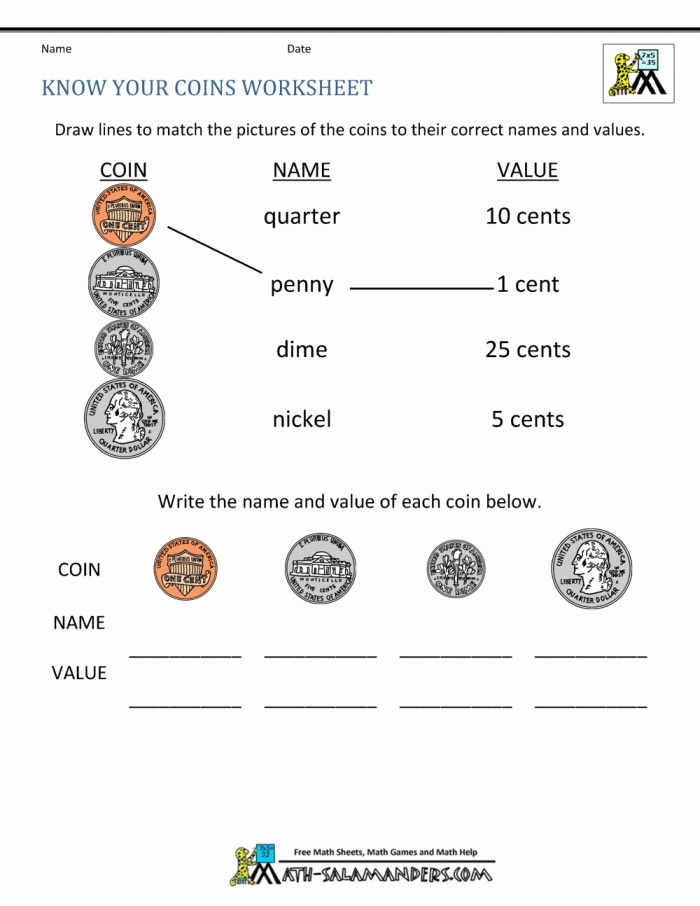
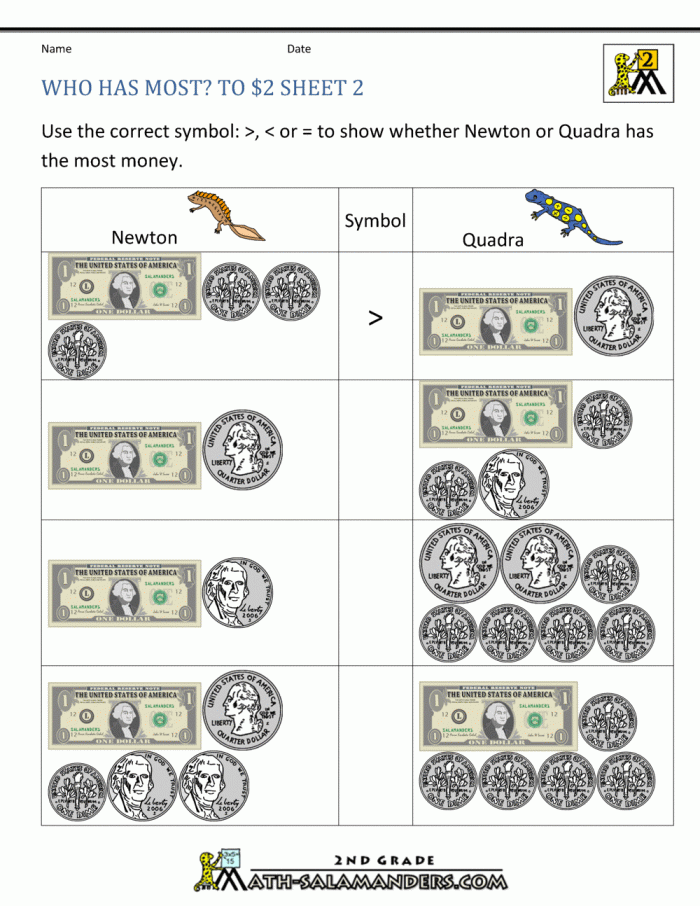
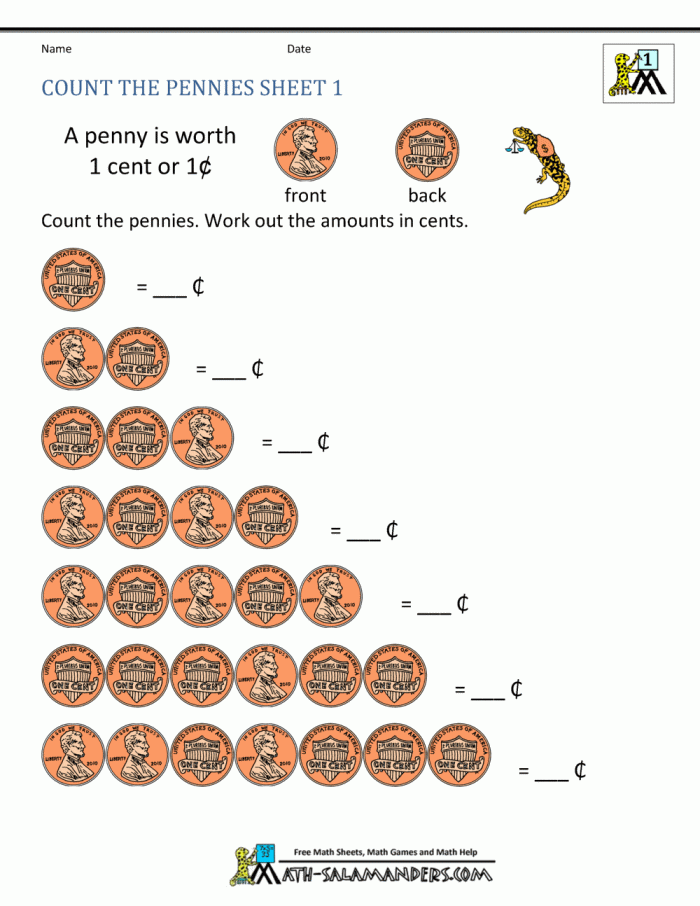
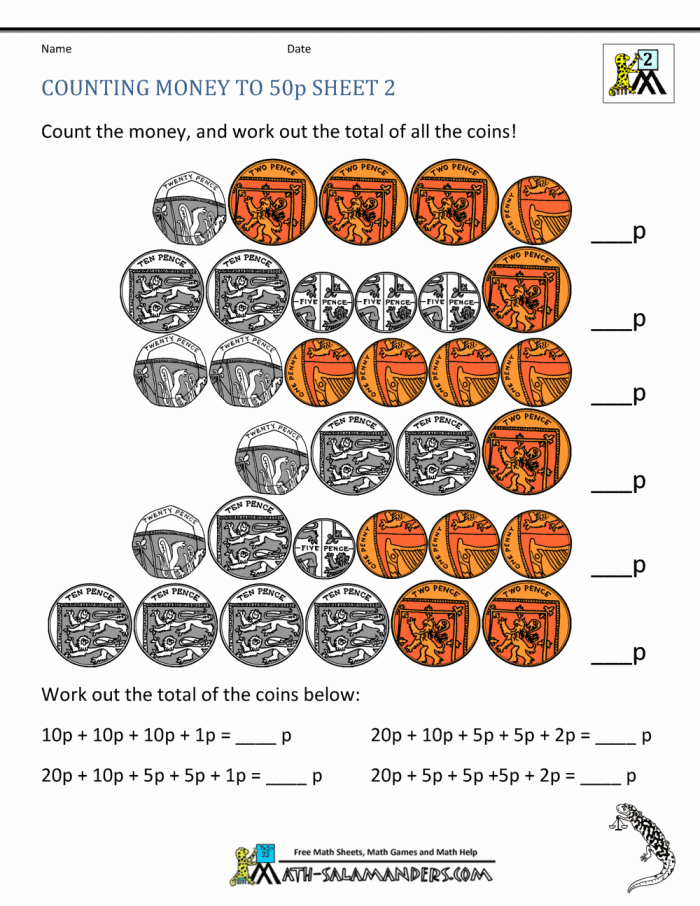
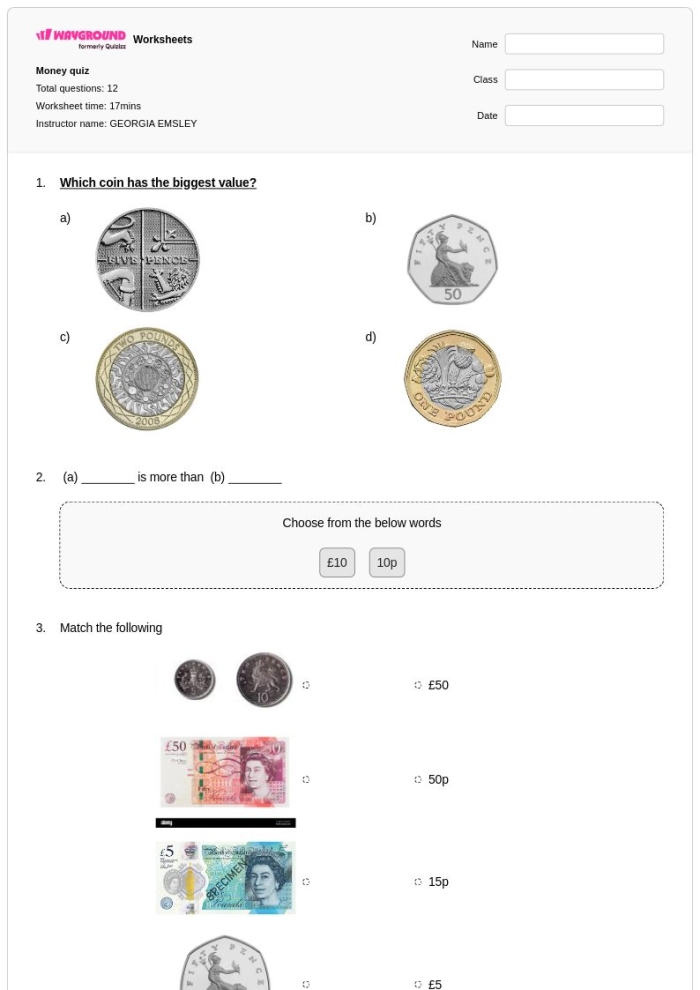
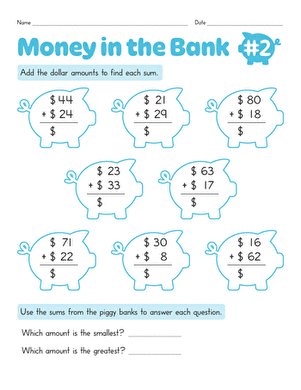
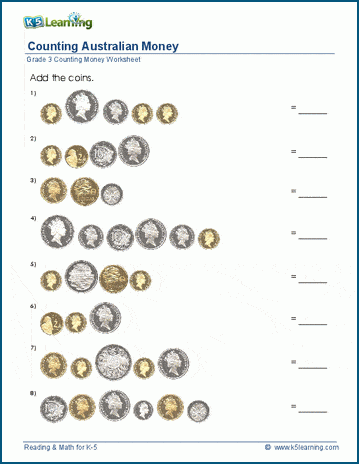
Money quizzes tap into something kids naturally enjoy: the satisfaction of counting and collecting. When first grade students sit down with a worksheet that asks them to count coins and fill in the bubble that matches their answer, they’re doing real math practice without it feeling like a chore.
The fill-in-the-bubble format works particularly well at this age. Kids get familiar with standardized test layouts early, which builds confidence when they encounter similar formats later. More importantly, the bubble-style questions force them to commit to an answer, strengthening their decision-making skills around number recognition and basic addition. When a child counts five pennies and confidently marks the bubble for “5,” they’ve just reinforced both counting skills and test-taking mechanics in one action.
First grade spelling and math often overlap in worksheet activities. While money quizzes focus primarily on numerical skills, many educators pair them with activities like ending consonant blends spelling first grade worksheets to build broader literacy alongside numeracy. This combination helps young learners develop multiple skills in a single learning session.
The “win big” framing in money quizzes matters too. Kids respond to language that makes the task feel like a game or achievement. Telling a child they’re going to “win big” by counting coins correctly creates positive momentum around math practice. They’re more likely to engage carefully with each question when it feels like they’re working toward something.
For teachers and parents, printable money quiz worksheets offer quick assessment tools. You can see immediately whether a child struggles with coin values or counting accuracy, then target practice where it’s actually needed. That diagnostic value makes these quizzes useful beyond just filling class time.
Practice with These Worksheets