Angles show up everywhere once you start looking for them: the corner of your classroom, the way a door swings open, the slice of pizza on your plate. Fourth grade is often when students first learn to identify and measure these shapes with intention, moving beyond just seeing corners to actually understanding how angles work.
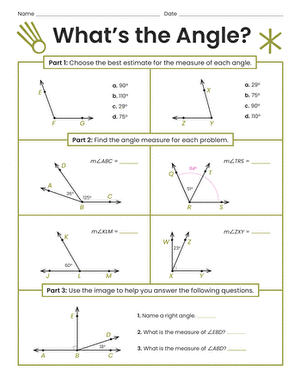
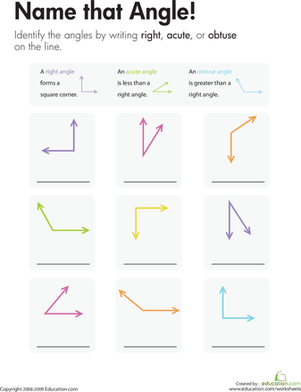
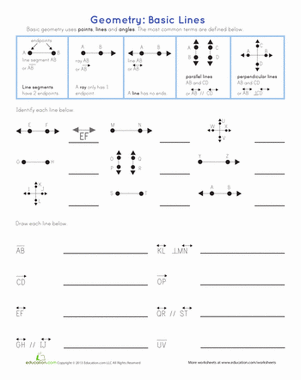
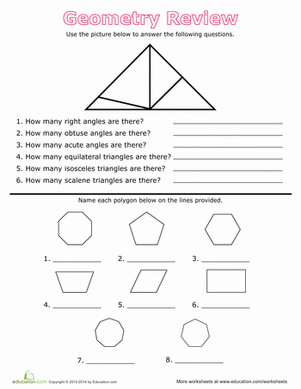
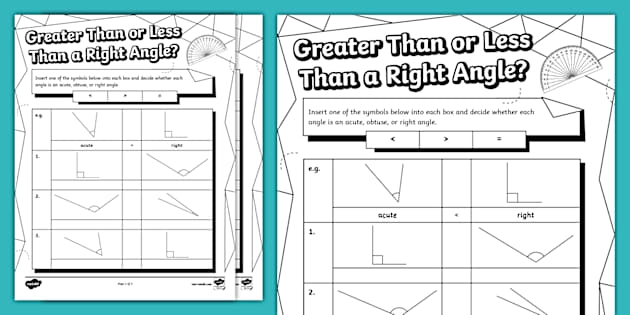
A worksheet focused on angle anatomy breaks down what makes an angle an angle. You’ll typically find a vertex (the point where two rays meet) and two rays extending outward from that point. The space between those rays is what we measure in degrees. Most fourth grade students work with basic angle types: acute angles that are less than 90 degrees, right angles that measure exactly 90 degrees, and obtuse angles that fall between 90 and 180 degrees.
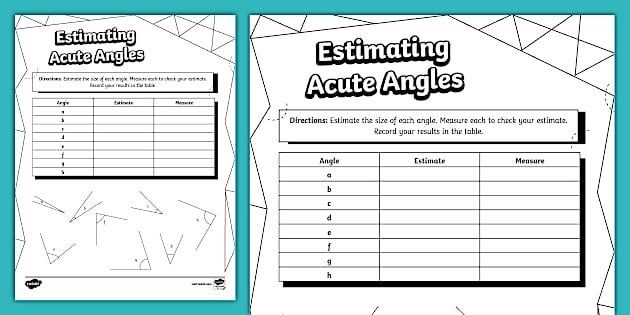
When you work through basic geometry worksheets about angle anatomy, you’re building vocabulary and visual recognition skills at the same time. Students learn to spot the vertex and label the rays. They practice estimating angle measurements before using a protractor. This hands-on approach helps the concept stick better than just reading about angles in a textbook.
The practical benefits extend beyond math class. Understanding angles helps with reading diagrams, interpreting maps, and even understanding how shapes fit together in space. If your fourth grade student is working on visual literacy skills through inference activities, geometry worksheets complement that learning by strengthening spatial reasoning.
A good angle worksheet includes clear diagrams, space for labeling, and problems that gradually increase in difficulty. Some students benefit from having a protractor nearby while working, while others prefer to estimate first and check their work afterward. The repetition helps cement the relationship between the visual representation of an angle and its measurement.
Download These Worksheets for Practice