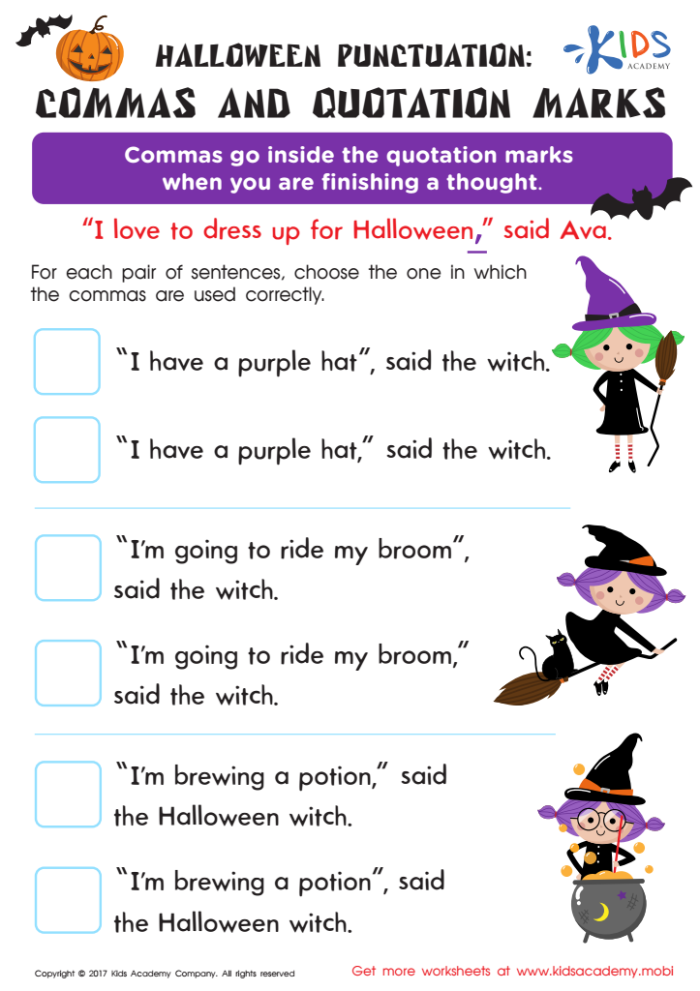
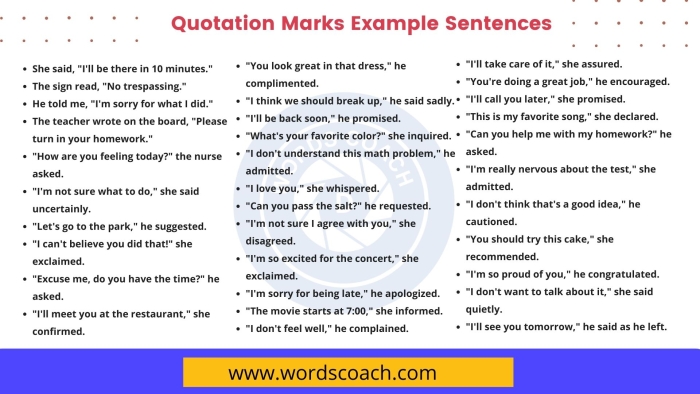
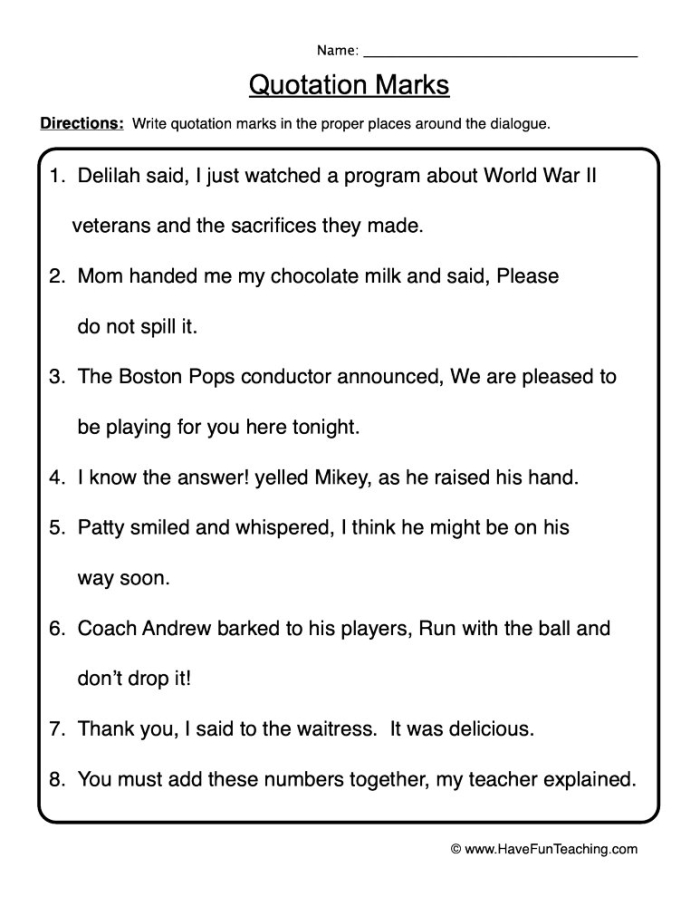
Mastering the use of quotation marks is crucial for anyone learning to write dialogue, especially for fifth graders who are starting to explore more complex writing styles. Knowing where to place quotation marks can change the meaning of a sentence, making it essential for clear communication. For instance, when writing dialogue, the spoken words should be enclosed in quotation marks, while punctuation marks such as commas or periods should be placed inside the quotation marks if they are part of the spoken sentence. This simple rule can significantly improve clarity in writing.
Consider a passage from The Secret Garden, where the characters share their thoughts and feelings through dialogue. If one character says, “I found the garden,” it’s clear that the words belong to them. However, if the sentence reads, “I found the garden,” she said, the placement of the comma indicates that the character’s speech has ended, and the narrative continues. This attention to detail helps readers understand who is speaking and what emotions are conveyed.
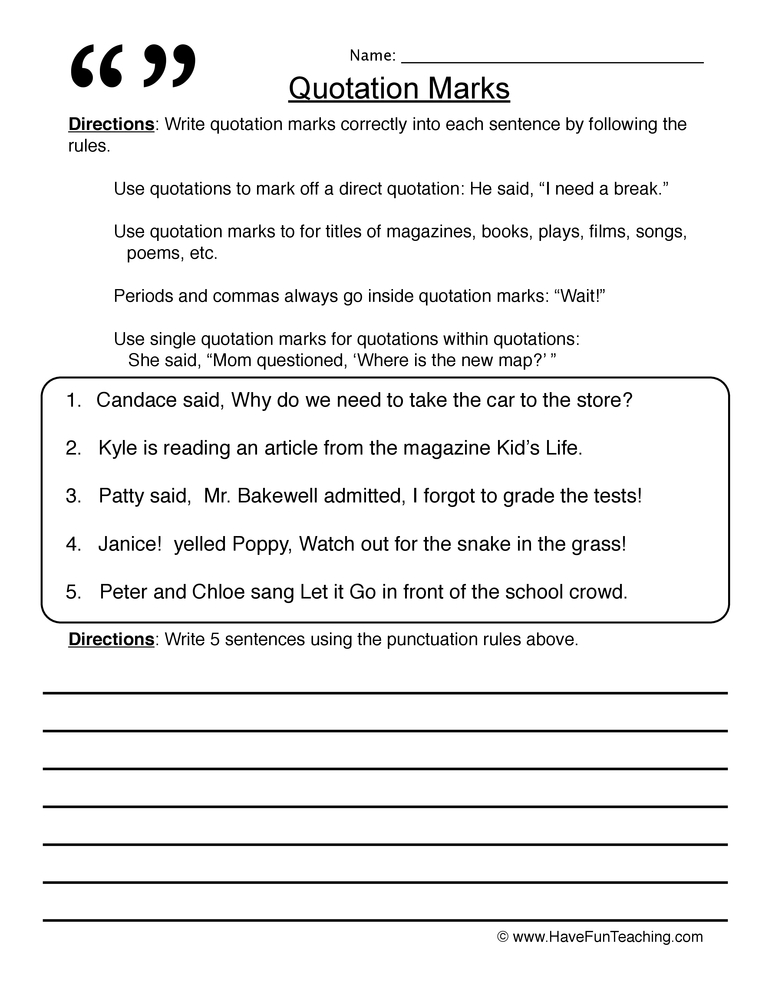
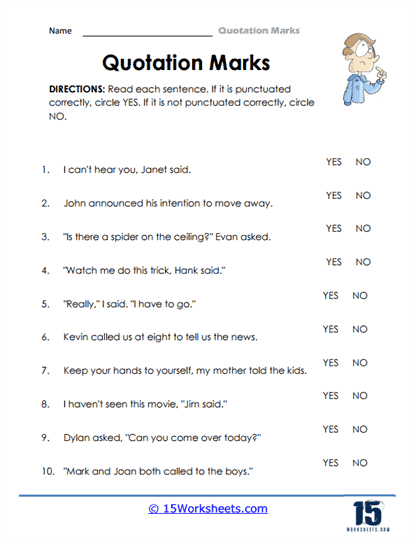
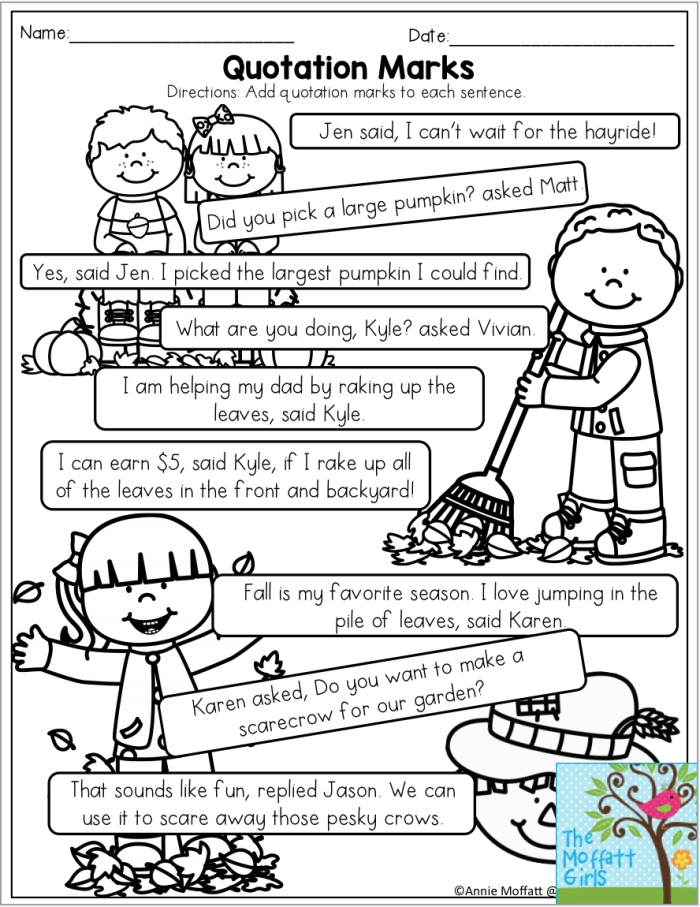
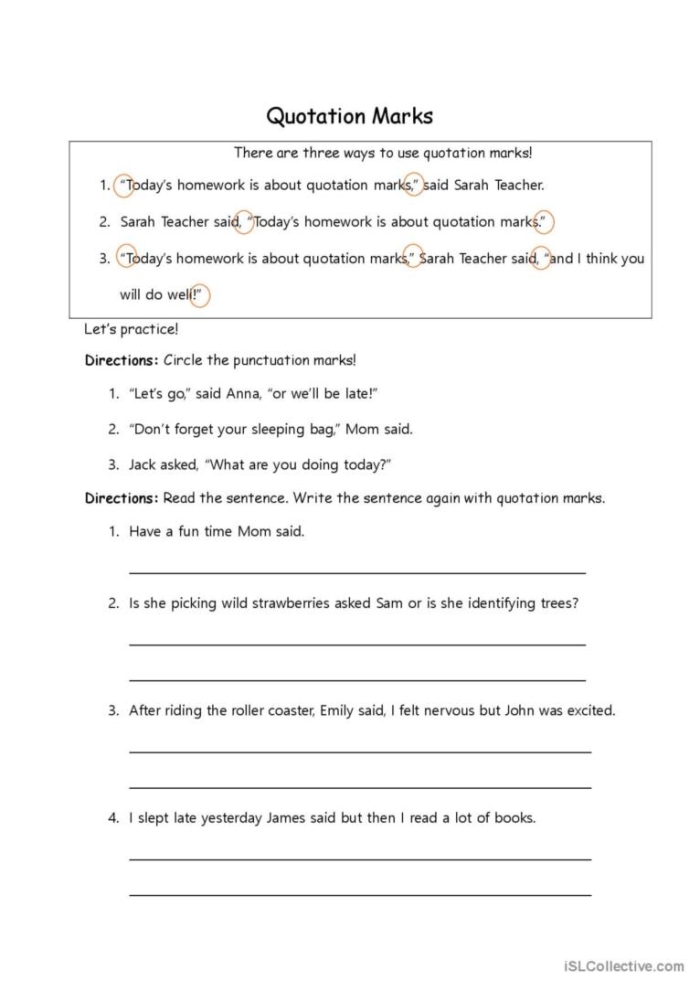
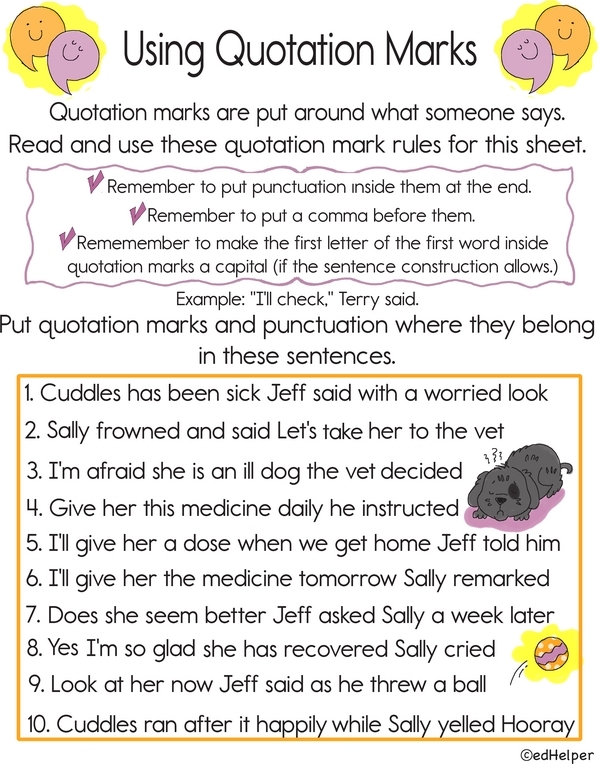
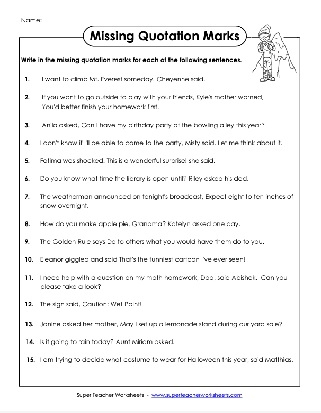
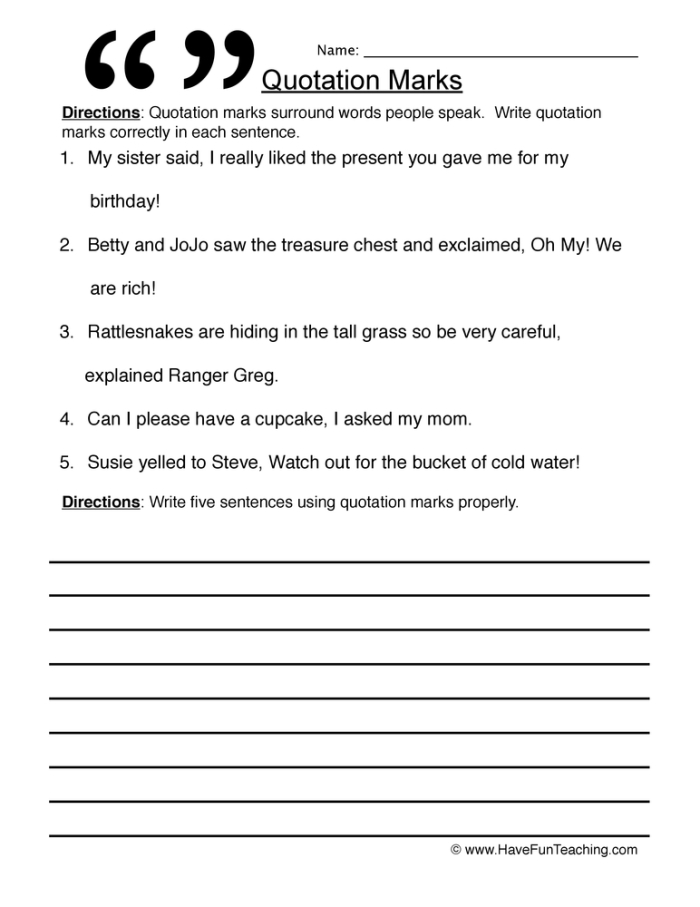
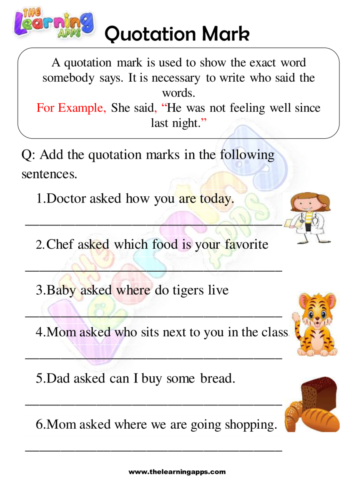
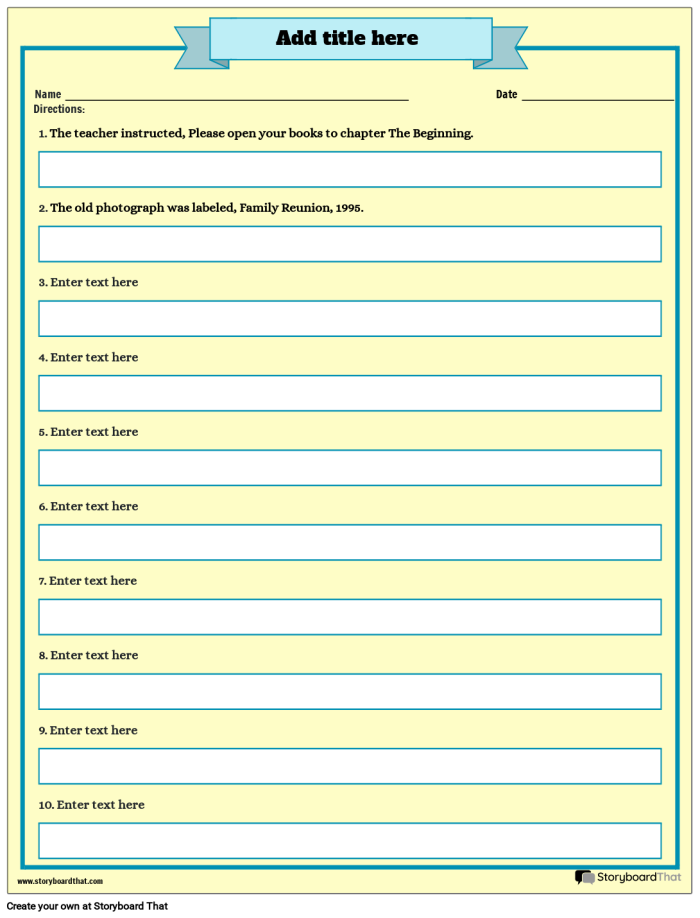
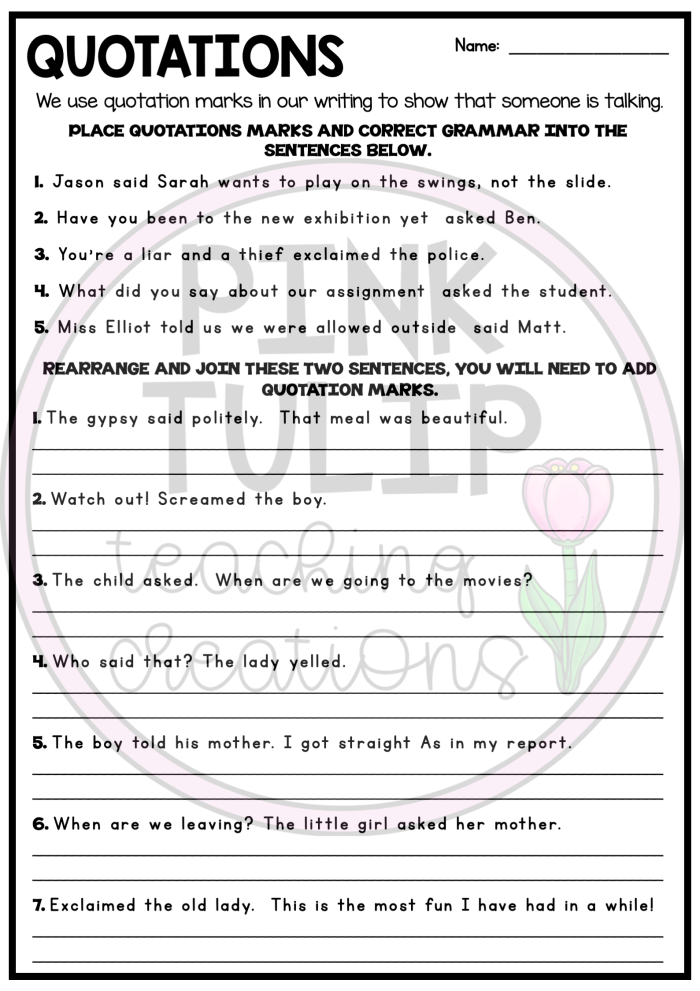
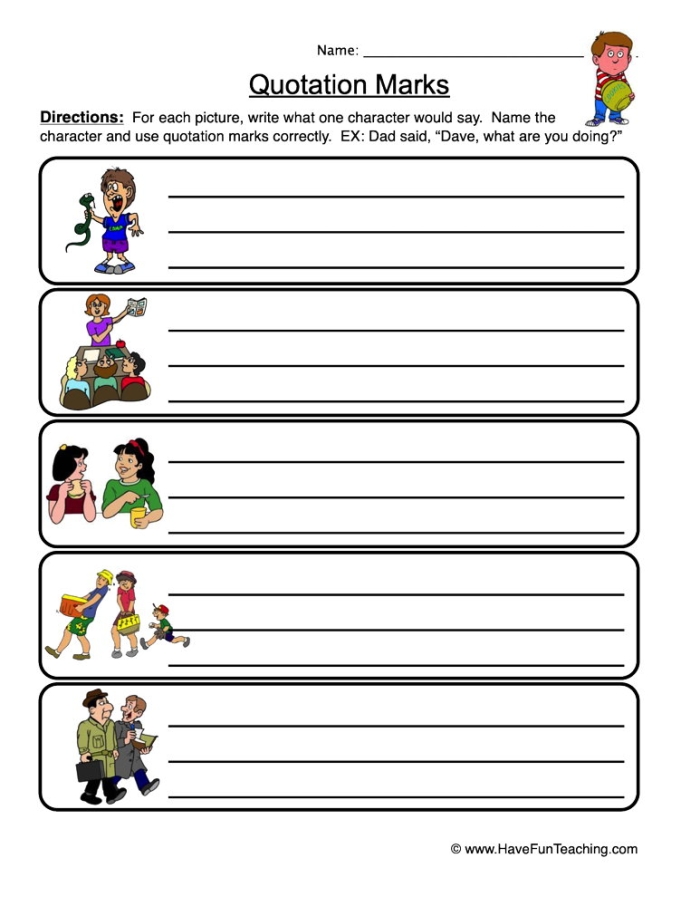
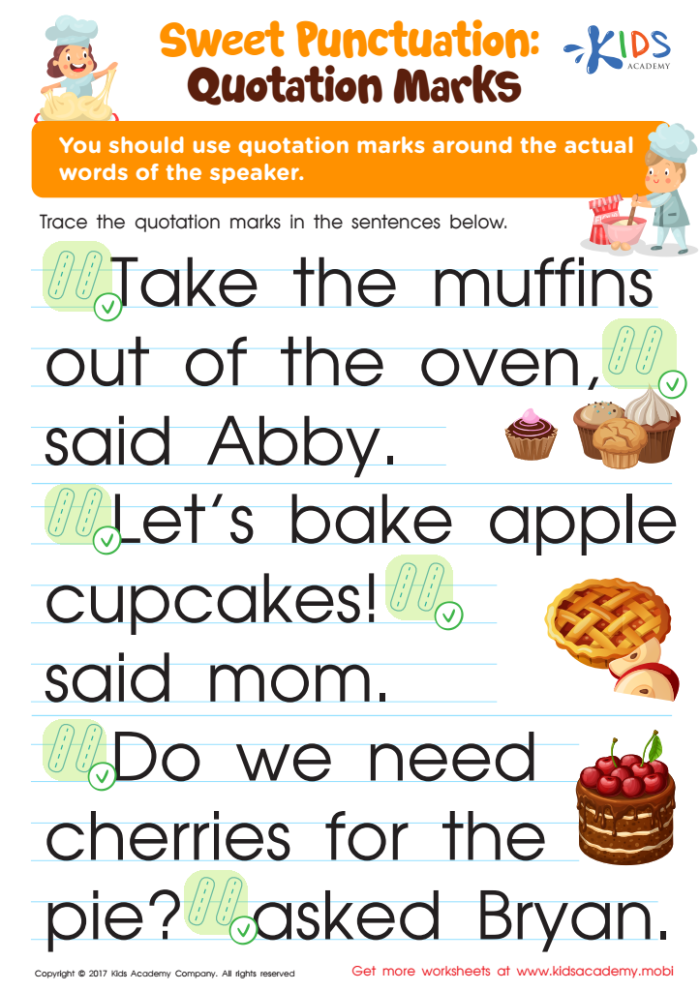
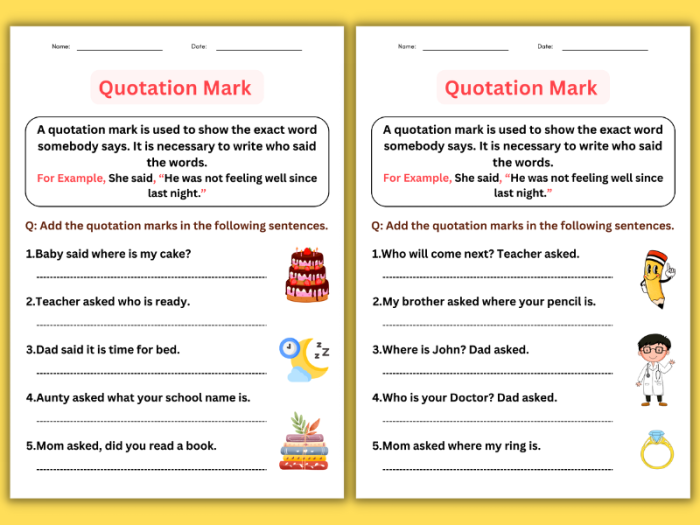
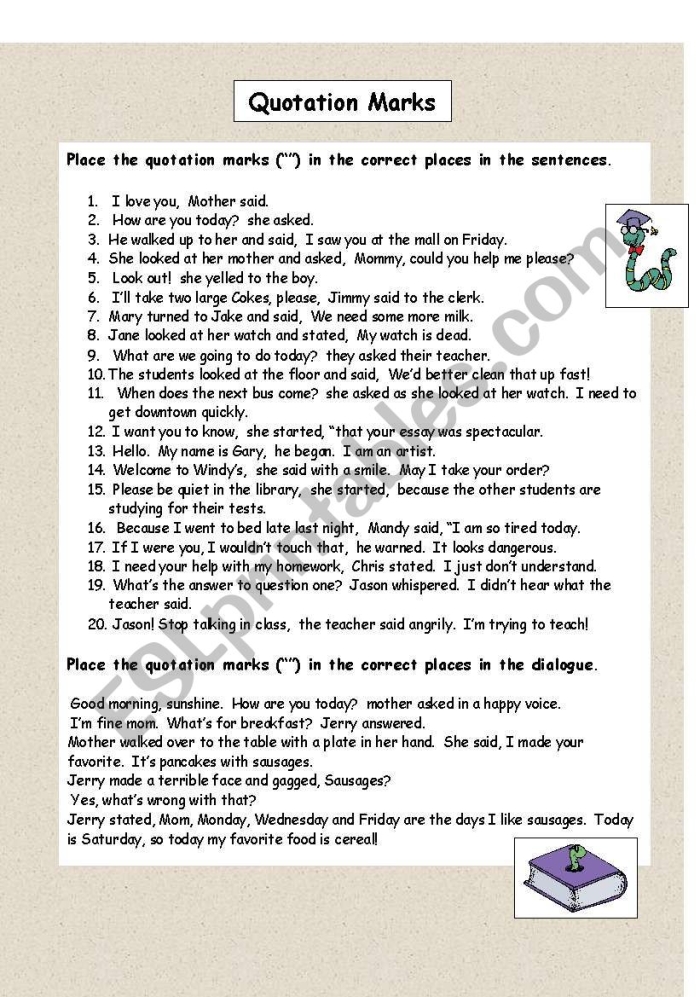
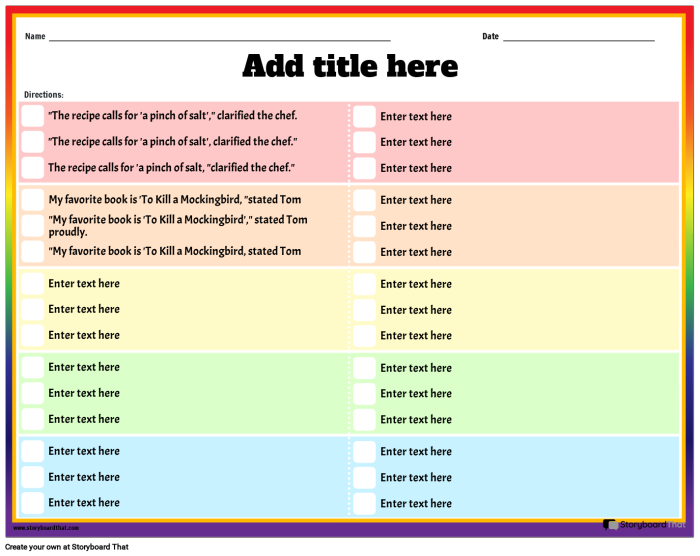
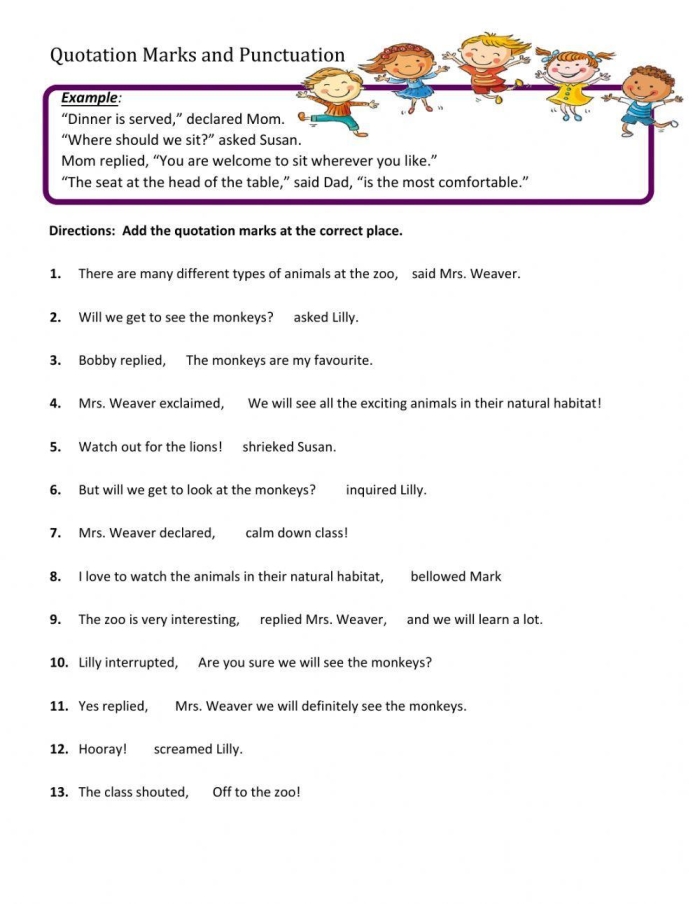
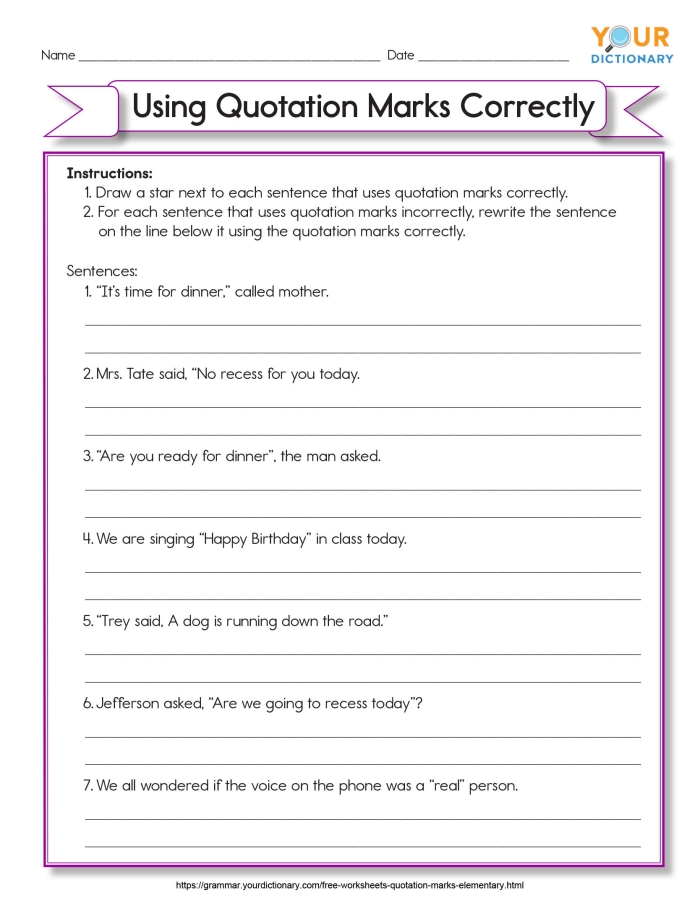
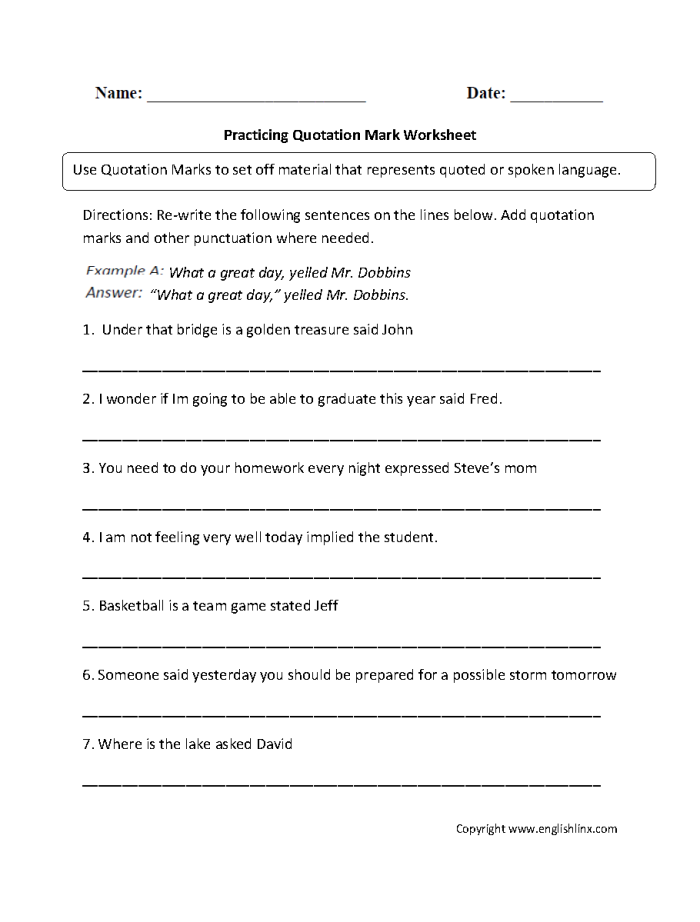
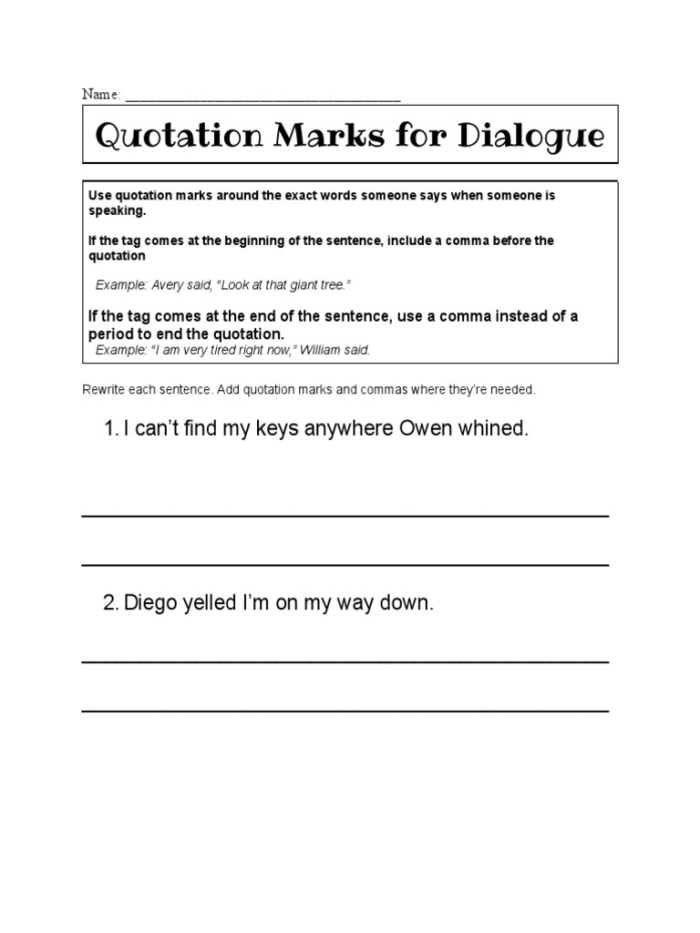
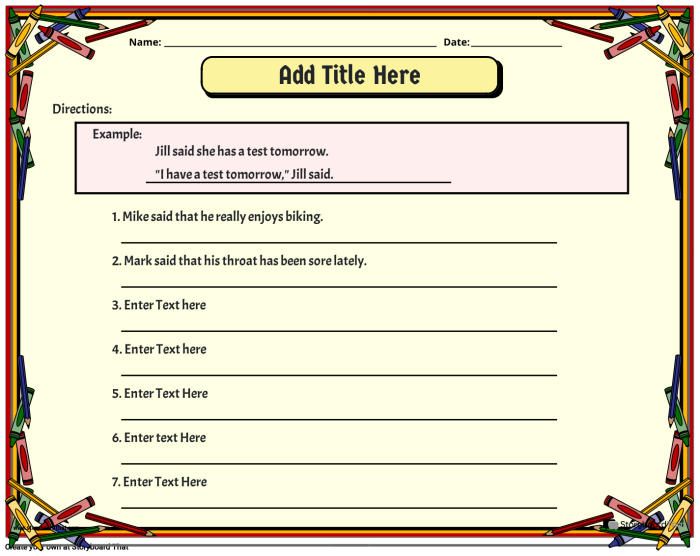
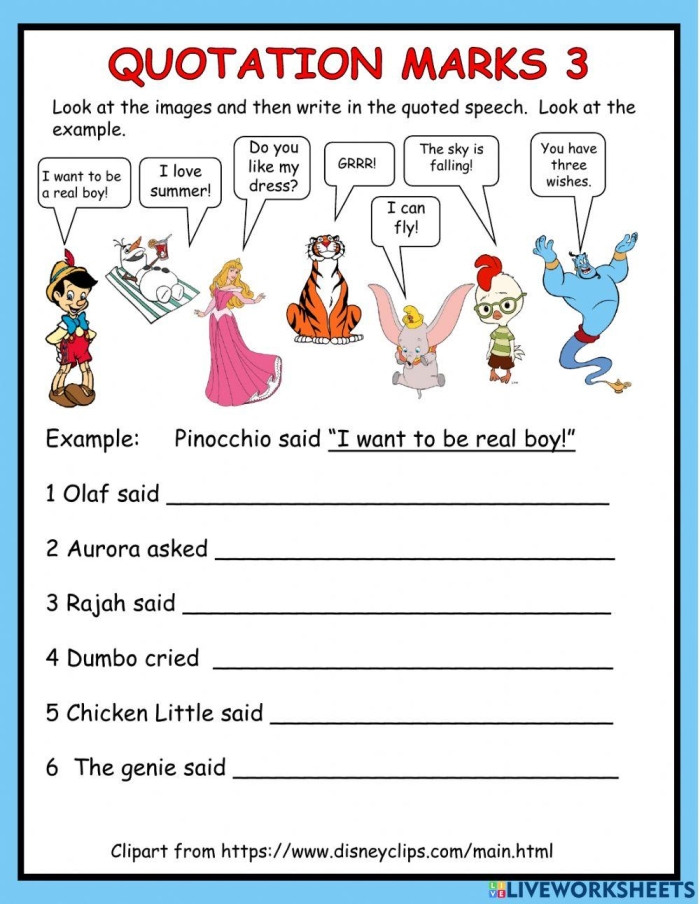
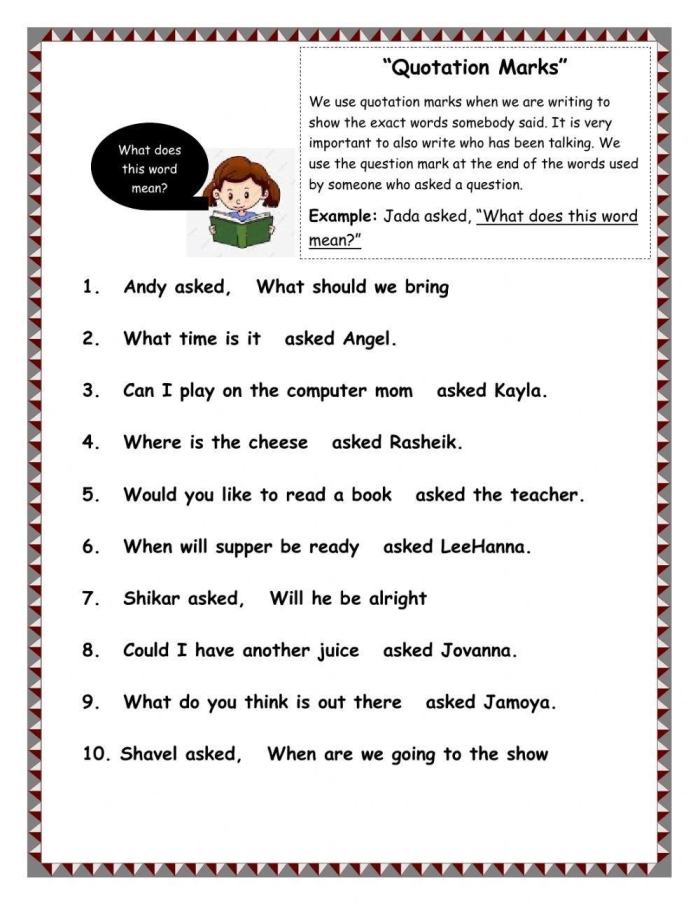
Practicing with printable worksheets on using quotation marks can be particularly helpful. These resources often include examples and exercises that allow students to identify and correct punctuation errors. For instance, worksheets that ask students to rewrite sentences correctly can reinforce the proper use of quotation marks. This kind of practice aligns well with fifth-grade learning objectives, particularly in language arts, where understanding punctuation is crucial.
Additionally, resources that integrate decimals and other math concepts can also enhance learning. Students might enjoy using worksheets that involve creative writing while practicing their math skills, like those found in the Awesome Anatomy worksheets. This approach not only makes learning more engaging but also helps solidify their understanding of important rules, including how to use quotation marks effectively.
Boost Skills with These Worksheets