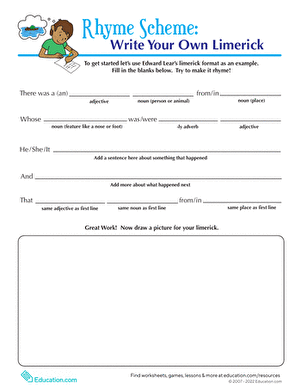
If your child enjoys rhyming, introducing them to the whimsical world of limericks can be a delightful experience. Limericks, made famous by poets like Edward Lear, are five-line poems with a specific rhythm and rhyme scheme that make them fun and engaging for young writers. This playful style encourages creativity and helps develop their understanding of language and structure, which is especially beneficial for third graders studying grammar and mechanics.
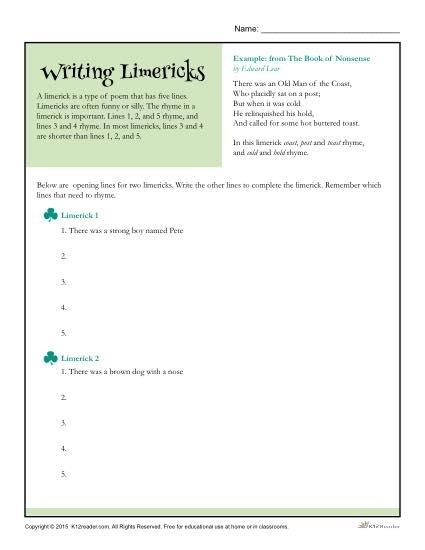
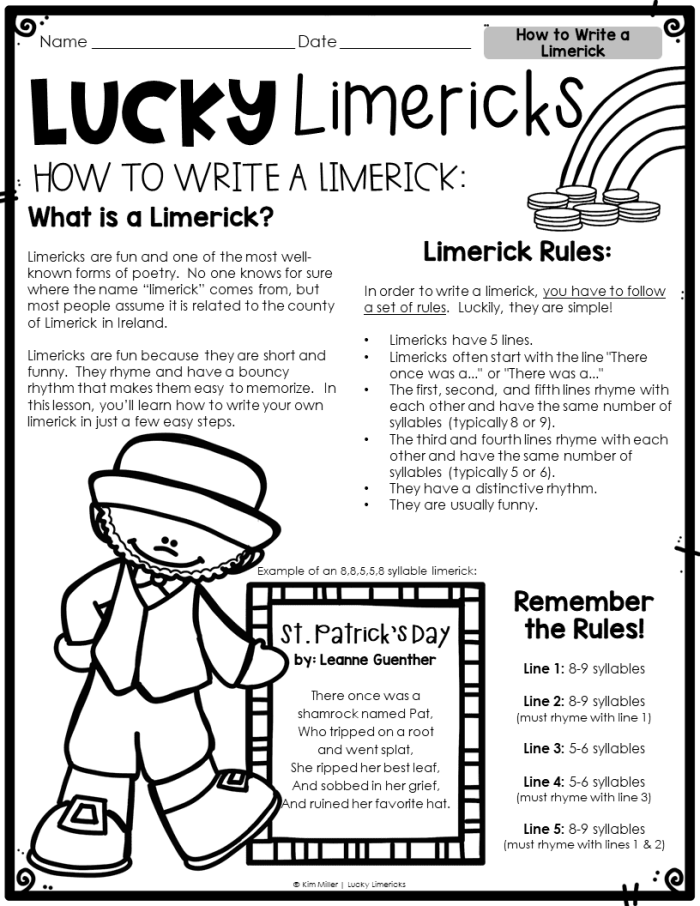
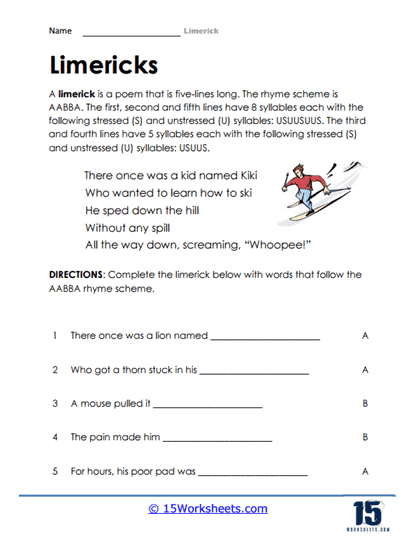
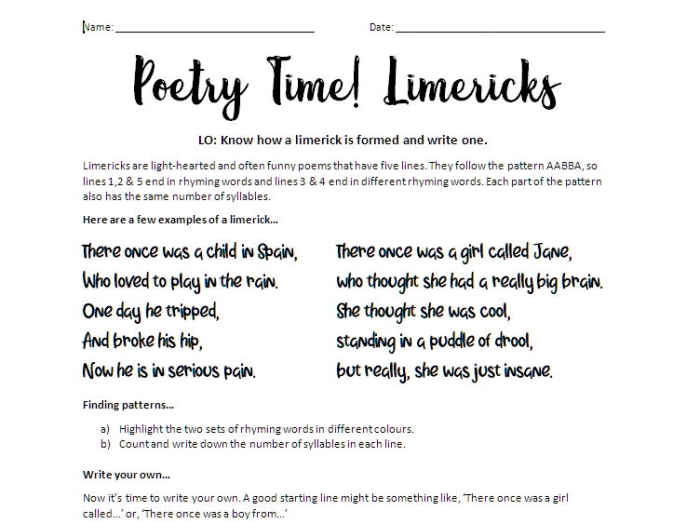
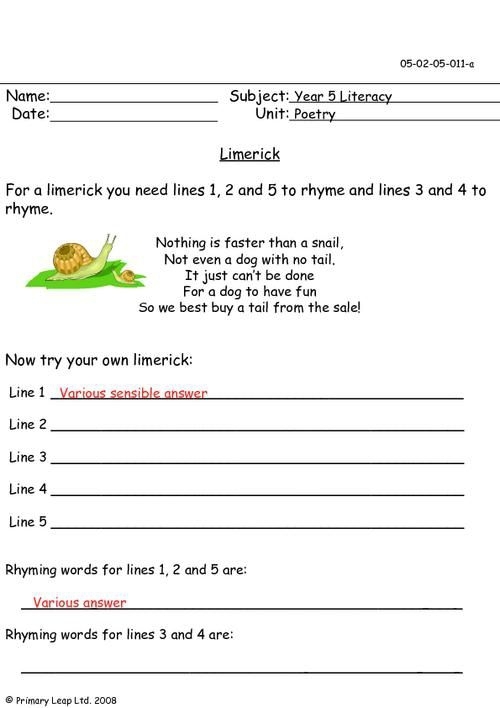
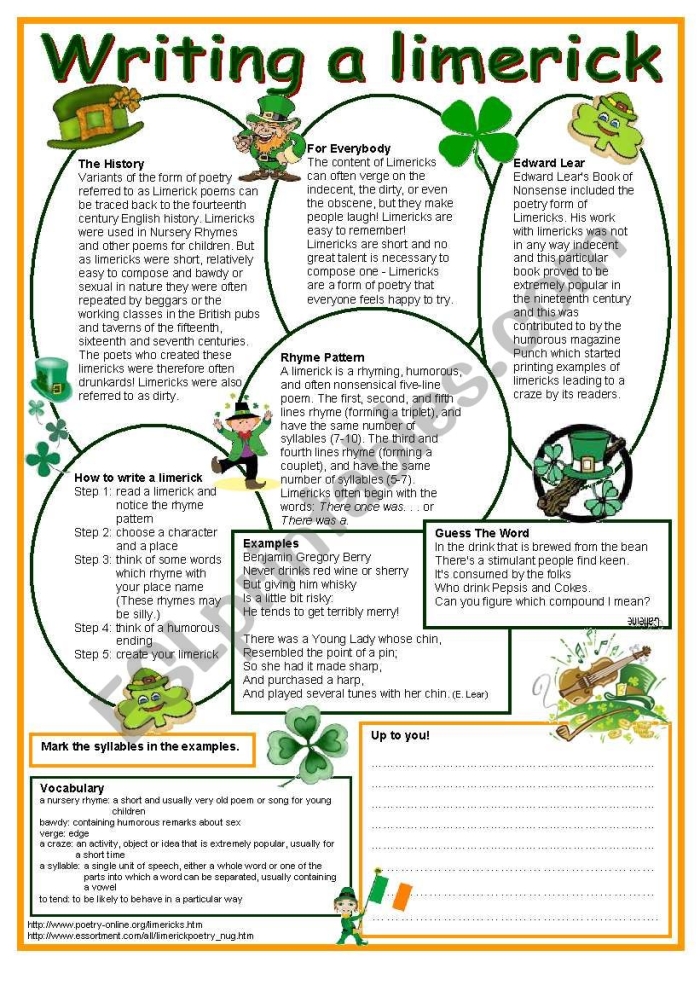
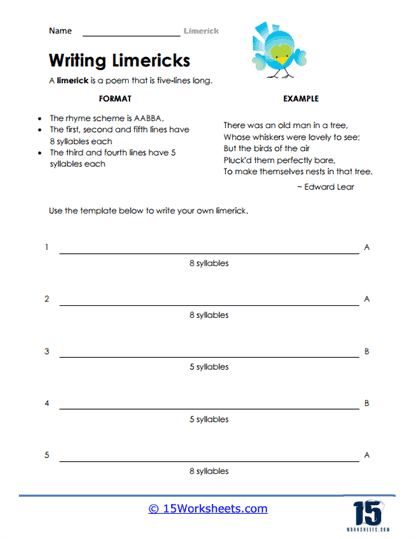
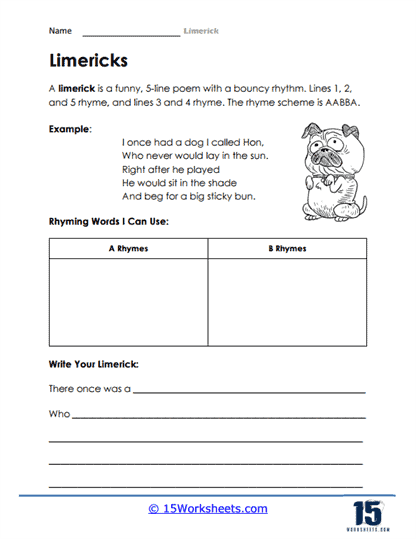
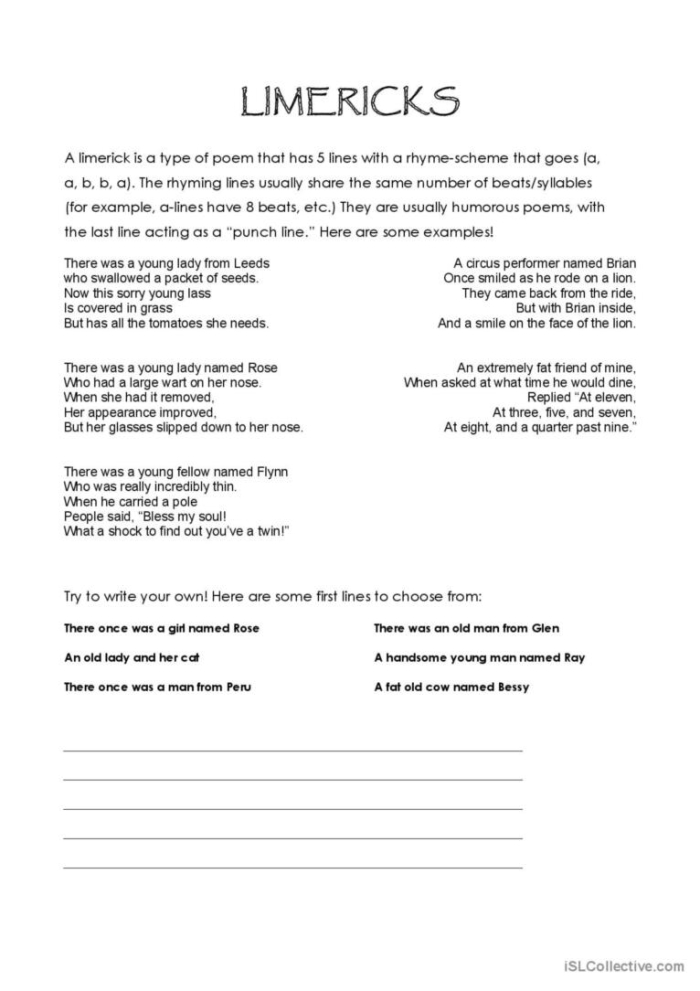
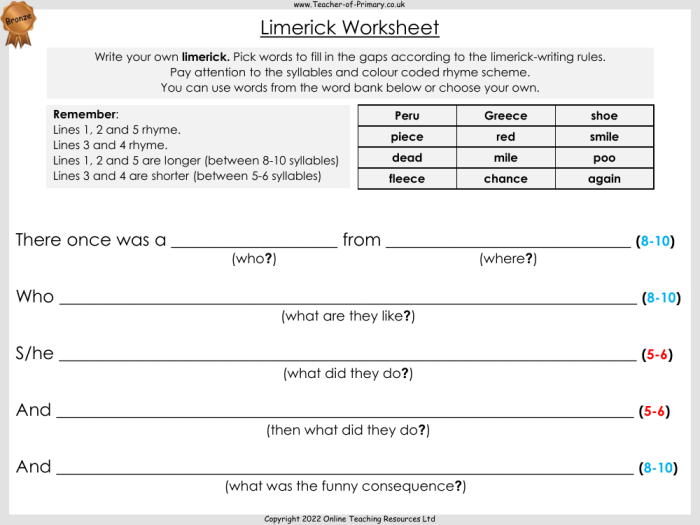
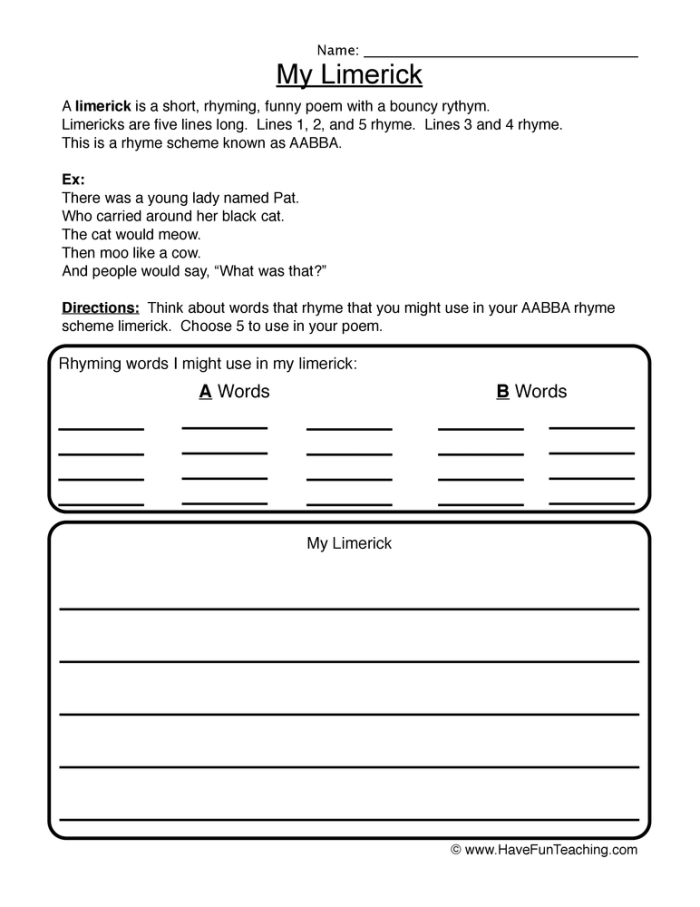
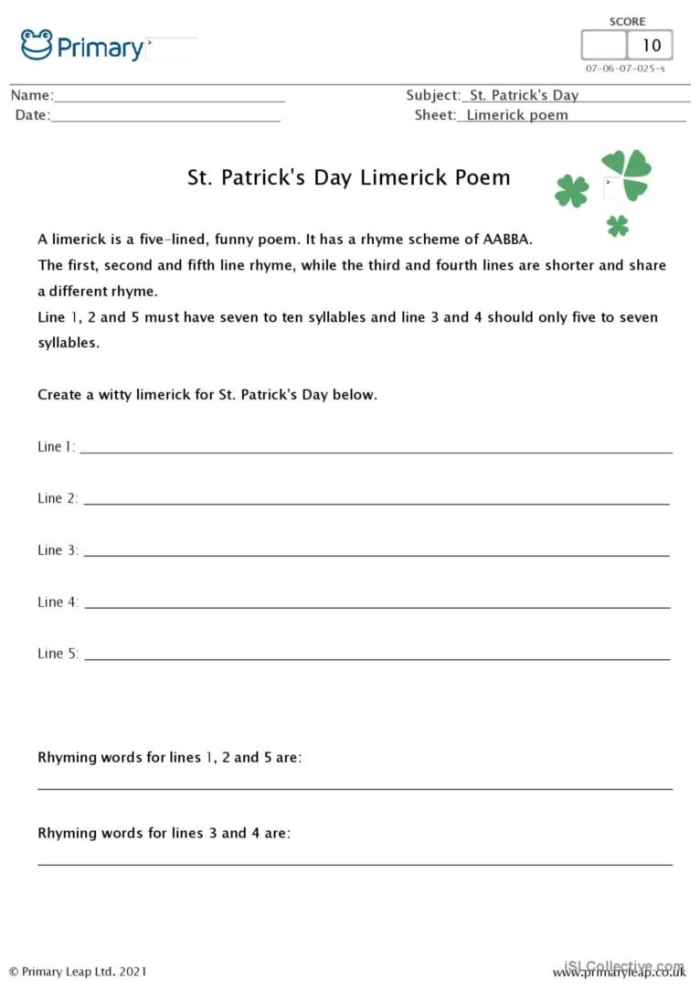
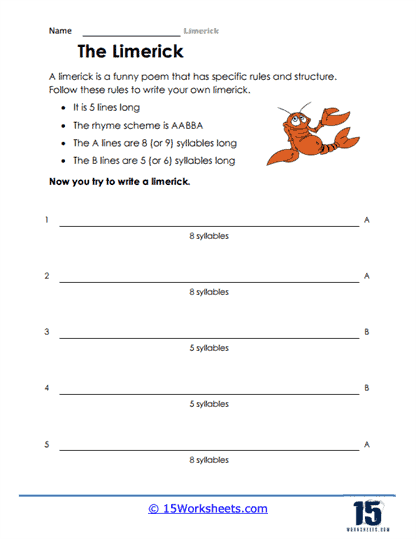
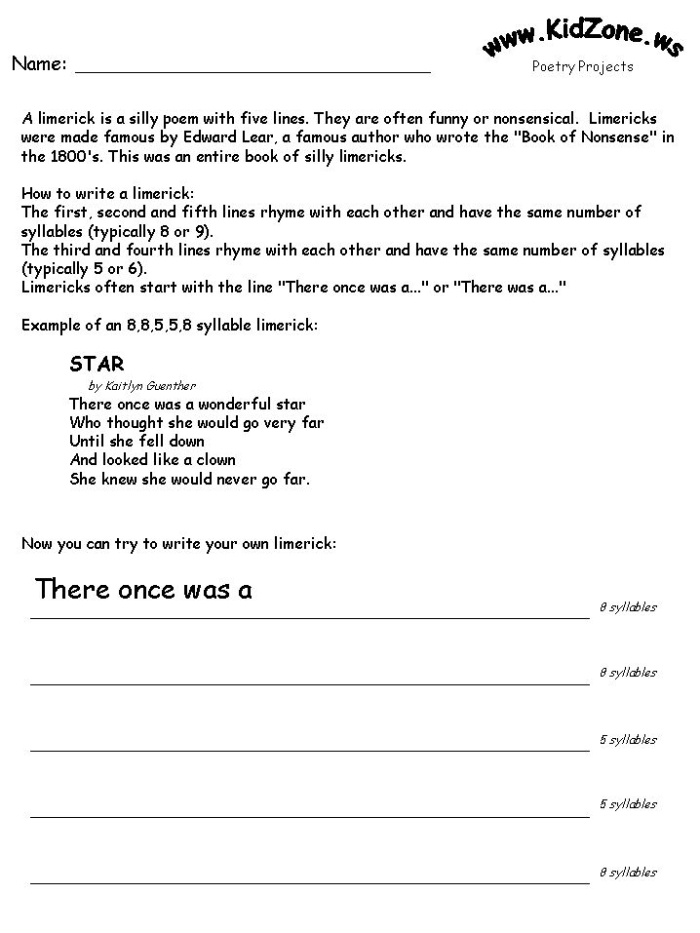
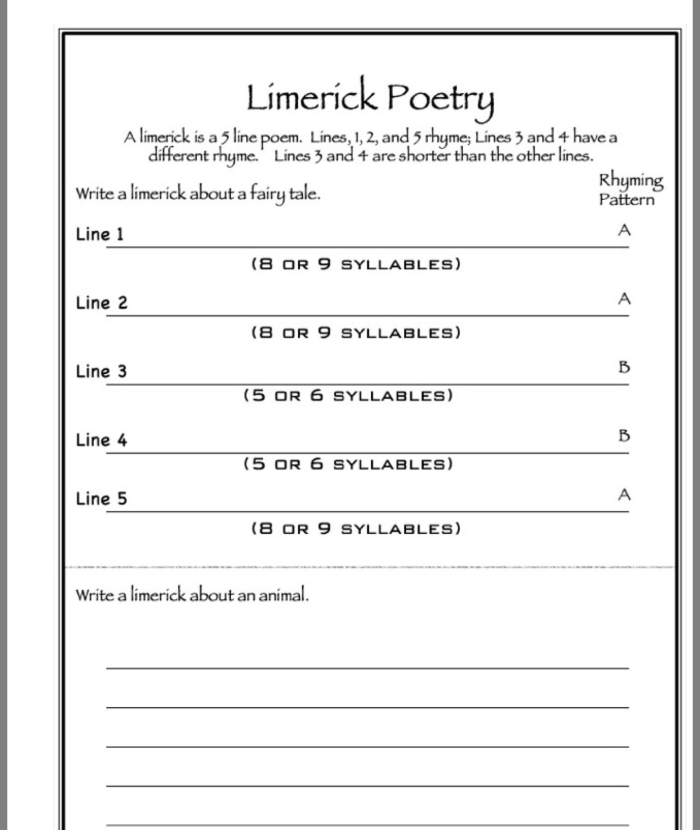
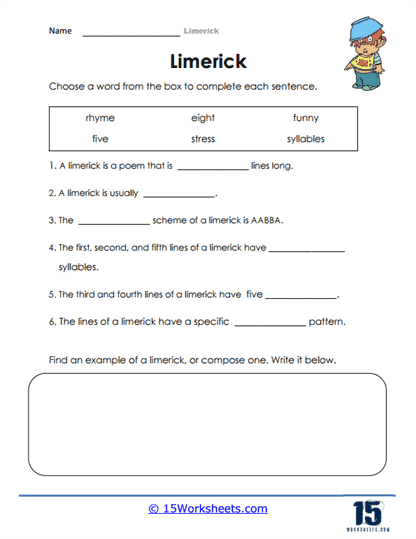
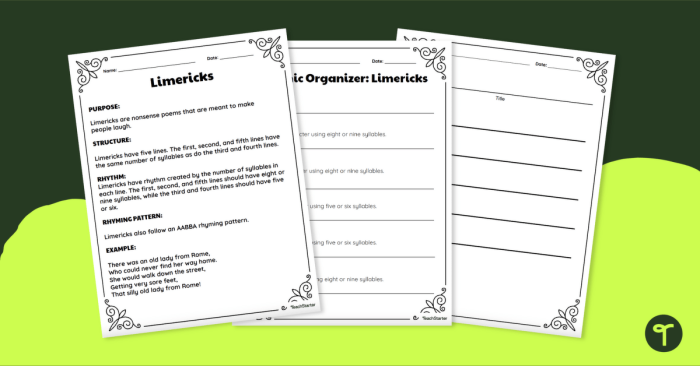
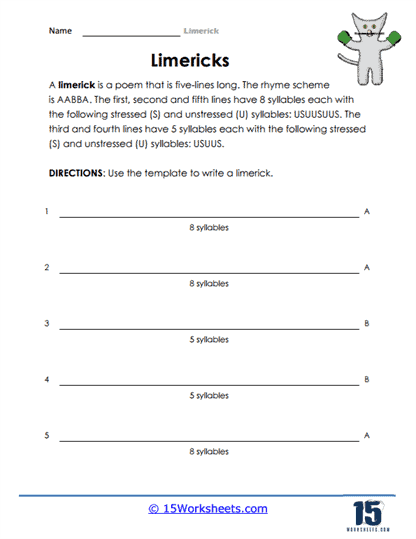
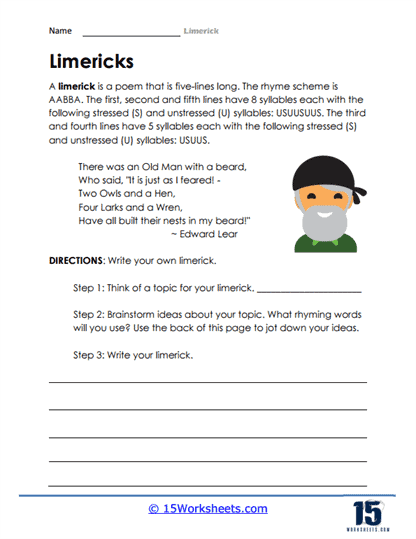
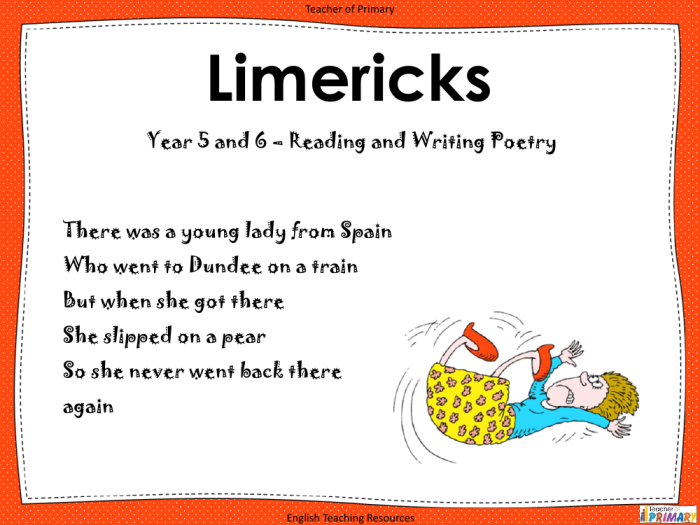
Limericks follow a simple pattern: the first, second, and fifth lines rhyme with each other, while the third and fourth lines share a different rhyme. The rhythm typically consists of three beats in the longer lines and two beats in the shorter lines. For example, you might start with a silly character, like “There once was a cat from Peru,” and continue with the rhymes that build a fun little story. This structure allows children to experiment with words while keeping them entertained.
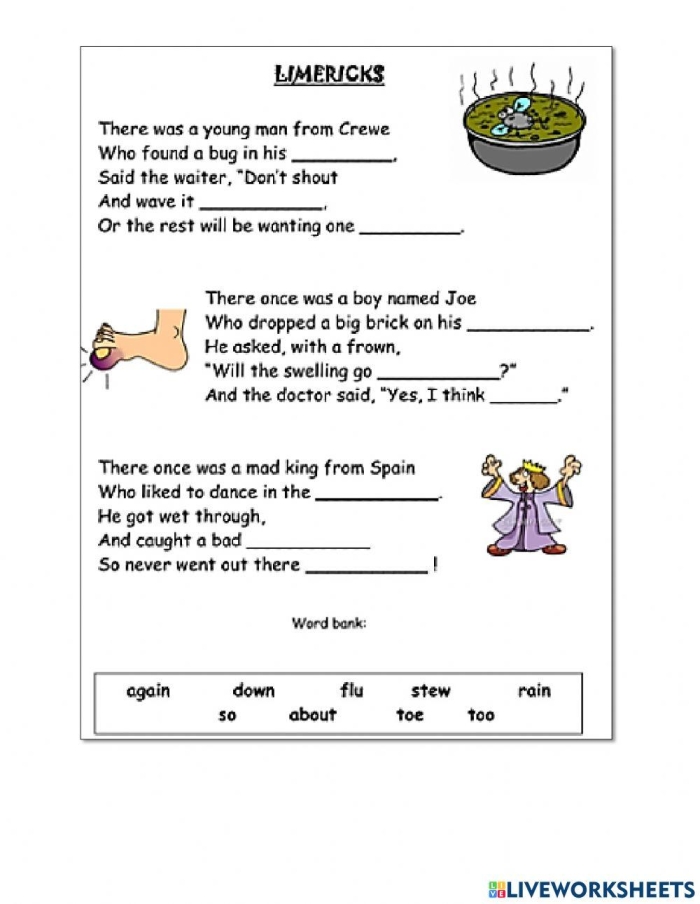
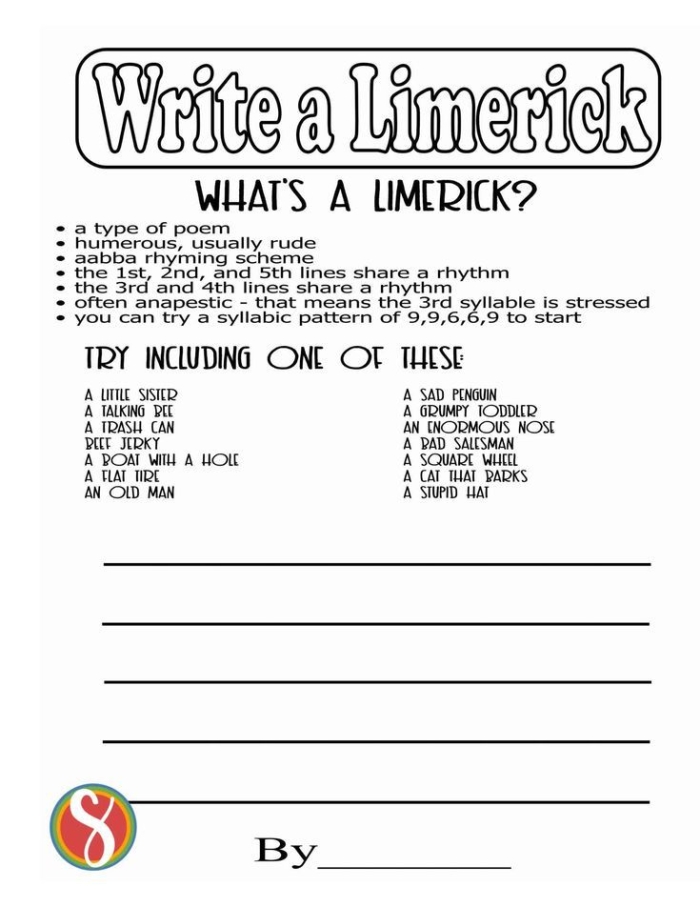
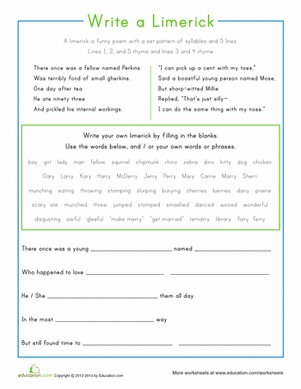
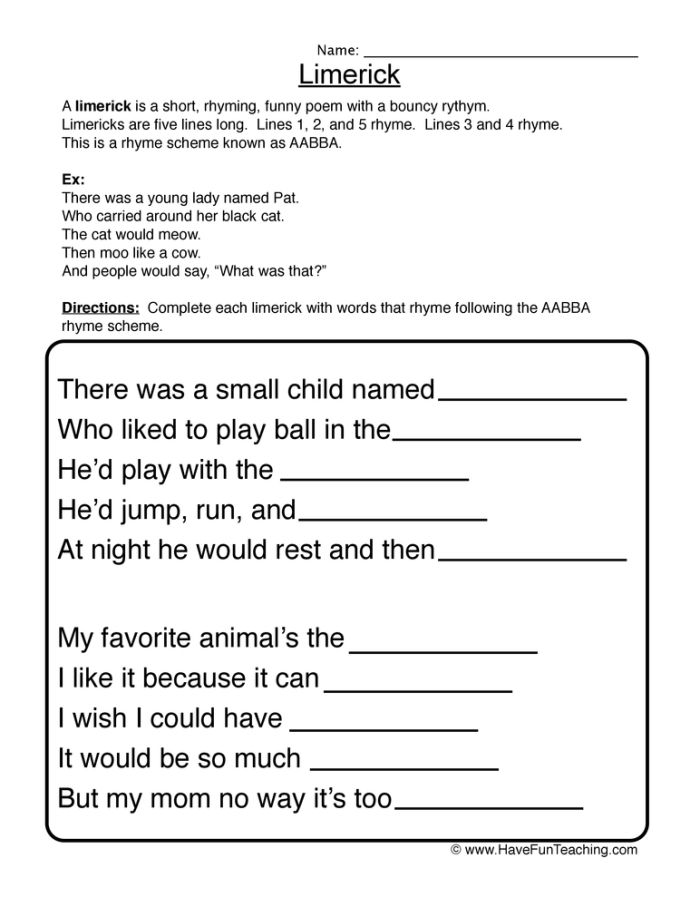
Encouraging your child to write limericks can also enhance their vocabulary. They’ll learn to think critically about word choices to maintain the rhyme while expressing their ideas. If they need guidance, consider using printable limerick worksheets that provide prompts and examples to help them get started.
Incorporating limericks into your child’s writing practice not only nurtures their love for poetry but also reinforces their grammar skills. As they learn to recognize and create different parts of speech, they can apply this knowledge while crafting their poems. Writing in this format can transform a simple writing exercise into a playful and imaginative session.
Once they feel confident in their limerick writing, encourage them to share their creations. Whether it’s at home or in a classroom setting, presenting their poems can boost their confidence and inspire others. So, why not invite your young poet to explore the world of limericks today? They might discover a new favorite way to express themselves!
Practice with These Worksheets